





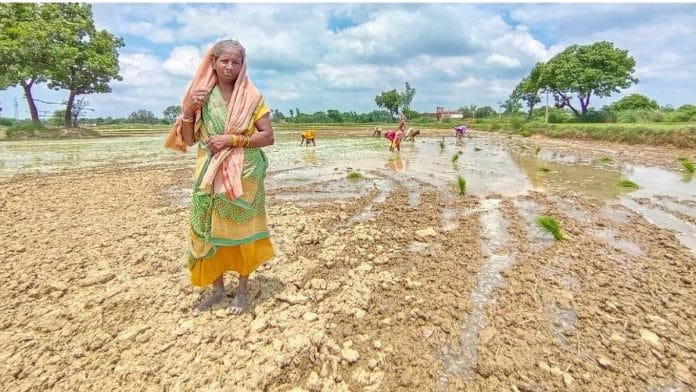



New Delhi: India’s soil is degrading. Years of imbalanced fertiliser use, declining organic matter and intensive farming have stripped it of essential minerals. Even as the country achieves record foodgrain production, the quality of food is deteriorating as soils lose their nutrients.
A report titled ‘Healing Soils in India: For Better Crop Health and Human Nutrition’, published by the Indian Council for Research on International Economic Relations (ICRIER) and released on 27 January at the India Habitat Centre in New Delhi, finds a “clear and troubling decline” in key soil quality indicators over time. The study calls for policy-level interventions to arrest the damage.
Authored by Biswabara Sahu, Ritika Juneja, Sachchida Nand, and Ashok Gulati, the report—released on 27 January at the India Habitat Centre in New Delhi and attended by professors, government advisors and policymakers with NITI Aayog member Ramesh Chand delivering the keynote address—analyses soil health data from the Soil Health Card (SHC) scheme and the Indian Council of Agricultural Research (ICAR). Both datasets point to widespread nutrient stress across Indian soils.
Nutrient-deficient soils
Soil nutrients are essential for plant growth and yield. But the report shows that Indian soils are increasingly deficient in sulphur, zinc, iron and magnesium, among other nutrients. Data from the 2024-25 SHC cycle indicate that nearly three-fourths of tested soil samples have low levels of soil organic carbon (SOC).
SOC, a key indicator of soil structure, water retention and microbial activity, is below 0.75 per cent in about 75 per cent of Indian states. Low SOC levels are associated with reduced crop productivity, higher vulnerability to drought, and increased greenhouse gas emissions.
“Organic carbon, which should ideally be at least 1.5 per cent, has fallen below 0.5 per cent even in some of our best agricultural districts,” said Rajat Kumar Mishra, Secretary, Department of Chemicals and Fertilisers. “Farmers often understand soil, water and crops better than we do, but economic pressure overrides that knowledge.”
Data from the SHC scheme also show widespread zinc deficiency. About 51 per cent of states report low zinc levels, with Madhya Pradesh, Rajasthan and Goa among the worst affected.
Among the three primary nutrients—nitrogen (N), phosphorus (P) and potassium (K)—nitrogen deficiency appears relatively low in most states due to heavy urea use. Arunachal Pradesh and Nagaland are exceptions. In contrast, several states, including Andhra Pradesh, show low levels of phosphorus and potassium despite adequate nitrogen. The report notes that southern and eastern states are facing multi-nutrient stress.
India produced nearly 351 metric tonnes of foodgrains in 2024–25. But the report argues that this production has come at the cost of long-term soil health.
Also read: Measure, monitor, manage: FAO calls for a unified approach to soil resource management
Soil health and fertilisers
For years, India’s fertiliser policy has been biased towards nitrogen, creating excessive dependence on a single nutrient. According to the report, the country loses an estimated 5.3 billion tonnes of topsoil every year—far beyond sustainable limits—amounting to about 16.4 tonnes per hectare annually.
While India’s fertiliser policy helped address food scarcity, the report argues it has created “hidden hunger”. Soil health, it says, is no longer just an agronomic issue but a public health concern.
The fertiliser subsidy regime has also imposed a heavy fiscal burden. Farmers tend to use nitrogen-based fertilisers because they are heavily subsidised. Urea, which lies outside the Nutrient-Based Subsidy framework, receives subsidies of 85-90 per cent, while phosphorus fertilisers are subsidised at around 45 per cent. Potassium, sulphur and micronutrient fertilisers receive little or no effective support.
“The price divergence accelerated nutrient imbalance in fertiliser consumption,” the report said.
The NPK ratio, which stood at a relatively balanced 4.3:2:1 in 2009-10, deteriorated to 10.9:4.4:1 by 2024–25, with Punjab showing some of the worst imbalances. The report notes that only 35-40 per cent of applied nitrogen fertiliser is actually absorbed by crops; the rest leaches into groundwater as nitrates, posing serious health risks.
“I never knew that one of the reasons I have to take a thyroid tablet every morning could be excessive nitrate content,” said Ashok Gulati. “There are studies linking excessive nitrates to thyroid problems, diabetes and even cancer—though opinions differ. Ultimately, this comes back to the imbalanced use of NPK in our soils, which are no longer in good health.”
Policy fixes
The report recommends several policy changes to restore soil health. It argues that the SHC scheme should expand beyond chemical nutrients to include physical and biological properties.
“Soil compaction, texture, moisture content and biological parameters must be brought under the soil-testing umbrella for efficient nutrient recommendations and management,” said ML Jat, Secretary, Department of Agricultural Research and Education (DARE) and Director General of Indian Council of Agricultural Research.
“Along with nutrient management, soil management, use of bio-fertilisers, regenerative farming practices, and biofortified, nutrient-efficient [crop] varieties must be cultivated,” he said.
Jat also emphasised on the need for better technology dissemination, farmer awareness programmes on fertiliser use, and skill development at the grassroots level.
(Edited by Prashant Dixit)