








Nainital: The Supreme Court’s nod to India’s first passive euthanasia has reopened the debate not only on the right to die with dignity but also the very definition of palliative care with all its fault lines. For poet and writer Jerry Pinto, the problem with euthanasia is that no one knows what the patient wants.
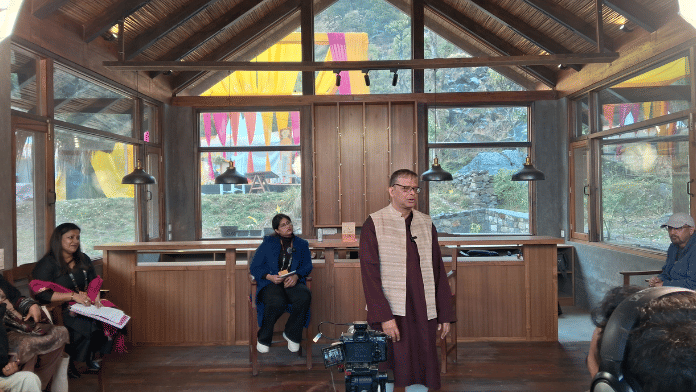
On the third day of the Nainital Literature Festival on 15 March, Pinto familiarised a packed house with the significance of palliative care — an area closely linked to euthanasia.
Palliative care is specialised medical care focused on relieving symptoms, pain, and stress caused by serious illnesses. Along with care for the patient, it also offers support services to the family and caregivers, including bereavement counselling.
Describing palliative care as “a cloak that offers warmth,” the poet asked why only one section of the medical fraternity is devoted to palliative care. “Shouldn’t every doctor, every nurse be trying to make you feel better?”
Pinto said that the answer was “patriarchy,” as confused faces looked forward to an explanation.
He added that for a long time, women doubled as mothers and caregivers. But all that changed with the dawn of the 20th century, when healthcare became quantified, and machines were developed.
“Once the money was in the work, men took over healthcare,” said Pinto, adding that this stripped healthcare of its emotion and warmth, leaving only numbers behind.
The writer picked anecdotes from his recent book, A Good Life: The Power of Palliative Care, which was also the name of the session. “Without palliative care, a hospital cannot claim to be complete,” Pinto said.
He also dismantled the misconception that only the elderly require palliative care, narrating the hardships faced by a newborn with Down syndrome and an 8-year-old with diabetes.
Also Read:SC allows passive euthanasia in Harish Rana case: What it means for end-of-life care in India
Understanding the patients’ needs
When the term “pain” was brought up, Pinto argued an uncomfortable fact: only 4 per cent of Indians in need have access to pain relief, even when the country is the biggest producer of legal opium in the world.
He added that palliative care, too, remains largely inaccessible in India. For this, Pinto blames the greedy medical professionals who refer patients in the last stage to intensive care units instead of palliative care, which would address not just the physical but also the emotional needs of the patient.
Highlighting patient autonomy in palliative care, Pinto called for a revolution against the “medical control of our lives.”
“We need them. But we need them in their place. They can’t be making decisions for us,” he said.
Responding to a question about palliative care being rooted in ancient Indian traditions, Pinto claimed that such practices have been suppressed because the medical system wants full control of everything.
“From your birth to your death, the medical fraternity wants complete control. And for that, they really want you to be in a state of manageable ill health, so that they can keep writing their prescriptions,” Pinto said.
ThePrint is the official media partner for Nainital Literature Fest.
(Edited by Insha Jalil Waziri)