





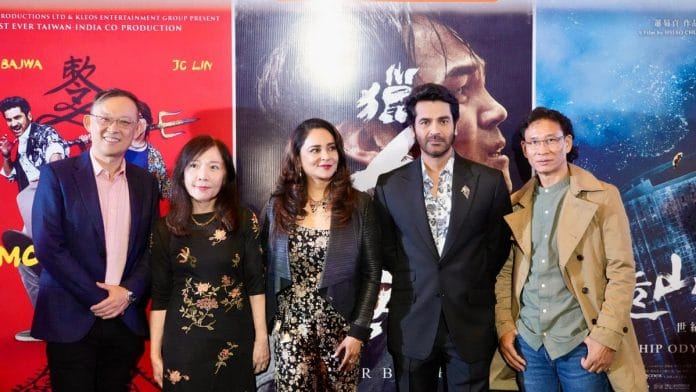



New Delhi: Taiwanese actor JC Lin picks up a trishul, shouts an Om Bhreem, and charges straight at an asura. It’s one of several ‘fusion’ moments in the horror-action caper Demon Hunters, which premiered last week at the Taiwan Film Festival.
An India-Taiwan co-production, it’s movie diplomacy between two states that don’t have formal diplomatic ties but have kept a cultural partnership going for decades.
“Cinema has the power to bridge distances, spark dialogue, and foster empathy. Through this festival, we hope to deepen Taiwan-India cultural exchange, encourage future co-productions, and inspire new bridges between our peoples,” said Dr Mumin Chen, the Representative of Taiwan to India, at the screening at PVR Vasant Vihar during the festival, organised on 12 and 13 December by the Taipei Economic and Cultural Centre (TECC) in India.
This year marks three decades of the India-Taiwan relationship, which dates back to India’s Look East Policy in 1991, followed by the opening of representative offices in 1995, with the India Taipei Association in Taipei and the Taipei Economic and Cultural Centre in New Delhi. Under Taiwan’s New Southbound Policy, India is a crucial partner for Taiwan to diversify its presence overseas.
The festival also screened Hunter Brothers and A Chip Odyssey — films that festival organisers said were chosen to show Taiwan as more than just an economic or technological power. On both days, the audience included a sizeable number of Indian Mandarin learners, besides TECC representatives and cinema aficionados.
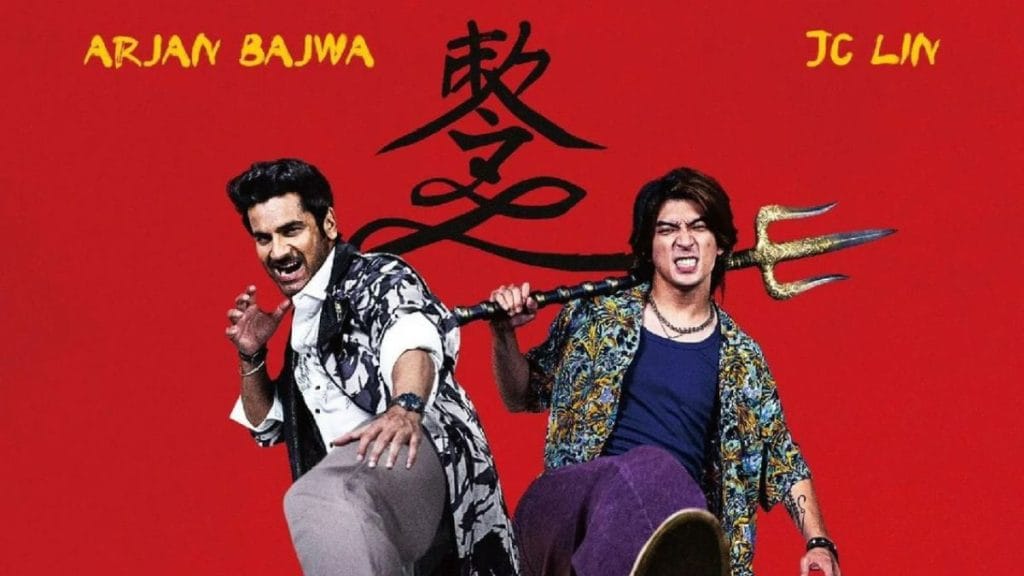
The main attraction, though, was Demon Hunters, which was initially expected to be released last year. Starring Lin as a paranormal content-maker and Arjan Bajwa as an engineer from a family of tantriks, the film’s plot seems to mirror the increasing cooperation between India and Taiwan, albeit with neat taekwondo moves, mudras, and even Bollywood-style numbers.
Directed by Chen Mei-Juin, the film is a collaboration between Lighthouse Productions in Taiwan and Kleos Entertainment Group in India. It is scheduled for a theatrical release in Taiwan on 31 December, with an India release yet to be announced.
The supernatural theme was a strategic nod to spiritual beliefs in both Taiwan and India.
“The movie shows that both Indians and Taiwanese people have steadfast faith in the divine which makes them more resilient,” said co-producer Cindy Shyu Thiel.
The other two films, too, came with their own messaging for India.
Also Read: Taj Hotels’ Ninaad was a grand gathering at Rambagh Palace. Exclusivity was intentional
Screening ‘potential’
While Hunter Brothers deals with themes such as diversity and the conflict between tradition and modernity, A Chip Odyssey is a documentary about Taiwan’s rise as a semiconductor powerhouse. Each has a message for India.
Directed by Hung En Su, Hunter Brothers stars Yi-Fan Hsu and Umin Boya as two brothers from Taiwan’s indigenous community, which is culturally distinct from the Han Chinese majority, with their own languages and histories.
After the screening, Chen commented that he hoped the diversity and social dynamics of Taiwan’s society shown in the movie would appeal to Indian audiences.
The closing film of the festival, A Chip Odyssey, directed by Hsiao Chu Chen, tells the human story behind Taiwan’s semiconductor industry. One of its central ideas is
‘shared destiny’— the argument that Taiwan’s technological rise depends on collaboration rather than retreating behind its much-discussed ‘silicon shield’.
“Preparations are underway to showcase this film in various universities in India so that people can understand the potential of India- Taiwan cooperation in the future,” said Chen after the end credits rolled.
Tanveer Malik is a TPSJ alumnus currently interning with ThePrint.
(Edited by Asavari Singh)