





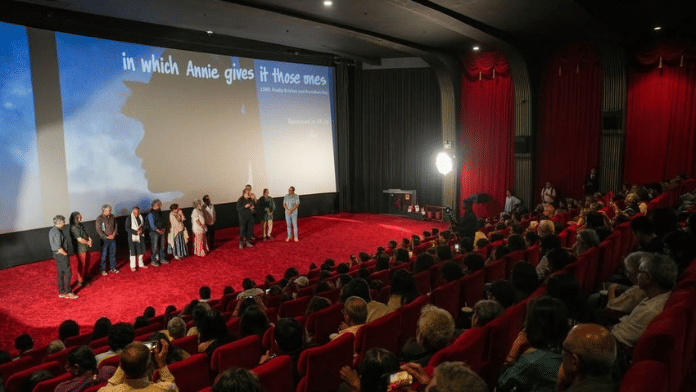



New Delhi: At the Delhi screening of her 1989 film, In Which Annie Gives It Those Ones Arundhati Roy said, “Looking back at the film now, all I see is a group of young people who were so radically different from what goes on in the world today.”
“They forgave each other, they celebrated each other’s failures, they celebrated each other’s eccentricities, it was not about who had how much of what, or how many likes on social media,” Roy reflected.
Nearly four decades later, the English-language comedy film has returned to the big screen, restored in 4K by Film Heritage Foundation and released over the weekend in 14 cities across the country. The Delhi and Mumbai premieres saw the cast and crew, includingRoy, who wrote and acted in the film, gather together to re-watch the film that captures student life in Delhi in the 1970s.
The Delhi screening was held at PVR Plaza in Connaught Place and saw Krishen in attendance along with actor Arjun Raina and a few other cast members. Roy plays Radha in the film, while Raina plays the titular character, Annie or Anand Grover.
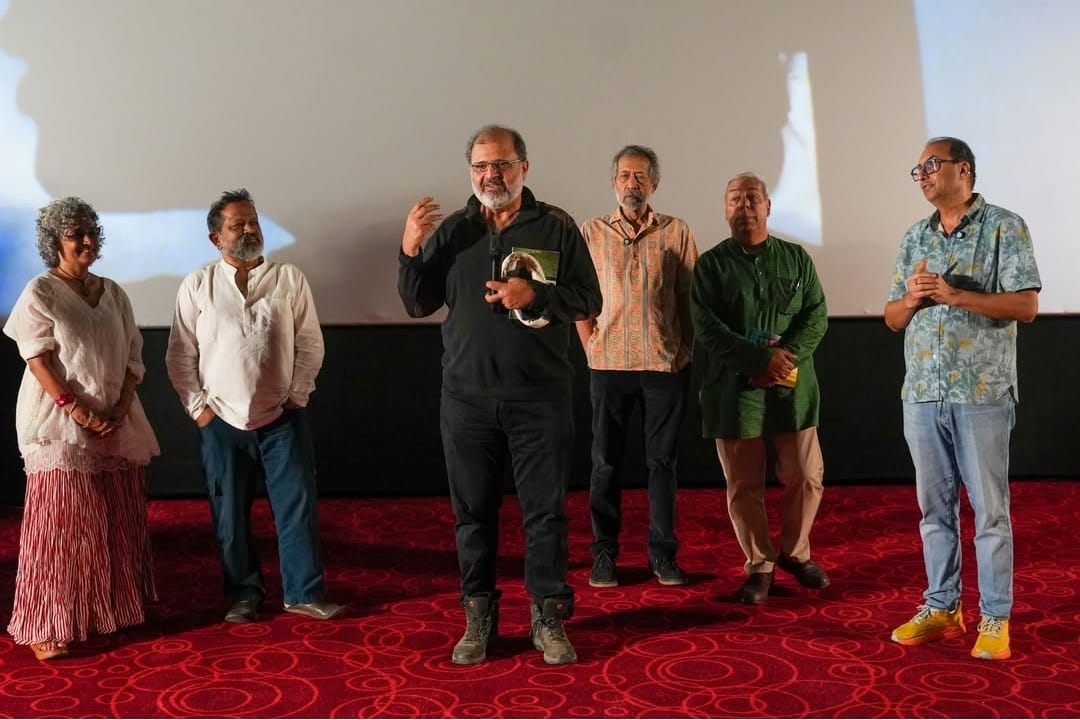
When director Pradeep Krishen and his crew were shooting In Which Annie Gives It Those Ones in Delhi in 1989, curious passersby often asked what the film was called. “The name was such a mouthful that we’d just say we were shooting Those Ones,” Krishen recalled at a screening of the film in Delhi on 14 March. “One gentleman then told another, ‘Oh, it’s a film called ‘Do Jawaan’.”
The film also features fleeting cameos by Shah Rukh Khan and Manoj Bajpayee as students, back when the duo were theatre actors in the city.
A radical thing
The film is set in 1974, a year before the Emergency was announced, at the National Institute of Architecture of Delhi, modelled on the School of Planning and Architecture. Drawn from Roy’s personal experience as a student there, the plot revolves around the idealistic Annie, who gets into trouble for making fun of the principal, YD Billimoria (Roshan Seth), known among the students as “Yamdoot.”
Roy said she drew inspiration from a variety of sources, including a film screening in a dingy Delhi theatre when a man who had taken drugs wanted to thank the cinema manager for letting him watch the film.
“When you look back at that, it looks like a kind of radical thing, a sort of joyful sound. Because all of us worked together like a band of musicians playing and jiving to the same beat. There were no stars, there was nobody special, but everybody was special,” she recalled.
The restored version was screened at the Berlin Film Festival recently, though Roy skipped the screening to protest jury head Wim Wenders’ comments that filmmakers should remain apolitical when asked about the conflict in Gaza. Earlier in 2015, Roy and Krishen returned the National Film Awards they won for the film to protest the Bharatiya Janata Party-led government’s crackdown on free speech. The movie received the National award for Best Feature Film in English, with Roy also winning the award for Best Screenplay.
Also Read: Is Delhi University no longer in demand? Vacant seats, misfit faculty, bloated syllabus
Life imitates art
In one sequence, Annie, who is in a relationship with a cabaret dancer named Bijli (Himani Shivpuri), is arrested by the police and beaten. Raina said that the scene was inspired by a real-life incident.
During the anti-Sikh riots of the 1980s, barricades stood at every junction across Delhi while the film was shooting. Raina recalled that he was detained by the police and beaten up.
“Because Roy is the most beautiful writer and woman that one has ever seen, every sordid story that one could pick up, one would go and tell her. I immediately went and told her that I was picked up and slapped, and that’s how this sequence happened,” he said.
Roy acknowledged the contribution of everyone who shared snippets from their lives in creating the characters in the film.
“There was a sense that when one puts one’s heart and soul and reveals almost everything, eventually it was a tacky thing. But yet, what is most powerful in this is every character now comes alive, everyone has a voice, every sound, every movement, and certainly it’s a work of art that I am proud of and we are proud of, and it is beautiful to share our souls with you,” said Raina, as the audience members cheered and clapped.
(Edited by Insha Jalil Waziri)