








New Delhi: India’s growth story has come with a deadly caveat: shoddy buildings and poorly designed roads. Bridges are collapsing, roads are caving in, and civil engineers are making a mockery of their profession.
Infrastructure issues were front and centre of policy debate this year, as news of infrastructure collapse kept making it to the front page. It brought to light the corruption in the civic sector and civil servants’ lackadaisical attitude regarding norms and procedures.
Here are the five biggest infrastructure debacles of 2025:
1. Gambhira Bridge collapse in Padra
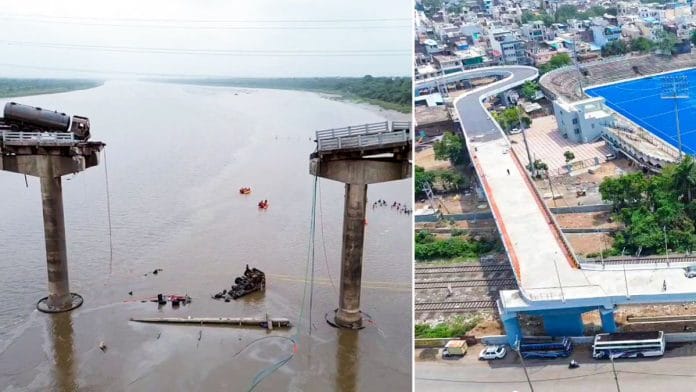
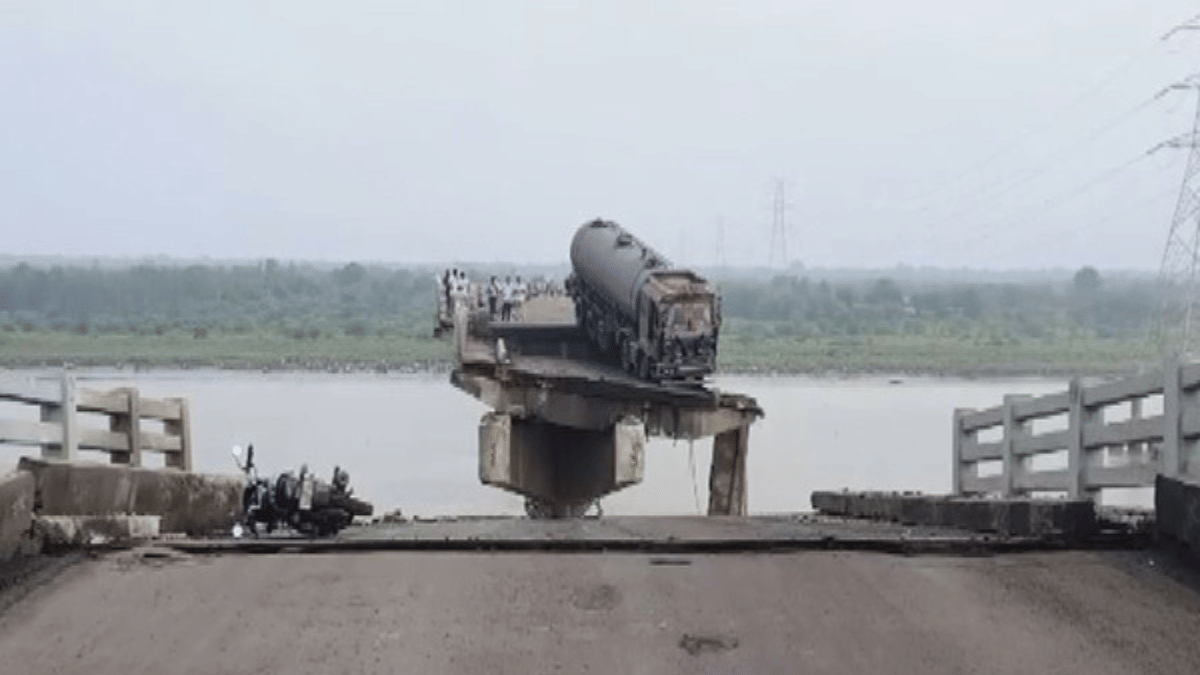
At least 20 people were killed and nine injured in Gujarat when a portion of the Gambhira Bridge collapsed into the Mahisagar River on 9 July.
Multiple vehicles, including trucks and auto rickshaws, plunged into the water. Casualties included children.
The bridge was built in 1985 and was a crucial link for the Saurashtra region of Gujarat. Four officials from the Road and Building Department were suspended.
Also read: Who is really running Nagpur & Mumbai? Influencers, proxy corporators, not civic council
2. Pune bridge collapse
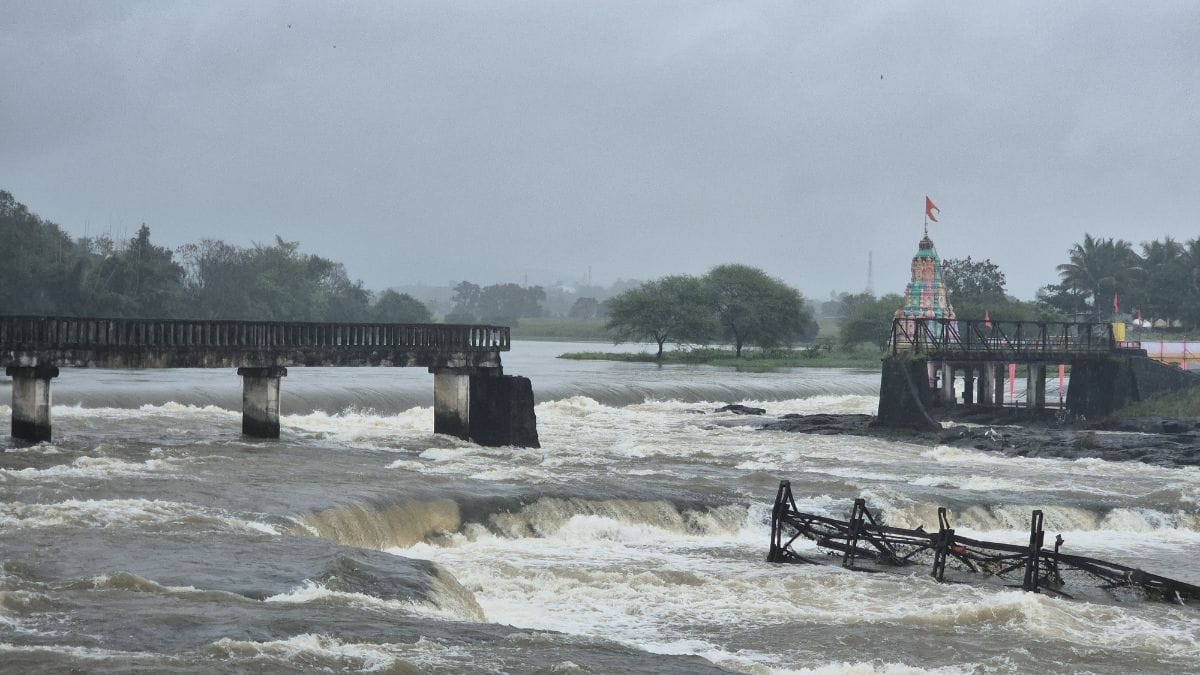
At least four died and 51 were left injured after an iron bridge, built in the 1990s, collapsed in Pune on 15 June. It was a footover bridge on the Indrayani River and caved in under the weight of 100 people.
The tourists ignored the warning sign against using the bridge. And the authorities never began work on a new parallel bridge to replace the 30-year-old structure, for which Rs 8 crore had been sanctioned.
3. ‘Right-angle’ bridge in Bhopal
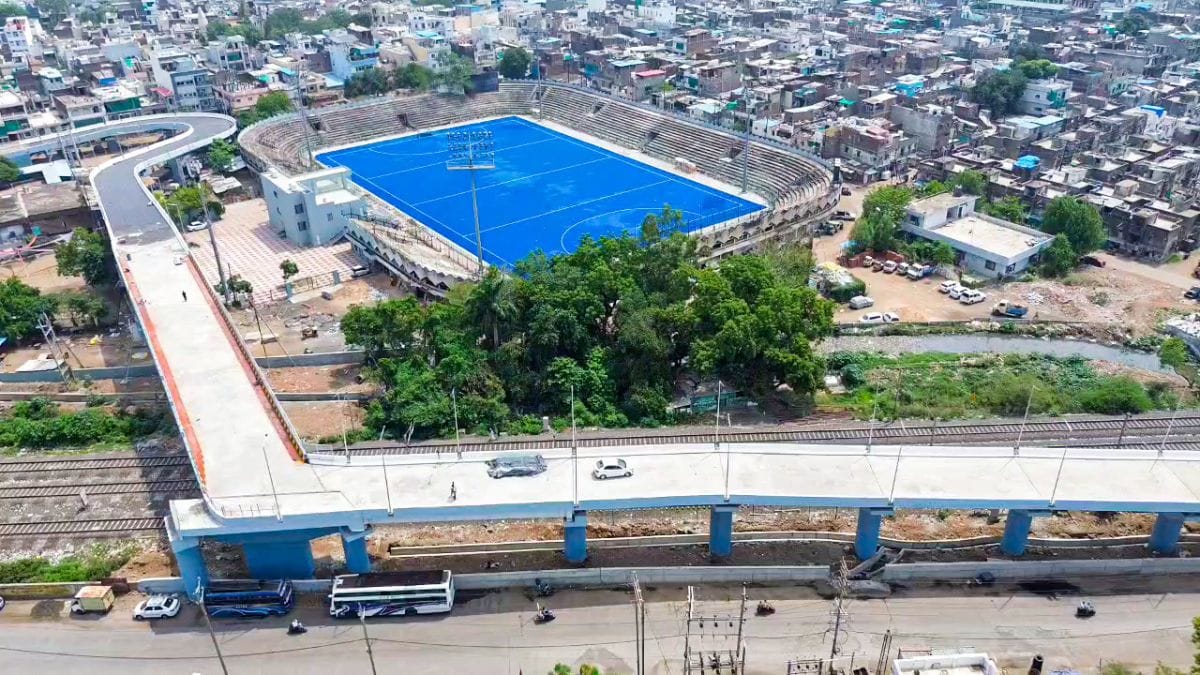
Bhopal’s Aishbagh Railway Overbridge turned heads for its dangerous, almost 90-degree turns.
After backlash on social media, the state government suspended seven officials and blacklisted the construction firm and design consultant.
However, the firm approached the Madhya Pradesh High Court, which appointed an expert committee to look into the case. It turned out that the turns weren’t 90 degrees, but 119 degrees, in line with the General Arrangement Drawings by the PWD Department.
Also read: Indian cities are a mess of overhead wires. Delhi will pay Rs 8 cr to clear just 5 km
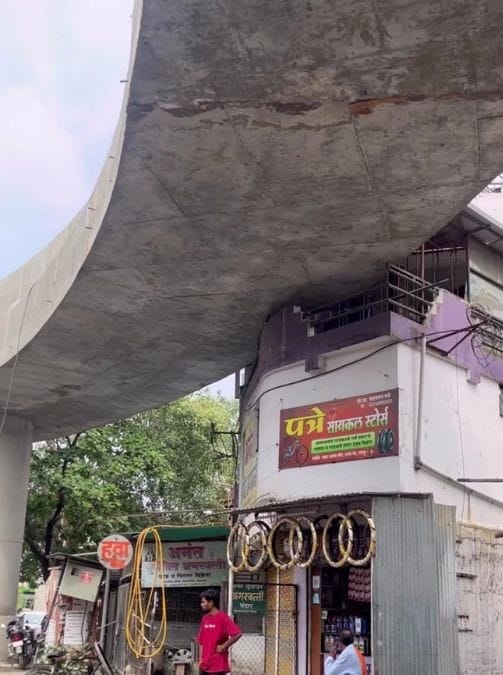
4. Nagpur highway through the balcony
A part of the Indora-Dighori flyover sliced through the balcony of a resident in Nagpur’s Ashok Square.
The National Highway Authority of India (NHAI) has said it is not at fault—the house is built in an encroached area. The house owner also reportedly contends that he doesn’t see a safety issue in the flyover passing through his balcony.
5. Malappuram road cave-in
In Kerala’s Kooriyad, an elevated section of the NH-66 caved in on 19 May, damaging cars that were passing 30 feet below.
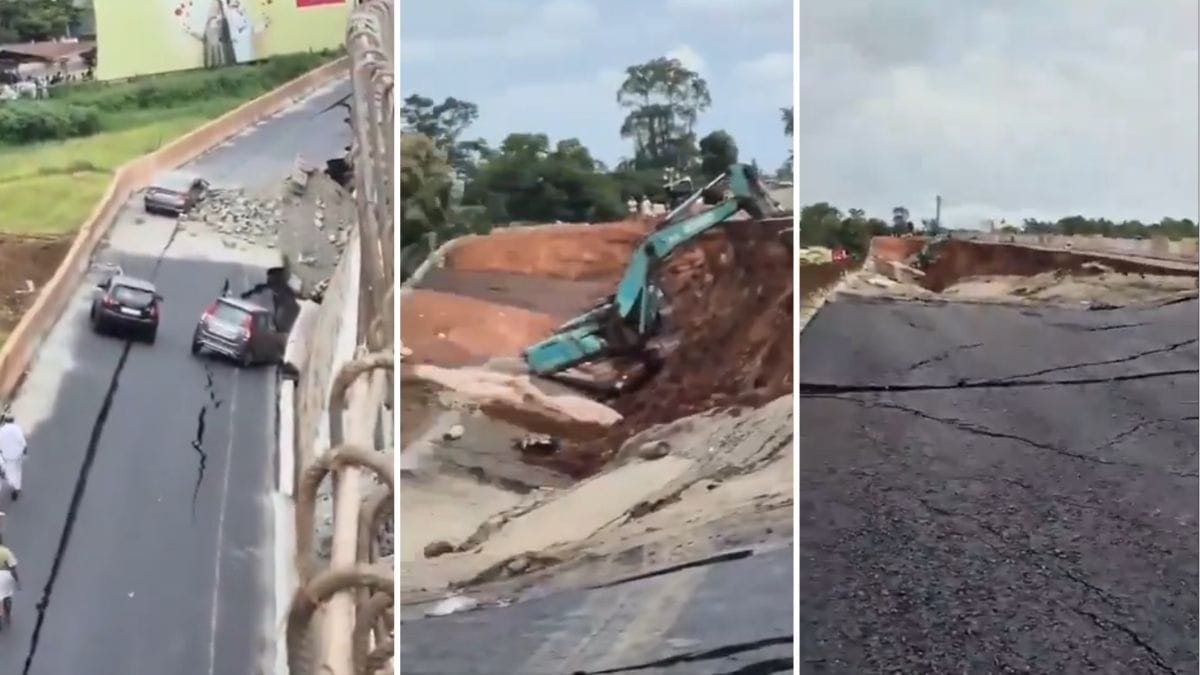
In August 2025, the Public Accounts Committee released a report on the cave-in and found that sanctioned costs were lower than actual costs. It noted that the project from Kadambattukonam to Kazhakuttom was approved at Rs 3,684.98 crore, but the contract was awarded for just Rs 795 crore—only about 22 per cent of the approved amount.
The PAC also noted that subcontracting of work makes it difficult to hold contractors accountable.
(Edited by Prasanna Bachchhav)