








New Delhi: India’s Finance Minister Nirmala Sitharaman is expected to prioritize job-creating growth while emphasizing fiscal prudence in Sunday’s budget, as the country grapples with geopolitical risks and steep US tariffs.
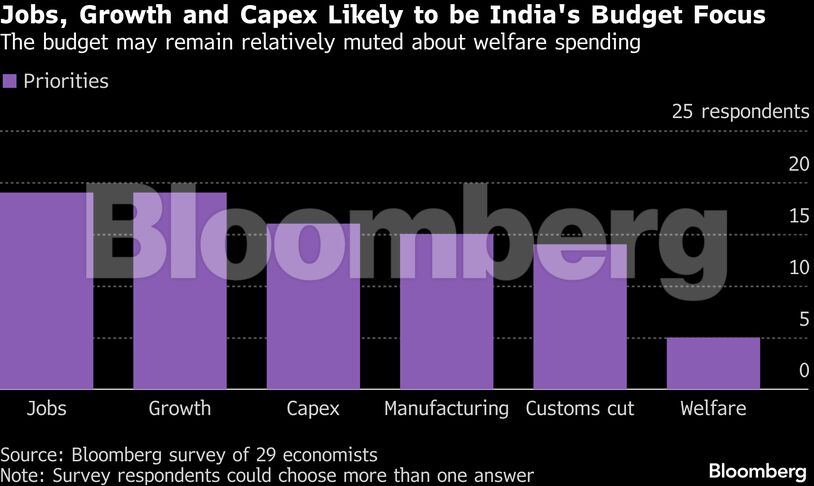
In the budget speech, due at 11 a.m., the minister is expected to outline higher spending on roads, ports and railways to maintain demand, create jobs and insulate the world’s fastest growing major economy from external headwinds, according to a survey of economists by Bloomberg News. They also expect a lower budget deficit target of 4.2% of gross domestic product in the fiscal year beginning April.
“Budget will look to strengthen the growth impulse by supporting domestic drivers of consumption and investment especially as global economic environment remains challenging,” said Gaurav Kapur, chief economist at IndusInd Bank Ltd.
Simmering trade tensions with Washington have raised concerns over the South Asian nation’s outlook, prompting Prime Minister Narendra Modi to overhaul archaic labor laws and cut consumption tax to spur domestic demand. The budget will build on those steps to safeguard jobs and incomes without a blowout in spending.
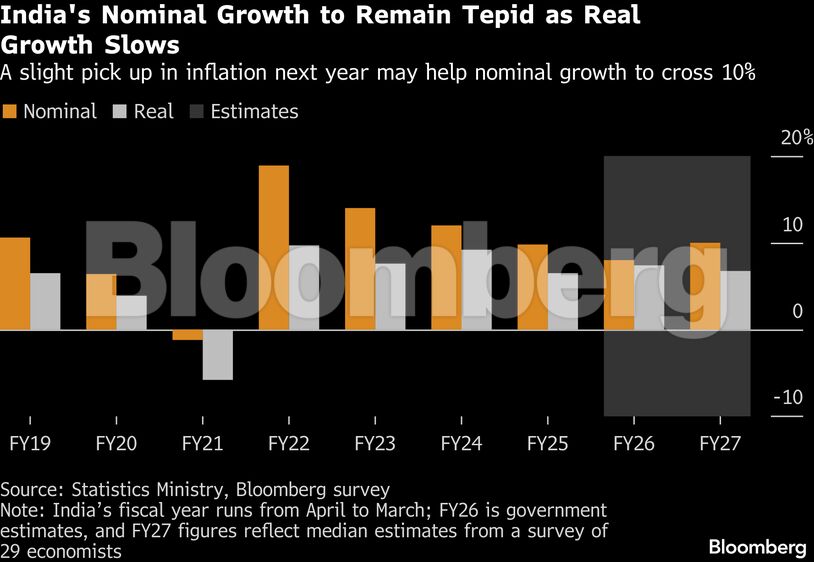
These measures are crucial for an economy projected to grow 6.8% to 7.2% in the next fiscal year starting April 1, according to the Economic Survey released on Thursday. The forecast, slightly slower than the current year’s 7.4%, exceeds analysts’ consensus of 6.6%.
Separately, Modi’s government is ramping up efforts to diversify India’s trade ties to reduce reliance on traditional partners such as the US and China. It agreed to a landmark free trade deal with the European Union that is seen as key to boosting exports and investment, while Canada is emerging as the next focus as New Delhi seeks new growth engines amid rising global protectionism.
The deals are designed to find new markets for exporters battling punitive 50% tariffs imposed by US President Donald Trump, partly linked to India’s purchase of Russian oil. The tariffs have also pressured the rupee, which tumbled nearly 5% last year.
In the survey, India’s chief economic advisor V. Anantha Nageswaran said Asia’s third-largest economy must boost its manufacturing and undertake reforms to sustain growth in a risky global backdrop.
Despite its commitment to curb debt-to-GDP ratio, the government is likely to resort to record bond borrowing. Economists expect gross market borrowing of 16.5 trillion rupees ($179 billion) and net borrowing of 11.6 trillion rupees.
While Modi’s popularity has remained resilient, there are growing expectations that his government may use Sunday’s budget to court voters in key states such as Tamil Nadu and West Bengal. The ruling party plans an aggressive campaign in regions where it has traditionally remained a minor player.