





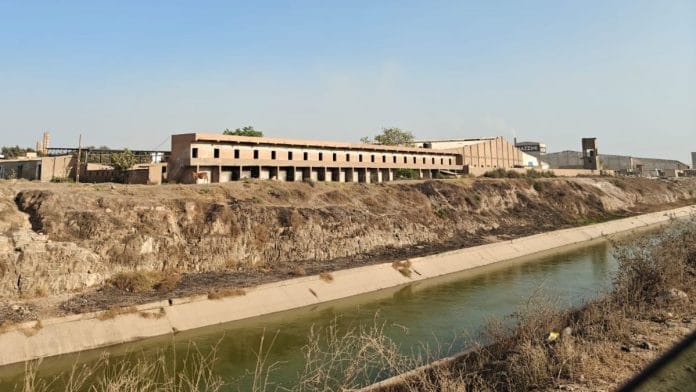



Morbi: The kilns have gone cold. Yards are deserted. And thousands of kilometres away, a war that Morbi neither started nor can end is quietly dismantling the livelihoods of the workers who built India’s ceramic capital.
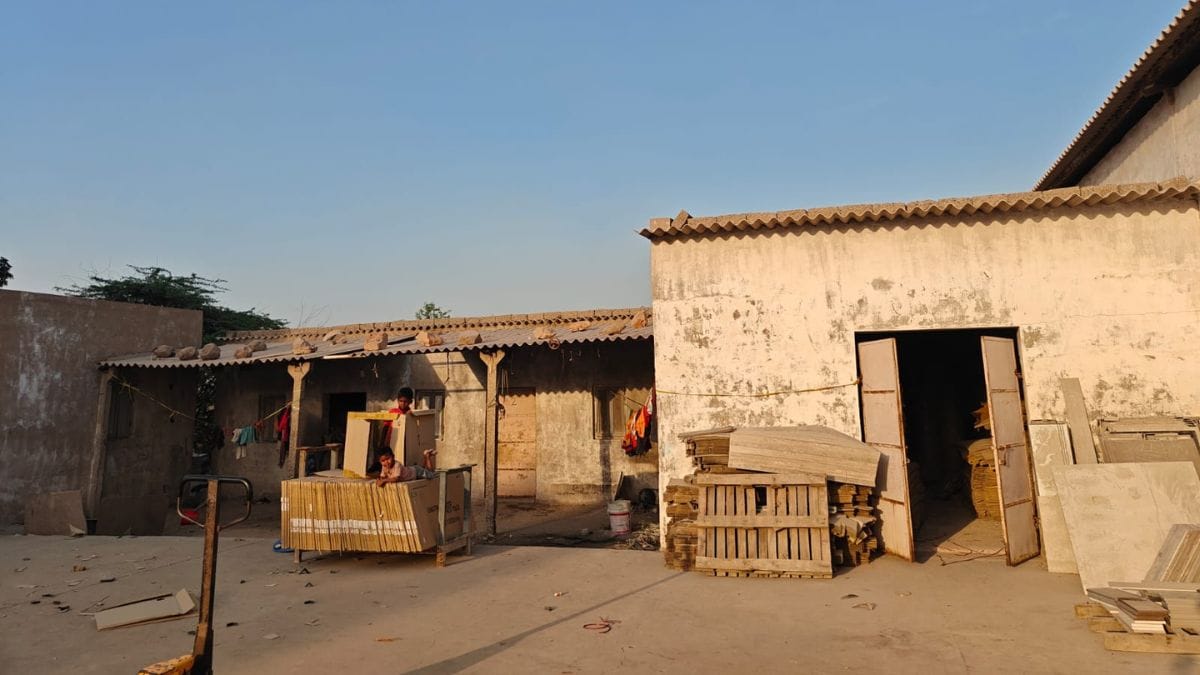
Radhe, a daily wage worker from Bihar’s Purnia district, sat in an open field near a factory in Lakhdhirpur on a scorching afternoon, his two children — aged three and five — beside him. He reached into his rucksack, pulled out two chapatis, and handed them over. “That’s all I have,” he said, before walking away.
Around him, a yard that once churned with trucks and labourers loading and unloading material stood empty. The only task left for Radhe that day was loading cartons of finished tiles onto a truck—the last thing left to do when the propane runs out and the kilns cannot fire.
Radhe had come to Morbi looking for what his village in Purnia could not offer. He found it, for a while: work loading cement, assisting in kiln operations, polishing and sorting tiles, packing finished goods. In normal times, he would earn Rs 16,000 a month. That has since fallen, and by 15 March, even that may be gone.
“We have been told there will be no work for us after 15 March. If we don’t get our salary, we will have to go back home; there is no other option,” the 34-year-old said.
What has brought Morbi—the world’s second-largest ceramic producing cluster, responsible for 80 to 90 percent of India’s ceramic exports—to this point is the conflict in West Asia. Now in its second week, US and Israel’s joint strikes on Iran on 28 February triggered a larger conflict that has effectively closed a vital shipping channel in the region. In one of its many ripple effects, it fractured supply chain for propane, the liquefied petroleum gas on which Morbi’s ceramic factories overwhelmingly depend.
Propane is sourced primarily from Saudi Arabia and other West Asian countries. It is transported by vessel to Kandla port in Gujarat and then by tanker to factories across Morbi, about 130 km apart.
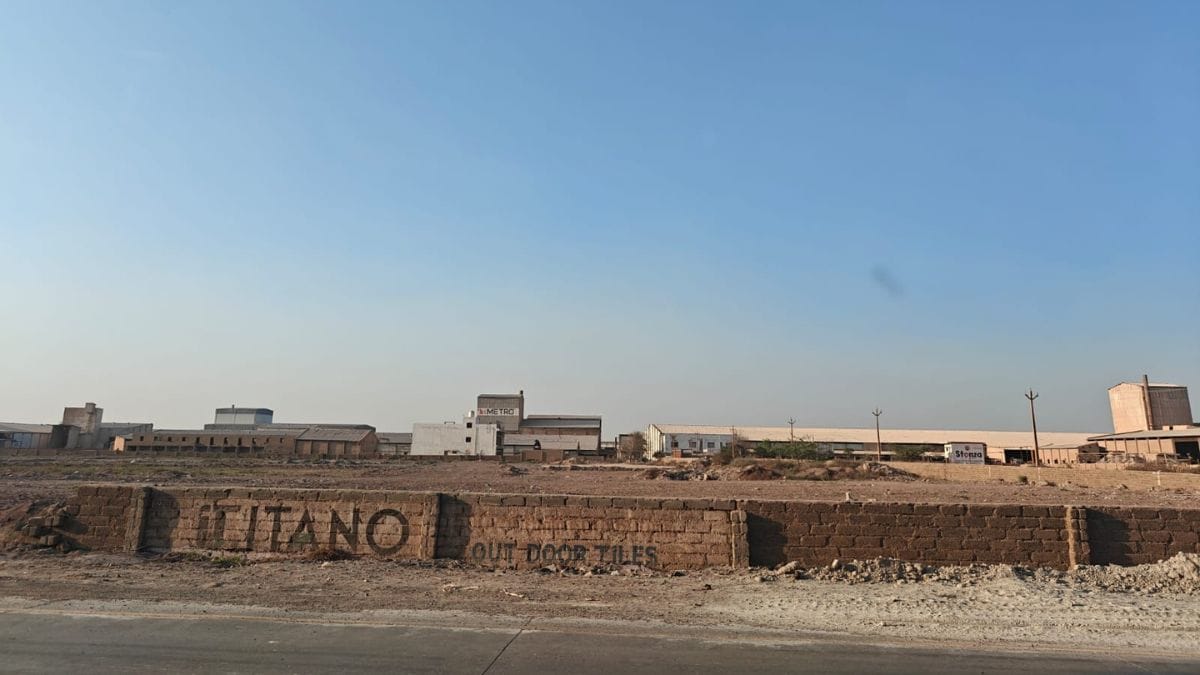
Since the conflict escalated, those shipments have been severely disrupted. More than 200 factories have already shut completely, according to industry leaders. The rest are running at reduced capacity on limited natural gas that has been routed through Gujarat Gas and private suppliers. Industries say they are counting down the days when they may have to stop operations completely should the war not end.
Also Read: How Iran war threatens India’s ‘Goldilocks’ economy & puts a dragon in the room
A town held in limbo
Forty-two-year-old Shambhu Kumar lives in factory-provided quarters near Salana in Morbi. He came from Bihar’s Katihar district four years ago and is the sole earner in a family of six. His salary sustains the household and covers his children’s school fees.
He still has a job—for now—but the fear of what follows a shutdown is constant.
“The owner is a nice man. He has promised to keep me here even if the factory shuts for a few months. But what about my family back home,” he asked.
For Shambhu, as for Radhe, the choice is brutal: stay and hope the crisis passes, or return to the villages they left precisely because there was no work there. Leaving Morbi, he acknowledged, would mean beginning again from nothing.
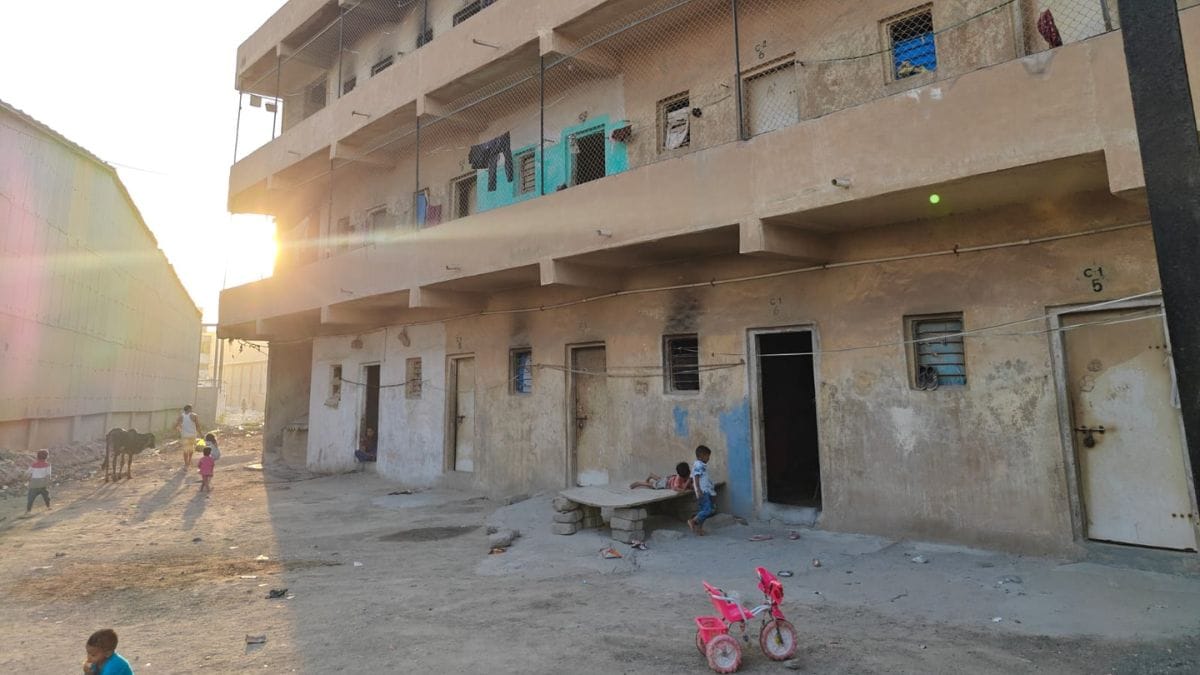
Lakhdhirpur and Salana, along with Lalpar and Jambudiya in Gujarat are home to dozens of such workers—migrants from Bihar and Uttar Pradesh, drawn to Morbi’s factories by the promise of steady wages and, for many, provided housing.
According to data from the Gujarat government’s Industries & Mines Department, Morbi is the world’s second-largest producer of ceramic goods, with approximately 1,200 manufacturing units generating 60 lakh tonnes of output annually.
The cluster supports nearly nine lakh livelihoods, with around four lakh workers directly employed in ceramic factories and related units.
In 2024–25, exports from Morbi were valued at approximately Rs 15,000 crore, according to data presented at the Vibrant Gujarat Summit in 2024.
With the district accounting for most of ceramic exports from the country, India is the world’s second-largest tile producer and exporter, at 2.55 billion square metres of tiles exported annually. It is the third largest ceramic producer overall, contributing around 13 percent of global production.
Over 200 factories have shut entirely; the rest are functioning partially, dependent on whatever gas the Gujarat government can channel to them.
Manoj Aervadiya, president of the Morbi Ceramic Association, said the situation could deteriorate sharply. “The factories partially functioning are expected to run out of supplies in the next 10 days. Till now, there is no solution we see to the war,” he said, estimating that 400 to 450 more factories could shut if no alternative supply is found.
On 9 March, the Ceramic Association, which represents 600-odd factories, met Gujarat Chief Minister Bhupendra Rajnikant Patel. Aervadiya said the state government has pledged support, but acknowledged that options are limited when the trigger is a war in which India has no direct role.
Industrialists are now pressing both state and central governments for a long-term strategy to reduce dependence on West Asian fuel imports.
The immediate difficulty for factory owners is not only the absence of gas. Haresh Bopaliya, president of the Morbi Ceramic Manufacturing Association who also runs his own factory, said production lines across the district had been halted, with orders half-fulfilled and stock half-made.
“A lot of my stock is half made, because of the war we don’t know when we will get propane again and when we will be able to complete the production. I have had to shut down my factory like many others,” he said.
Nikunj Bhojani, owner of Theo’s Tiles in Morbi, faces the same paralysis. His factory has exhausted its gas supply and workers are now confined to packing the tiles produced before the shortage hit.
“A lot of our produce is incomplete and we don’t know when we will be able to complete it—we are packing up and selling whatever we have made,” he said.
Shops that sell the tiles
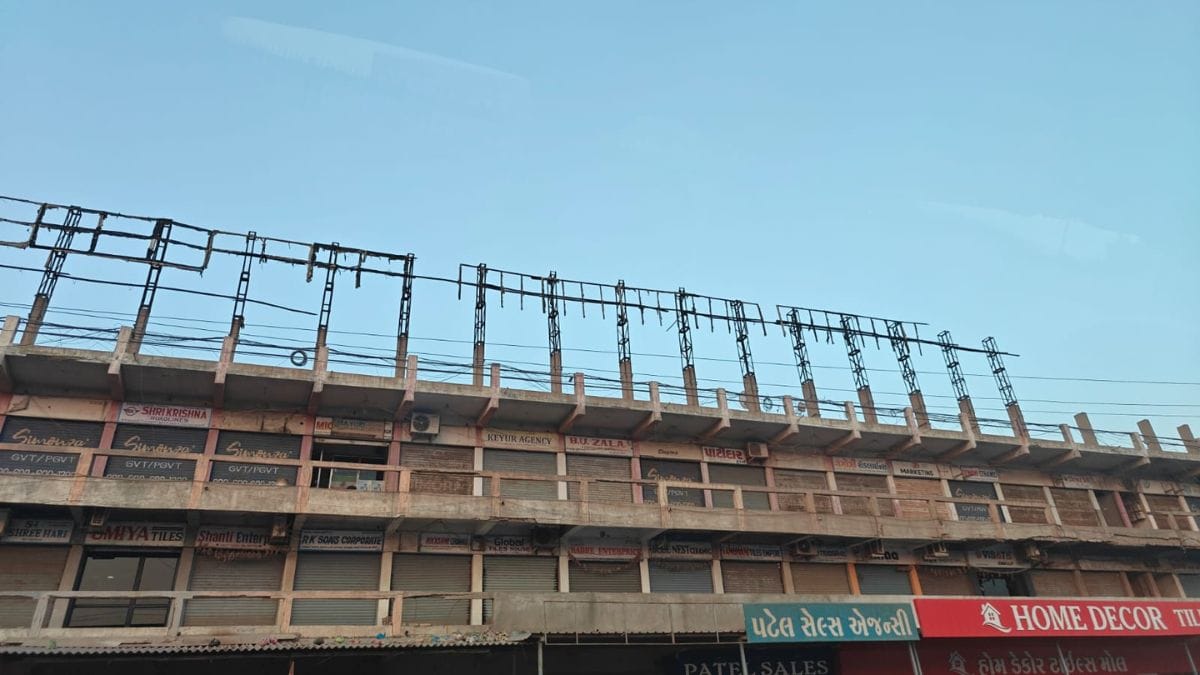
The disruption has extended downstream to retail. A hub of tile retailers in Morbi was almost completely deserted, and most shops shuttered. The workers still present were bracing for salary cuts and delays.
Kamala Devi, a salesperson at one of the shops selling tiles, said her employer had already communicated that wages would be reduced and delayed. “The owner has said we will not get some amount of our salary, that too (will be given) on the 20th (of March). Now, how do we go on for that long without money? I have to pay for my son’s school fee along with rent and other necessities,” she said.
At Theo’s Tiles, Karshan, one of the factory workers, had been given a similar warning.
“We have been told that if this situation doesn’t get better, we will get paid 50 percent of our salaries next month; which will make it difficult to run a home and buy medicines for my ailing mother in law,” he said.
Factory owners, he added, may manage to sustain wages for a few months, but if gas supplies do not resume, even that shelter would collapse.
The case for self-reliance
Beyond managing the immediate crisis, Morbi’s industrialists are asking harder questions about why the industry was so exposed in the first place.
Khimji Kundariya, former president of the Morbi Ceramic Association and owner of three factories in the town, said the industry had long relied on propane imports from West Asia—a dependence this crisis has now fully exposed. He called on the central government to prioritise green hydrogen development as a long-term alternative.
“I urge the central government to work on their green hydrogen mission. There is massive potential to become self-reliant if (we) produce our own fuel,” Kundariya said.
In the present, Kundariya said, Gujarat Gas and private suppliers were providing only limited volumes.
“Another 400 factories could shut down in the coming days. We may be forced to relieve our labourers because there is no clarity on when the situation will improve. Gujarat Gas and private suppliers are currently providing only limited gas; for years, the industry has depended on propane gas imports from countries such as Qatar and Iran,” he said.
A market paused at the wrong moment
The crisis arrived at a particularly costly moment for India’s ceramic sector.
Analysis of Gujarat government data shows that the domestic ceramic tiles market was projected to expand from $6.14 billion in 2023 to $9.23 billion by 2028, at a compound annual growth rate of 8.49 percent.
The Asia-Pacific region, which Morbi supplies a significant portion of, accounts for more than 39 percent of the global ceramic market.
Industry experts say the supply disruption risks undermining India’s competitive position precisely when global demand is rising and rivals are watching closely.
Over the past two years, the Gujarat government extended Rs 115 crore in financial assistance to 2,200 beneficiaries in Morbi under various industrial incentive schemes, according to Industries & Mines Department data dated 6 January 2026. That support was intended to deepen an already fast-growing industrial base.
Not ceramics alone
Reverberations from the West Asia conflict are spreading beyond the ceramic industry.
Morbi has over the past decade also emerged as a significant hub for polypropylene (PP) woven products. Around 150 PP woven product units operate in the district, producing nearly five lakh metric tonnes of fabric annually—a sector with an estimated annual turnover of Rs 5,500 crore, according to the state government.
The industry provides direct and indirect employment for 15,000-20,000 people. But, around 40 percent of its raw material is imported.
Former Morbi MLA Lalit Kagathra, who owns a plastic factory in the district, said raw material costs had more than doubled since the crisis began. “A tonne of plastic that used to cost us ninety thousand is now costing us close to two lakh rupees,” he said.
He alleged that large raw material suppliers were exploiting the disruption to inflate prices. “Since the war began, the large suppliers have begun dictating prices; they see one crisis in the world and take that as a cue to increase prices substantially; they are misusing the fact that we are not getting imports,” Kagathra said.
The sector faces a double strain: supply disruption compounded by rising transportation costs, a combination that industry insiders say is squeezing manufacturers from both ends.
Morbi’s wall clock and gift article industry is feeling the pressure too. The district is home to between 150 and 200 wall clock manufacturing units—the highest concentration in India—employing an estimated 10,000 to 12,000 people, nearly 60 percent of whom are women.
Rising raw material and freight costs are now beginning to weigh on margins there as well.
ThePrint has reached out to Gujarat’s principal secretary of the Industries and Mines Department Mamta Verma with queries. The report will be updated if and when Verma responds.
(Edited by Prerna Madan)
Also Read: India has lost the language for Iran