





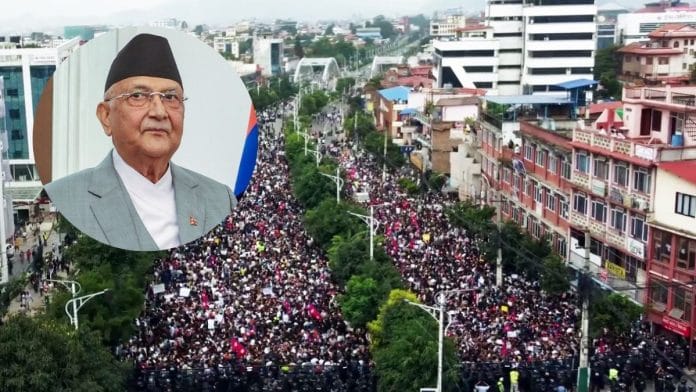



New Delhi: Former Nepal PM K. P. Sharma Oli has been arrested for alleged culpable homicide in connection with the violent protests of September 2025, which led to the fall of the government and resulted in at least 77 deaths. The arrest comes a day after a new government was sworn in.
Authorities also arrested Ramesh Lekhak, the former home minister, who has been accused of ordering security forces to fire on demonstrators.
In its first meeting, the newly formed Cabinet, chaired by Prime Minister Balendra Shah, decided to immediately implement the findings of a high-level commission that investigated the events.
Oli was detained at his residence in Bhaktapur, on the outskirts of Kathmandu, at around 5 am local time, the Kathmandu Post reported.
The arrests followed a formal complaint by the home ministry, which led to the issuance of arrest warrants.
Announcing the detentions, the newly-appointed home minister, Sudan Gurung, who was part of the protests, wrote on social media, “No one is above the law. This is not revenge against anyone; it is just the beginning of justice.”
In a separate post, he added a more pointed message: “You messed with the wrong generation.”
Oli and Lekhak’s arrests come after a government-backed investigation into the September protests. Police officials said the action is being carried out to implement recommendations made by a commission led by former special court judge Gauri Bahadur Karki.
On 21 September 2025, the interim administration formed a judicial commission under the Commission of Inquiry Act. Former judge Gauri Bahadur Karki was appointed to head it, along with former Assistant Inspector General (AIG) of Nepal Police Bigyan Raj Sharma and legal expert Bishweshwor Prasad Bhandari. The commission was given three months to study the excesses and was expected to make the report public before the elections. That did not happen, leading to criticism.
Amid mounting pressure to make the findings public, excerpts of the report began surfacing in the media Wednesday morning. It was only later that evening that the government formally placed a copy in the Federal Parliament Secretariat’s library. However, spokesperson Ekram Giri said that, as of Thursday evening, the secretariat had yet to receive any official communication regarding the report.
The 907-page Karki report has since drawn criticism for being disjointed and lacking clarity, with analysts warning that translating its recommendations into action may prove challenging.
The commission found evidence of “criminal negligence and recklessness” by officials, citing a failure to act on intelligence warnings and to control the use of force. While the report said it could not conclusively establish that an explicit order to open fire had been given, it concluded that Oli and the authorities made no meaningful effort to stop the shootings, resulting in civilian deaths, including minors.
The panel recommended that Oli, Lekhak, and the then police chief Chandra Kuber Khapung face prosecution under Nepal’s penal code, with potential prison sentences of up to 10 years.
The report also called for action against several other senior officials, including security chiefs and bureaucrats, while recommending formal reprimands for others—measures that could affect future promotions within Nepal’s security establishment.
The Communist Party of Nepal (Unified Marxist–Leninist) condemned Oli’s arrest, calling it “politically motivated”. Party leader Raghuji Pant said the investigation report lacked sufficient grounds, while former FM Pradeep Gyawali described Oli’s arrest as “political revenge” on the party’s chairman.
(Edited by Viny Mishra)
Also read: Balen Shah starts his PM stint the Hindu way. Power, populism & patience will define his rule