








New Delhi: The recently signed Comprehensive Economic Partnership Agreement (CEPA) between India and Oman will see Muscat allowing the export of rough marble blocks, thereby reducing New Delhi’s dependence on Türkiye. Since Operation Sindoor, India has remained miffed with Ankara for its continued support to Pakistan.
“Marble blocks were banned from being exported from Oman. We are the first country for whom they have opened marble blocks, which will now be available in India from Oman… Instead of importing finished marble, we will now be able to provide jobs…have India produce fine marble tiles and marble flooring,” Piyush Goyal, the Union Minister for Commerce and Industry, said Friday at a press conference on the free trade agreement (FTA) between India and Oman.
Goyal added: “The good part is it will replace our imports from Türkiye. We will get quality blocks from Oman, and they are better priced also, and in the competition we will get even better pricing.”
Addressed the media on the #IndiaOmanCEPA, signed yesterday in Muscat. 🇮🇳🇴🇲
Highlighted how the India-Oman Comprehensive Economic Partnership Agreement (CEPA) will open new avenues for trade, provide a major boost to India’s exports & create enhanced opportunities for businesses… pic.twitter.com/A6QULU5KRz
— Piyush Goyal (@PiyushGoyal) December 19, 2025
For Indian marble block importers, Türkiye accounts for around 55 per cent of all imports. India imported roughly $189.19 million worth of marble blocks from Türkiye. Its total imports of these goods were $339.81 million in the last financial year, with Italy and the UAE a far second and third for the sourcing of marble blocks.
The minister highlighted that the two countries are hoping to operationalise the agreement within the next three months, which will see Indian exporters gain duty-free access to the Omani market immediately, covering close to 96 per cent of the tariff lines, while another 2 per cent of duties will slowly be reduced within the next few years.
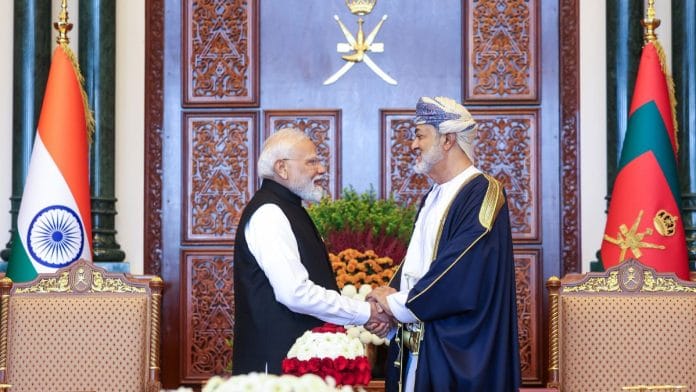
The CEPA, signed Thursday during Prime Minister Narendra Modi’s visit to Muscat, is the sixth FTA India has signed in the last four years. It is the second agreement with a nation from West Asia, following the agreement with the United Arab Emirates first announced in 2022.
Trade between India and Oman stood at $10.61 billion in the last financial year (2024-2025) and is poised to grow considerably once the CEPA comes into force. Oman had banned exports of raw marble exceeding 3 cm in December 2019.
Ties between New Delhi and Ankara have chilled in the last few months, especially with Türkiye’s consistent support for Pakistan, especially in the aftermath of Operation Sindoor. Last month, Ankara sat on the permission allowing the transport of Apache military helicopters from the US to India through its airspace, thereby delaying the arrival of these defence platforms at New Delhi.
India did not send a representative to the Turkish national day celebrations at the end of October in New Delhi, held at Ankara’s embassy in the Indian national capital. Turkish unmanned aerial vehicles were used by Pakistan during Operation Sindoor–the 87-hour conflict between New Delhi and Islamabad in May of this year.
Ankara has also consistently raised the issue of Jammu and Kashmir at the international stage, such as the United Nations General Assembly, which has further irritated India. India has sought to engage countries such as Cyprus in recent months. Nicosia has been locked in a territorial dispute with Ankara since 1974.
Also Read: Why India and Oman remain among the oldest strategic partners of the Indian Ocean world
Engineering goods, services & pharmaceuticals set to gain
The India-Oman CEPA is set to allow Indian firms to gain a new market, especially in the exports of machinery and mineral exports. The Indian Ministry of Commerce has indicated Indian mineral exports have the potential to grow threefold once the FTA is operationalised.
India currently exports roughly $1.8 billion worth of minerals such as petroleum oils, iron ore etc. The potential the Indian Ministry showcased Friday at the press conference is for Indian exports in this sector to eventually grow to be worth over $7.2 billion.
Base metals such as ferrous products, tubes, copper, screws, bolts and nuts is another sector where Indian exporters have a large potential to gain. India currently exports roughly $303.26 million worth of these goods to Oman, with the potential estimated to be worth $2.91 billion.
The main sector where Indian firms are set to gain is the services sector. Indian services exports to Oman are currently worth roughly $665 million in 2024. Oman’s service imports in 2024 stood at $12.52 billion. India’s current 5.31 per cent market share is considered to be suboptimal, given that this area is considered to be a strength of the Indian economy.
Oman has made a number of commitments to boost India’s services footprint in the West Asian nation. It has offered visas for up to four years for intercompany transferees, contractual and service suppliers. Business visitors will be allowed to stay up to 90 days, while independent professionals will be given visas for up to 180 days.
Furthermore, Oman has assured India that for Indian firms, the employment rules will be rationalised, allowing for its firms to bring more Indian nationals to Muscat if it sets up an enterprise there. Apart from the local requirements to hire Omani nationals, Indian firms will be allowed to employ Indian nationals for the rest of its needs.
“Indian investments will provide jobs to our people. This is a permanent facility. Even if they change their laws, this will remain entrenched in the FTA. It is a binding commitment,” Goyal said.
(Edited by Shashank Kishan)
Also Read: Türkiye is expanding its influence in India’s neighbourhood — after Pakistan, now Bangladesh