





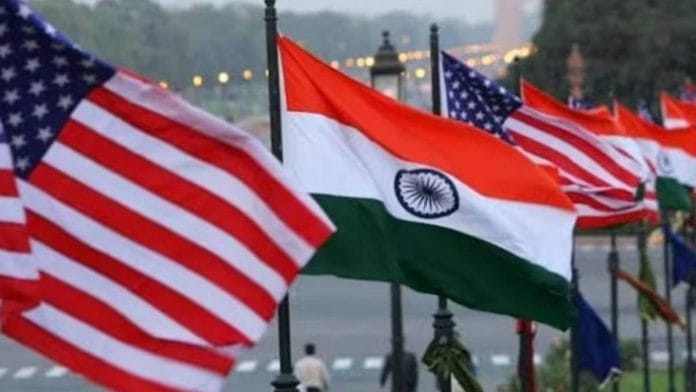



New Delhi: A number of products including Harley Davidsons, a few industrial and medical devices and some agricultural imports are set to become cheaper for Indian importers, while exporters are set to gain with the reduction or elimination of a number of tariff lines by the American administration as a result of the India-US trade deal.
Sources highlighted that day one of the interim agreement coming into effect will see Harley Davidson motorcycles between 800 CC and 1600 CC see the elimination of all duties and tariffs. The major concession given to the US comes after President Donald Trump has consistently complained of high tariffs imposed on this brand of motorcycles by India.
Electric vehicles (EVs) are out of the scope of the current deal, sources confirmed, while highlighting that only tariff reductions on internal combustion engines (IC) vehicles are part included in the deal.
The deal first announced Monday by Prime Minister Narendra Modi and US President Trump is set to be inked within the next 30-45 days. The two countries issued a joint statement Friday detailing the contours of the deal. Senior officials confirmed that the final interim agreement should be ready in a few days, and will go through the legal vetting processes before being inked in March.
As a part of the deal, Trump has already removed the 25 per cent punitive tariffs on Indian merchandise, which were imposed August 2025 due to New Delhi’s purchases of Russian crude. The effective tariff rate from 7 February for Indian merchandise to the US is 25 per cent. This “reciprocal tariff” will be further reduced to 18 per cent in the next three to four days, once an amended executive order is issued by the US President.
India will reduce or eliminate its tariffs on American merchandise imports only after the deal is inked. The interim agreement is the “first tranche” of a larger bilateral trade agreement between India and the US, Piyush Goyal, India’s Commerce and Industry Minister said at a press briefing Saturday.
For its part, India is set to eliminate tariffs on a number of imports in a “calibrated” fashion, Goyal announced. He promised that farmers are “protected”, while certain goods such as dried distillers grain (DDG) and other products used in the animal husbandry sector in India will become easier for American exporters to access.
“There are few areas that India has opened. It has allowed imports of wine and spirits, with a minimum import price. Pistas, walnuts, almonds, lentils—which have been allowed since Congress governments—in these sectors there is a phased elimination of tariffs. In industrial production, there are several goods that are important for India, such as cancer treatment devices, medical devices; and some cosmetics are being opened, organic and inorganic chemicals—in these sectors there is a reduction of duties,” said Goyal.
The Commerce and Industry Minister clarified that genetically modified crops, meat, poultry, dairy, soybean, maize, rice, sugar, cereals, millets, banana, strawberries, citrus fruits, cherries, green peas, chickpeas, moong, oil seeds, groundnuts, malt, honey, non-alcoholic beverages and flour are all outside the scope of the deal.
The US is India’s largest export market. In the 2024-2025 financial year, India’s merchandise exports to the US stood at $86 billion. Sources highlighted that the deal will see the tariffs imposed on roughly $44 billion worth of Indian exports eliminated or reduced to 0 per cent. Around $30 billion worth of exports will face reciprocal tariffs of 18 per cent, while around $12 billion worth of exports are under Section 232 tariffs.
Section 232 of the US’ Trade Expansion Act of 1962 allows the government to look into imports that are necessary for national security and accordingly propose trade measures to correct the situation. Steel, aluminum and copper are some of India’s exports covered under the Section 232 measures. These are global measures applied equally on all countries.
However, the joint statement issued by India and the US ensures that generic pharmaceuticals, on which the US Department of Commerce has opened a Section 232 investigation last April, will remain at zero tariffs for Indian exporters.
What do Indian exporters gain?
India’s merchandise exports of gems and diamonds will face no tariffs in the US, a major gain for the sector. The US is the largest market for Indian gems and diamonds. Jewellery will see an 18 per cent reciprocal tariff rate, down from the current 50 per cent. India’s gems and jewellery exports to the US in the 2024-2025 financial year stood at roughly $9.97 billion.
India’s generic pharmaceuticals and medicines will face no tariffs. India’s exports of these goods were worth $9.7 billion in the last financial year.
Smartphone imports by the US will remain at zero duty, while tariffs on spices, tea, coffee, coconut and coconut oil, vegetable wax, areca nut, cashew nuts, chestnuts, avocados, mangoes, kiwis, papaya, guavas, pineapples, all vegetables and fruits, rooted vegetables, cereals like barely, canary seeds, bakery products, sesame seeds, poppy seeds, processed fruits like citrus juices, banana pulp will all have duty free access to the US markets.
India’s textile industry, leather and marine products are all set to see competitive gains with new reciprocal tariffs at 18 per cent. India’s competitors in these sectors such as Vietnam and Bangladesh all have higher reciprocal tariff rates than India at 20 per cent respectively. Chinese goods face 34 per cent tariffs.
At the same time, large parts of the Indian agricultural sector, the entire dairy and meat sectors are all outside the scope of the deal. The first tranche of the India-US trade deal once it is in effect will lead to a more predictable trading relationship. India’s exports to the US have maintained a steady figure of around $6 billion month-on-month in the last few months as reported by ThePrint.
On other promises
The most important of all commitments that the US has claimed India has made to strike this deal is the promise to purchase no Russian oil, and instead purchase American goods worth $500 billion in the next five years.
While Goyal refused to get into the composition of India’s trade with the US, pointing out that the government is not in the business of directly importing goods, there is a commitment in the joint statement for the purchase of American “energy products, aircraft and aircraft parts, precious metals, technology products, and coking coal”.
When questioned about the Russian oil purchase commitment, which was included in Trump’s executive order removing the 25 per cent punitive tariffs Friday, Goyal referred the situation to the Ministry of External Affairs.
Randhir Jaiswal, the official spokesperson for the Ministry of External Affairs, had Thursday said that while India “supports diversification” of energy sources, its purchases will be made keeping in view the evolving market dynamics and its national interest. Sources indicated that the stance of the ministry remains unchanged at this time.
Sources clarified that Indian firms are free to source their goods as per the current market realities and if they are willing to risk American sanctions, to continue business with sanctioned entities. Russia’s two largest oil producers, Rosneft and Lukoil, were sanctioned by the US in October 2025.
The sanctions have impacted Indian imports of Russian oil, which have fallen to early 2022 lows, as reported by ThePrint. In the past, Indian firms have moved away from sanctioned sources of energy, such as Iran and Venezuela. However, the sanctions regime on both these countries and their oil industry is far stronger than those imposed on Russia’s energy companies.
India is open to sourcing more energy from Venezuela, Jaiswal said Thursday. In the past, India had investments in the Venezuelan oil industry, all of which were hit after the imposition of sanctions by the US in 2018 and 2019 and again in 2024.
(Edited by Viny Mishra)
Also read: Don’t celebrate India-US deal yet. It’s a work in progress & Trump can back out any time