








“Even despotism does not produce its worst effects, so long as individuality exists under it; and whatever crushes individuality is despotism, by whatever name it may be called”—John Stuart Mill
In 2014, the Supreme Court gave a landmark judgement in ‘National Legal Services Authority vs Union of India (UOI) and Ors’, which recognised the rights of transgender persons. The judgement described that the word ‘transgender’ is an umbrella term, and it includes individuals whose gender identity, expression, or behaviour does not conform to their assigned sex at birth. Gender identity is rooted in the intrinsic belief of self-identification, a sense of self, independent from any biological categorisation or medical procedures. P.19 of the judgement clearly states: ”Gender identity, therefore, refers to an individual’s self-identification as men, women, transgender or other identified category”.
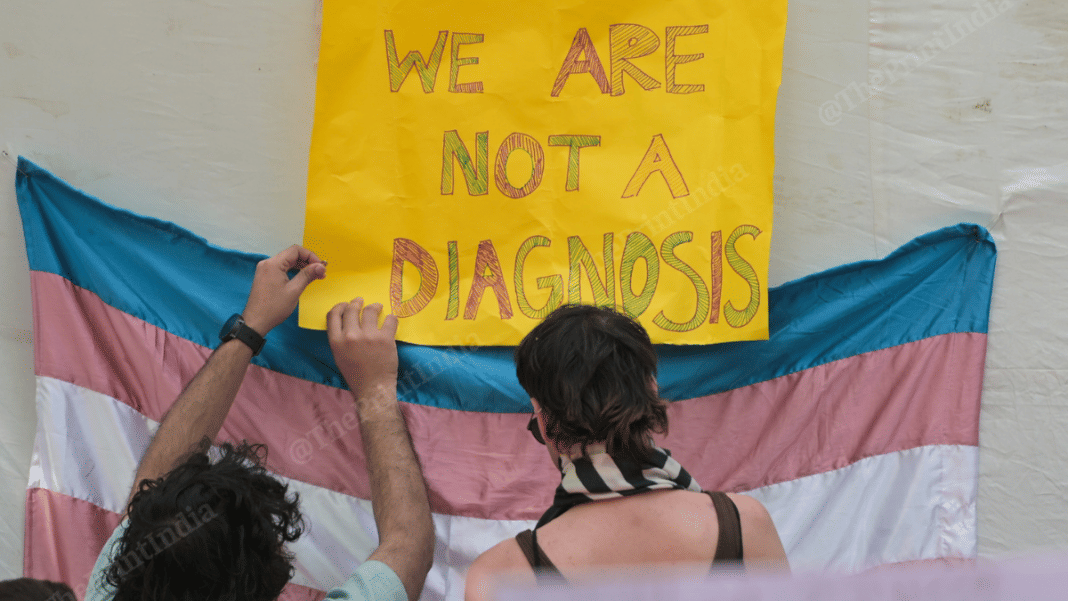
However, the recent legislative developments sparked a major controversy over Transgender Persons (Protection of Rights) Amendment Bill, 2026—introduced with the aim of amending the Transgender Persons (Protection of Rights) Act, 2019. As the bill has been passed by both Houses of Parliament and received the assent of the President, it is now a law. However, the intricacies and constitutional validity have been questioned and challenged before the Supreme Court.
This amendment is likely to bring major changes in one’s understanding of autonomy, identity and dignity of the individual. The previous Act provided a wider scope of definition as it included individuals with diverse sexual orientations and gender identities. However, the recent amendments have narrowed its scope of definitions by removing the general terms and replacing them with specific categorisation. It excludes diverse sexual orientations and self-determined gender identities that were previously recognised.
The changes go beyond definitions of gender identities and stretch to structural frameworks as well. The amendment unfairly proposes that transgender persons must be certified through a medical board and force them to seek revised certification. In short, the idea is not to allow individuals to assert their gender identity as their own, but rather to fit their identity under the institutional control of the state and society.
Such provisions target certain groups and further marginalise those who are already on the
brink. It undermines their right to equality and equality before the law under Article 14. It exposes them to face the discrimination on the grounds of sex, which is prohibited under Articles 15 and 16, as well as it harms their Right to life and personal autonomy under Article 21 of the Indian Constitution.
It is also in conflict with the very Right to privacy recognised in Justice K.S. Puttaswamy (Retd) vs Union Of India 2019 (1) SCC 1 by exposing individuals to intrusive processes as a condition for legal recognition. It also raises serious concerns related to the state’s overreach in private domain through control and surveillance where the state makes control over one’s personal identity. Or should we call it what it is: despotism? Where do personal identity and bodily autonomy stand in this state? Reducing identity to a matter of medical certification, overlooking a fundamental understanding, gender is not wholly biological, but also psychological and social, rooted in self-perception and lived experience.
It can cause a major roadblock in India’s commitment towards international covenants like
international protection of human rights to which the country is a signatory member. Article 17 of the International Covenant on Civil and Political Rights states: “No one shall be subjected to arbitrary or unlawful interference with his privacy, family, home or correspondence, nor to unlawful attacks on his honour and reputation” and “everyone has the right to the protection of the law against such interference or attacks”.
The elephant in the room is not that the legislature possesses the authority to enact such
restrictive laws, but whether the law itself passes the test of constitutionality and social justice which the society envisions to protect. Justice cannot be reduced to instinct, legality, or structures; it must be evaluated on the basis of upholding moral rights and promoting the genuine well-being of marginalised groups within the largest democracy in the world. Isn’t it what the marginalised groups deserve?
As John Stuart Mill highlights, what is legally valid need not be just and fair. Lex iniusta
non est lex: “an unjust law is no law at all”. A law might be valid in form, but if it fails in
substance then that is also an immoral law undermining individual autonomy and agency. Hence, the real question is not whether the law functions efficiently, but whether it brings effectiveness in its operation. Whether it is capable of providing social justice (a core of the Preamble). Whatever crushes individuality, by whatever name it may be called, is nothing short of despotism.
Shreya Saloni is pursuing 3-year LL.B. at DES Shri Navalmal Firodia Law College and holds a Political Science (Honours) degree from the University of Delhi. Views are personal.
Also Read: The legal challenge to immunity for CEC, election commissioners is a test of our democracy