Sir, well-written article!
However, the government’s unlikely to consider CAPF as OGAS. If they do, IPS will face stagnation too, given state police’s limited senior posts. IPS is considered the nation’s best minds, so government and senior bureaucrats will likely justify their retention.
CAPF CADRES officers’ promotions need addressing first.
My opinion: 50% reservation in IG won’t solve the issue. 100% DIG and IG posts should go to cadre officers.
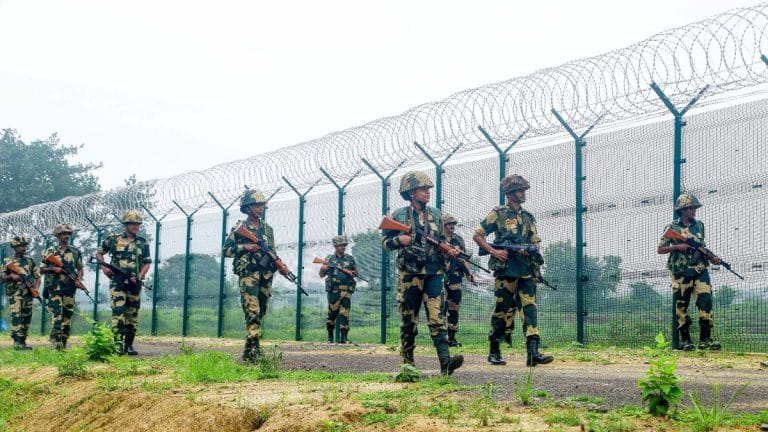
Let’s take the example of BSF,considering the fact that promotion is vacancy based
– 14 BSF frontiers, 7 reserved for IPS
– 7 DIGs won’t be promoted
– 7 Senior Commandants, 7 2nd-in-Commandants, 7 Deputy Commandants, 7 Assistant Commandants won’t get promoted
This stagnation affects sub-ordinate officers too:
– 7 senior Inspectors, 7 Sub-Inspectors, 7 Assistant Sub-Inspectors won’t get promoted
– ~50-56 cadre officers suffer due to just 7 IPS IG posts
Suggestion:
– IG post should be for cadre officers only
– IPS should join laterally at ADG post and above
– Revise ADG reservation to 50% (not 67%)
– Retain IPS at ADG, SDG, DG levels only
If IG post is not reserved for IPS, then considering it around 400 officers and 500 sub ordinate officers will be benefited at a time across all CAPFs, CRPF being the largest followed by BSF.
This might help solve CAPF’s promotion issues, at least partially
I strongly appreciate the recent article in ThePrint highlighting the realities behind the CAPF General Administration Bill, 2026. It rightly exposes that what is being projected as reform is, in fact, an attempt to institutionalise IPS dominance at the cost of CAPF cadre officers.
As I had also written earlier in my article, the reasons cited by the government are nothing but an eyewash, and the real intent appears to be preservation of control rather than genuine reform. CAPFs are highly specialised, battle-hardened forces, and their leadership must emerge from within, not be imposed externally.
This is not a question of cadre rivalry—it is about fairness, morale, and institutional integrity. Genuine reform must strengthen forces, not sideline their own officers.






Sir, well-written article!
However, the government’s unlikely to consider CAPF as OGAS. If they do, IPS will face stagnation too, given state police’s limited senior posts. IPS is considered the nation’s best minds, so government and senior bureaucrats will likely justify their retention.
CAPF CADRES officers’ promotions need addressing first.
My opinion: 50% reservation in IG won’t solve the issue. 100% DIG and IG posts should go to cadre officers.
Let’s take the example of BSF,considering the fact that promotion is vacancy based
– 14 BSF frontiers, 7 reserved for IPS
– 7 DIGs won’t be promoted
– 7 Senior Commandants, 7 2nd-in-Commandants, 7 Deputy Commandants, 7 Assistant Commandants won’t get promoted
This stagnation affects sub-ordinate officers too:
– 7 senior Inspectors, 7 Sub-Inspectors, 7 Assistant Sub-Inspectors won’t get promoted
– ~50-56 cadre officers suffer due to just 7 IPS IG posts
Suggestion:
– IG post should be for cadre officers only
– IPS should join laterally at ADG post and above
– Revise ADG reservation to 50% (not 67%)
– Retain IPS at ADG, SDG, DG levels only
If IG post is not reserved for IPS, then considering it around 400 officers and 500 sub ordinate officers will be benefited at a time across all CAPFs, CRPF being the largest followed by BSF.
This might help solve CAPF’s promotion issues, at least partially
I strongly appreciate the recent article in ThePrint highlighting the realities behind the CAPF General Administration Bill, 2026. It rightly exposes that what is being projected as reform is, in fact, an attempt to institutionalise IPS dominance at the cost of CAPF cadre officers.
As I had also written earlier in my article, the reasons cited by the government are nothing but an eyewash, and the real intent appears to be preservation of control rather than genuine reform. CAPFs are highly specialised, battle-hardened forces, and their leadership must emerge from within, not be imposed externally.
This is not a question of cadre rivalry—it is about fairness, morale, and institutional integrity. Genuine reform must strengthen forces, not sideline their own officers.