




Thank you dear subscribers, we are overwhelmed with your response
Your Turn is a unique section from ThePrint featuring points of view from its subscribers. If you are a subscriber, have a point of view, please send it to us. If not, do subscribe here: https://theprint.in/subscribe/
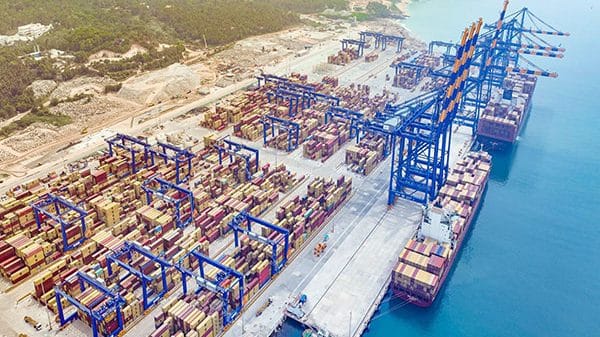
The rise of the Vizhinjam International Seaport is one of the most consequential developments in Kerala’s modern history. A deep water transshipment port positioned close to the main east west international shipping route has the potential to redraw the economic map of southern India. Yet infrastructure alone does not transform a region. A port can generate opportunity, but only a city that reforms itself can convert that opportunity into sustained prosperity. Thiruvananthapuram stands at that exact crossroads.
Vizhinjam is not an ordinary coastal project. It is a strategically located deep draft port capable of handling some of the world’s largest container vessels without extensive dredging. That geographical advantage means shipping lines can dock closer to the natural shoreline, reducing operational costs and saving time. For decades, a significant portion of India’s transshipment cargo has been routed through foreign ports such as Colombo. Vizhinjam offers India an opportunity to reclaim part of that traffic and the associated revenue. It places Kerala within the global logistics network in a way no previous project has.
However, the existence of a world class port does not automatically make a city globally competitive. The surrounding ecosystem must function with efficiency, predictability and resilience. Thiruvananthapuram currently struggles with basic urban management challenges that could undermine the port’s success if not addressed urgently.
Water supply disruptions caused by frequent pipeline bursts reveal a deeper issue of aging infrastructure and reactive maintenance culture. When roads are repeatedly dug up for emergency repairs, traffic congestion worsens and public confidence erodes. A logistics driven economy cannot afford unpredictability in essential services. Industrial units, warehouses and logistics parks require stable utilities. Without a comprehensive capital investment plan for water, sewage and drainage systems, the city risks becoming a bottleneck rather than a catalyst.
Solid waste management presents another area of concern. Ports increase commercial activity, packaging waste and urban density. If waste systems are already strained, additional pressure will magnify the problem. Thiruvananthapuram must adopt a scientific and technology enabled waste chain that integrates segregation, processing and responsible disposal. Coastal cities carry an added responsibility to prevent marine pollution. A port city that allows plastic and untreated waste to enter its waters damages both fisheries and its international reputation.
Urban governance reform is equally critical. Infrastructure requires competent institutions. The municipal corporation must operate with professional planning units, transparent procurement processes and measurable service benchmarks. Multi year budgeting aligned with projected port traffic growth should replace fragmented annual approaches. Coordination between state agencies, the port authority and city planners must be institutional rather than ad hoc. A modern port cannot function beside a fragmented administrative system.
Land management is another structural issue. Kerala’s highly fragmented land ownership patterns complicate the development of contiguous logistics parks and industrial zones. If Thiruvananthapuram wishes to attract large scale warehousing and export oriented industries, it must streamline land pooling, clarify titles and reduce procedural delays. Investors look for certainty. Delays in land conversion and compliance can divert capital to competing states.
Transport planning requires immediate attention. Increased cargo movement means more trucks on city roads unless dedicated freight corridors and bypasses are developed. Without proactive planning, traffic congestion could become severe, affecting daily life and diminishing the port’s efficiency. Integrated planning that connects the port to national highways, rail networks and potential inland container depots will determine whether Vizhinjam operates at optimal capacity.
At the same time, reform must be socially sensitive. Coastal communities, especially fishing families, must not be marginalized. Transparent rehabilitation policies, skill development programs and alternative livelihood support are essential. If local communities perceive development as exclusionary, social friction can destabilize progress. Inclusive planning builds legitimacy and long term stability.
Climate resilience must also be central to reform. Coastal erosion, extreme weather events and rising sea levels are no longer abstract risks. Urban planning must incorporate stronger coastal protection, better storm water systems and early warning infrastructure. A resilient city protects both its citizens and its economic assets.
The deeper question is whether Thiruvananthapuram sees Vizhinjam as an isolated infrastructure project or as the beginning of a structural transformation. Ports historically reshape cities. They create industrial clusters, service economies, educational institutions and research hubs. But this transformation requires disciplined governance and long term vision.
If reforms are delayed, Vizhinjam could function merely as a cargo handling point with limited spillover benefits. If reforms are embraced, the city can evolve into a maritime innovation hub with logistics parks, export oriented manufacturing, maritime training institutes and global business services.
The opportunity is historic. Kerala’s economy has long depended on remittances and service sector income. Vizhinjam offers a chance to expand into trade driven growth anchored in the Indian Ocean. Thiruvananthapuram must therefore move beyond incremental improvements. It must modernize infrastructure, strengthen institutions, rationalize land use and build inclusive systems.
A port is an anchor, but a city must be seaworthy. Vizhinjam has created momentum. Reform will determine whether that momentum becomes a lasting transformation for Thiruvananthapuram.
These pieces are being published as they have been received – they have not been edited/fact-checked by ThePrint.