




Thank you dear subscribers, we are overwhelmed with your response.
Your Turn is a unique section from ThePrint featuring points of view from its subscribers. If you are a subscriber, have a point of view, please send it to us. If not, do subscribe here: https://theprint.in/subscribe/
With the beginning of 2026, the global legal order is not just shifting; it is vanishing. When Sir Thomas Erskine Holland characterised international law as the “vanishing point of jurisprudence,” he argued that as we move from the clear, enforceable rules of a state to the nebulous interactions of nations, the very essence of “law” begins to disappear. He stated that international law can indeed be described as law only by courtesy, since the rights with which it is concerned cannot be correctly characterised as legal.
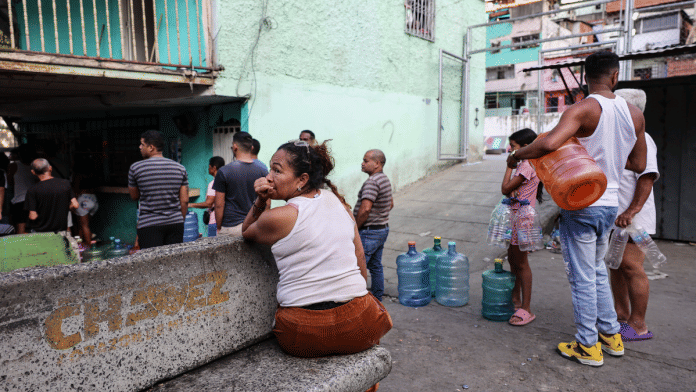
As the United States attacks Venezuela, culminating in the theatrical “Operation Absolute Resolve” strikes and the abduction of Nicolás Maduro on 3 January 2026, Holland’s scepticism has become a 21st-century reality.
The Illusion of Command
The core of any legal system is a sovereign authority and an enforcement mechanism. In domestic law, if you seize property or threaten any person, the state machinery is there to punish the offender in accordance with the law. However, under international law, there is no such powerful global machinery to implement the law. The U.N. Charter was envisioned to be the foundation of modern civilisation. Article 2 (4) of the Charter strictly prohibits the “use of force against the territorial integrity or political independence of any state.”
However, the recent U.S. actions have created a vacuum in which international law is treated as mere suggestions. By branding the Venezuelan government a “narcoterrorist organisation” and claiming a right to “restore American pre-eminence” in the Western Hemisphere, the U.S. has made a mockery of the UN Security Council. Thus, strengthen the argument that when a superpower unilaterally redefines an act of aggression as international law enforcement,” the line between legal principle and political will vanishes.
Sanctions: Law or Warfare?
On several occasions, the U.S. has utilised sanctions as a form of statecraft. However, the recent approach against Caracas relies on the vagueness of “maximum pressure” and the claim of the White House to “inherent constitutional authority” to act on the territory of another sovereign state without a congressional mandate or international consensus.
When the U.S. or any other powerful state dictate the economic survival of a nation-state without a mandate from an international institution, we see the “vanishing point” in action. The rules of international law are not being applied; they are being bent until they are invisible. If international law applies only when it aligns with the interests of the powerful, it ceases to be law and becomes a sophisticated form of rhetoric.
The Sovereign Contradiction
The U.S. justifies its intervention by citing the illegitimacy of the Maduro regime after the disputed 2024 and 2025 elections, with many countries also considering the Caracas administration autocratic. However, International Law is based on the principle of sovereign equality.
The “vanishing point” ensues when the “legal” status of a government is determined not by its effective control over territory, but by the recognition of a foreign capital. By recognising Venezuela as a “stateless” zone for drug-trafficking interdiction, the U.S. effectively removes it from the protection of the international legal community. Thus, creating a dangerous precedent, as sovereignty will no longer be a right but a license that a more powerful state can revoke.
A World Without a Central Hub
We are seeing the end of the post-1945 legal consensus. Holland argued that international law is the vanishing point because it lacks an arbiter with the power to punish. Today, the International Court of Justice (ICJ) and the U.N. General Assembly continue to issue statements of “deep alarm.” However, these statements are more or less considered as moral courtesies rather than binding obligations.
The operation in Caracas is a glaring test case for a new era of “hyper-realism.” If a nation-state can successfully execute regime change and resource seizure without facing any legal consequences, the UN Charter is no longer a treaty but a historical artefact.
Conclusion: The Bleak Horizon
If international law is the vanishing point of jurisprudence, then we have touched the horizon. The measures against Venezuela establish that, in the absence of a collective will to enforce the rules equally against the strong and the weak, the “law of nations” is merely the “will of the powerful” decoded into legalese.
We need to consider: if we permit the vanishing point to override the principles of sovereignty and non-intervention now, what legal protections will be left for weak nations in the future? The crisis in Venezuela is more than about oil or democracy; it questions whether “law” still exists beyond the influence of the strong nation-states.
These pieces are being published as they have been received – they have not been edited/fact-checked by ThePrint.