





Thank you dear subscribers, we are overwhelmed with your response.
Your Turn is a unique section from ThePrint featuring points of view from its subscribers. If you are a subscriber, have a point of view, please send it to us. If not, do subscribe here: https://theprint.in/subscribe/
People thought that the world’s energy markets were linked to each other for most of the time since the Cold War. When there was a demand for oil, it flowed. Ships followed set routes, and financial clearing systems were the invisible infrastructure of trade. That idea is now under a lot of stress. The return of sanctions politics, especially after Russia invaded Ukraine, has turned energy from a commodity into a weapon for coercion, negotiation, and signaling in geopolitics.
The change didn’t happen in 2022. Sanctions have usually been aimed at countries that export oil, like Iran and Venezuela. The modern moment, on the other hand, is different because of its size and systemic reach. When the US and the EU implemented broad sanctions on Russia, including price controls, shipping restrictions, and financial exclusions, they were not simply disciplining a peripheral supplier. They restructured flows from one of the world’s top energy producers. The outcome has been a subtle redrawing of the world’s energy map.
Oil Flows Go East
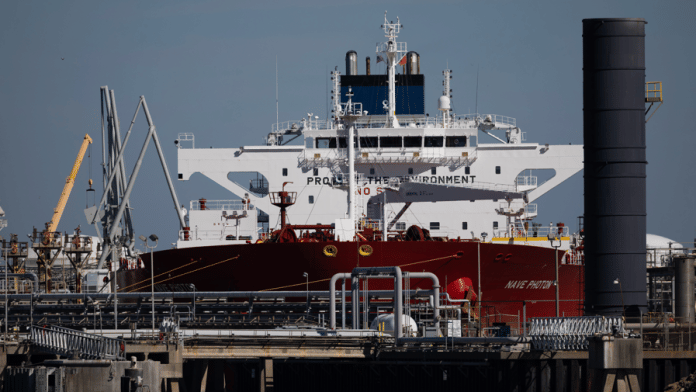
Russian crude oil used to go to European refineries, but now a lot of it is going to Asia, especially India and China. Discounts helped this change happen. India gets more than 85% of its crude oil from other countries, so getting cheap barrels helped the economy during a time of rising inflation.
But the main story is more than just buying things when they are cheap. It has to do with making competing financial and logistical systems. Tankers that don’t have Western insurance, alternative payment systems, or diverted transport corridors show that the energy trade is slowly breaking up. Sanctions didn’t take oil off the market; they just moved it around, making the whole supply chain more political.
There are two levels in today’s energy market: an official system that is mostly run by Western banks and insurance companies and a shadow network that runs outside of them. This two-part system makes things less clear and costs more to do business. It also makes a bigger point: can the world’s energy markets stay connected as trust between countries fades?
Sanctions as a Planned Policy
Washington and Brussels say that sanctions are a way to hold people accountable. For the states that are being targeted, they are signs of systemic weaponization. Sanctions, irrespective of their normative context, are progressively functioning as structural policies. They have an effect on long-term investment choices, not just short-term trade flows. Oil producers who are facing sanctions refine oil at home, look for ways to do business that don’t involve dollars, and try to find customers who are less likely to give in to Western pressure. Consumers use a variety of providers to protect themselves against possible problems. Banks and other financial institutions look at how much risk they are taking on. The result is a slow separation that may last longer than the problems that caused it.
Even arguments about secondary sanctions, which punish third parties who do business with sanctioned people, make markets less stable. Countries that import energy need to find a balance between making strategic alliances and meeting their economic needs. The choice is rarely binary, but the cost of making a mistake is going up.
The OPEC+ Variable
The changing dynamics of producer coordination and the politics of sanctions are connected. OPEC and its larger group, OPEC+, now count Russia as an important partner. Production choices, which are said to keep the market stable, have effects on politics around the world.
When output cuts happen at the same time as sanctions, prices become more unstable. Consumers think that producers are working together strategically, but producers think that they need to work together to protect their income in an uncertain market. The market, in turn, reacts to more than just supply and demand; it also reacts to diplomatic signals.
An Energy Order That Is More Broken Up
The repoliticization of energy markets does not lead to an immediate shortage. The global supply is still meeting the overall demand. But fragmentation makes the system more difficult to work with. Prices for insurance go up and down depending on political unrest around the world. Shipping routes get bigger. Less transparency. Volatility turns into a structural part instead of a sudden change.
Energy policy and foreign policy come together in this case. Choosing a supplier, deciding on a currency, and building infrastructure are all strategic choices. The idea of a neutral global market is fading.
The return of sanctions politics marks a change from a time when countries depended on each other for energy to a time when they managed to diverge. Oil keeps flowing, tankers keep sailing, and contracts keep being made, but the rules are changing behind the scenes. For democracies that get their energy from other countries, the challenge is to make sure they have enough while still being able to change their plans. For exporters under pressure to stay in business, they need to be flexible and build partnerships. The question for the global system is whether parallel energy networks will settle into a new balance or break apart even more.
Energy, once seen as an economic factor, is now seen as a tool of geopolitics again. Sanctions are now one of its most important tools.
———————————————————————————————————————
About the authors:
-Anusreeta Dutta is a columnist and climate researcher with experience in political analysis, ESG research, and energy policy.
-Sikha Dutta is an independent policy analyst.
These pieces are being published as they have been received – they have not been edited/fact-checked by ThePrint.