




Thank you dear subscribers, we are overwhelmed with your response.
Your Turn is a unique section from ThePrint featuring points of view from its subscribers. If you are a subscriber, have a point of view, please send it to us. If not, do subscribe here:
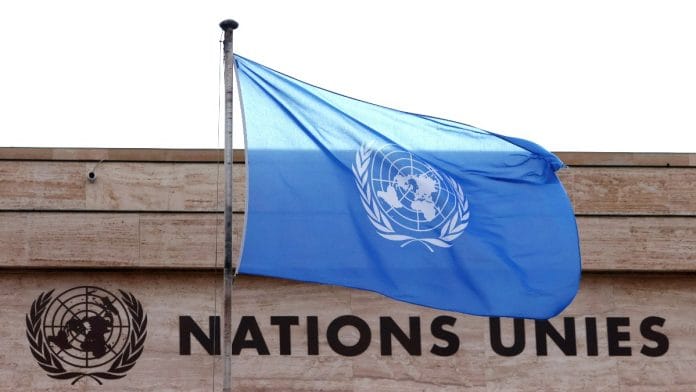
On December 10, 1948, the UN General Assembly adopted the Universal Declaration of Human Rights (UDHR). Born from the shadows of the Holocaust and World War II, it remains a “Magna Carta for all humanity,” asserting that every human being possesses inherent dignity—a necessary corrective to a world that had witnessed state-sponsored barbarism.
As we approach the 77th anniversary of this historic day on December 10, 2025, the UN has chosen the theme “Our Everyday Essentials.” It reminds us that rights are not abstract concepts but lived realities: food, shelter, freedom of speech, and safety. However, a bird cannot fly with only one wing. For seventy-seven years, we have championed human rights but largely ignored their necessary counterpart—human duties.
The Global Imbalance of Rights
The essential struggle for rights against colonialism and tyranny defined the political discourse of the 20th century. However, the 21st century has revealed the cracks in a rights-only framework. We see societies becoming increasingly litigious and individualistic, with the clamour for “my rights” often drowning out the whisper of “our responsibilities.”
Recognising this imbalance, initiatives like the InterAction Council’s proposed Universal Declaration of Human Responsibilities (1997) and the Declaration of Human Duties and Responsibilities (Valencia Declaration) of 1998 sought to codify this balance. The logic is simple: a right to life implies a duty not to kill; free speech implies a duty to listen and seek truth. While the UDHR enjoys immense moral authority, these duty declarations never achieved the same binding status or even widespread acceptance, making the current imbalance structural. A demand for the right to a clean environment without the duty to reduce consumption is, ultimately, a demand for ecological collapse.
The Indian Vision: Dharma and Democracy
Long before these global debates, India had already articulated the intricate relationship between rights and duties. The Indian civilisational ethos views the individual not as an isolated island but as a thread in a vast social fabric. The concept of Dharma—often mistranslated as religion but more accurately meaning “duty” or “righteous conduct”—sustains the cosmos.
Mahatma Gandhi crystallised this view in his famous correspondence with H.G. Wells regarding a “Charter of Rights.” His response serves as the perfect tagline for Human Rights Day 2025:
“Begin with a charter of Duties of Man and I promise the rights will follow as spring follows winter… I began life by seeking to assert my rights and I soon discovered I had none… So I began by discovering and performing my duty… and I find today that I have greater rights perhaps than any living man I know.”
For Gandhi, the “right to live” accrued only through the “duty of citizenship.” This was not a rejection of rights, but a formula for their guaranteed preservation.
The Constitutional Mandate
The Indian Constitution initially left duties implicit in Part III (Fundamental Rights), trusting the inherent moral sense of the citizenry. However, post-independence societal challenges and the fragmentation of community spirit led to the conclusion that this faith needed explicit textual reinforcement.
By 1976, the 42nd Amendment introduced Article 51A—the Fundamental Duties. Thus, codifies the Indian way of life. It asks citizens to abide by the Constitution, to promote harmony, and to renounce practices derogatory to women, and to protect the natural environment—a proactive duty that predates much of modern climate activism.
Judicial Evolution: From Non-Justiciable to Essential
For years, Fundamental Duties were dismissed as “non-justiciable.” However, the Supreme Court of India has transformed them into powerful interpretive tools.
In AIIMS Students Union v. AIIMS (2001), the Supreme Court observed that rights and duties are “two wheels of a chariot.” Similarly, in Ranganath Mishra v. Union of India (2003), the Court emphasised that duties should guide the State in making laws. Crucially, the judiciary has used duties to temper fundamental freedoms. Thus, one cannot claim the Fundamental Right if it violates the Fundamental Duty. This judicial balancing act is essential to preventing the abuse of constitutional freedoms in the name of rights.
Conclusion: A Pledge for the Future
As we reflect on “Our Everyday Essentials,” we must recognise the basics. If clean air is essential, it implies a duty to reduce our carbon footprint. If human dignity is essential, it implies a duty to treat those weaker than us with respect.
The Universal Declaration of Human Duties does not need to be a new treaty signed in Geneva; it needs to be a pledge signed in our hearts. Let us remember that sovereignty is protected not just by soldiers on the border, but by citizens in their homes performing their duties. Let us prove Gandhi right—that by performing our duties, our rights will indeed follow, as surely as spring follows winter.