




Thank you dear subscribers, we are overwhelmed with your response.
Your Turn is a unique section from ThePrint featuring points of view from its subscribers. If you are a subscriber, have a point of view, please send it to us. If not, do subscribe here: https://theprint.in/subscribe/
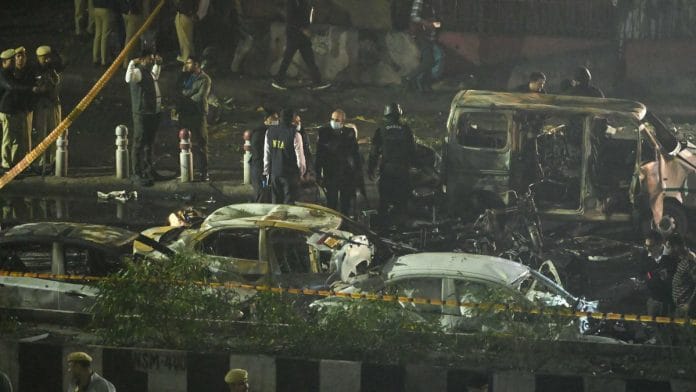
Three weeks after the Red Fort explosion in Delhi, while the investigation remains underway, the mainstream media, after abandoning the holy trinity of ‘alleged,’ ‘accused,’ and ‘attributed,’ has opened up their newsrooms to writing novels in a different genre altogether.
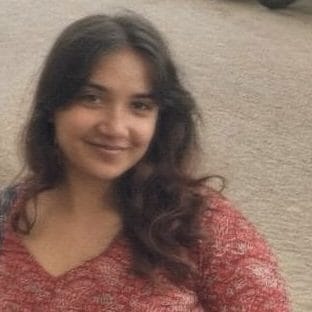
Deployed at the forefront of this war against terror, they have stitched together a detestable plot centring on the arc of ‘lovers to terrorists’ in a romance thriller, where Shaheen is introduced as “a distressed, divorced doctor with two failed marriages and a slow descent into terrorism.”
There is another issue at hand here, apart from this crude repackaging: it is delivered with precision exactly where the public has an appetite for it. Anuradha Bhasin, editor of Kashmir Times, writes about the politics and repercussions of employing tags such as ‘terror doctors’. These labels, carefully infused with alliteration, are easy to swish around, gripping public memory and leaving behind a communal aftertaste.
In the current media landscape—where such tags travel faster than judicial convictions and linger regardless of judicial verdicts—the term ‘terror doctors’ continues to complicate lives long after the headlines fade. Those labelled by it remain stained by association. Now, this saga of ‘Doctor, Divorce, and Terrorism’ only further weaponises these stereotypes.
One must shed all naivety that such information and reportage is collecting background information, because every day it is being repackaged as a romance thriller, and worst of all, is being served as news.
Speaking to India Today, Shaheen’s former husband stated that they divorced around 2012–13 without any arguments and have not been in contact since. The account offers no trace of the dramatic fallout that now fills headlines. It is interesting, then, how this tale of love, obsession, and betrayal continues to be woven—despite the absence of conflict in the very relationship being mined for spectacle.
NDTV reported Muzammil’s confession: ‘He stated that he met Shaheen at Al-Falah University; she was much older than him and her salary was significantly higher. He became deeply in love with Shaheen, and their romance grew to such an extent that they married in 2023.’
However, between 2012 and 2023, the media had no such building blocks to thicken this romance plot. Hence came a filler episode, declaring her alleged love affair with Muzammil to be the reason for her divorce. While Shaheen’s former husband carried no such memory of their separation, the reporter declared with conviction that Shaheen had abandoned her husband and children for Muzammil.
What followed were further chapters of a blossoming on-campus love story with accounts of them meeting every day and references to ‘growing intimacies’—a phrasing more voyeuristic than journalistic.
However, more was to come, as the headlines of two failed marriages and Shaheen’s descent into terrorism became the breeding ground on which all further developments in the case were germinating. Ajwani, on his show Sau Baat Ki Ek Baat, also reminded viewers—very vividly—of Shaheen being older than Muzammil in what he described as her now third marriage. Any correlation between this information and the matter at hand remains unknown as of now.
If one enters the jurisdiction of ABP News holding any hope of finding a chronological assessment, they are instead greeted with the sequence: ‘Love–Failed Marriages–Terrorism’. They would have you believe, with full conviction, that Shaheen’s participation began only after her marriage to Muzammil.
“The divorce was reportedly a significant blow to Saeed, who started to feel lonely.” Who exactly reported this loneliness is unclear but that does not stop the reporter from weaving a direct correlation between her perceived loneliness and patterns of criminality.
Such reporting builds on years of debt to communal stereotyping, portraying multiple marriages and loneliness as synonymous with criminality. What emerges is an endless saga of blossoming love, growing intimacies, obsession, and betrayal—while any important questions remain nowhere to be found.
Instead of restricting itself to the facts of the case, an ill-informed psychological dissection is performed in front of the audience, using needles of ‘multiple marriages,’ ‘divorces,’, and ‘loneliness’ to diagnose radicalisation.
The suspect—here, a Muslim woman—has her personal life converted into a psychological case study and offered to the audience as an explanation for criminality, effectively manufacturing a type. Any bad-faith reading might, from between the lines, interpret this as a terror apology. Yet the harm of this gendered and communal stereotyping extends far beyond the individual suspect, affecting many others who had nothing to do with the incident and who now must live under the shadow of potential suspicion.
This is an indictment of a media culture that not only trivialises serious criminal investigations by repackaging sexist entertainment as fodder for an appetite already growing in the country, but also misinforms its audience, turning the investigation into a spectacle—in an incident where thirteen people tragically lost their lives.
To conclude, as Bhasin says“ By amplifying the very alienation that breeds discontent, the risk of fueling the next cycle of violence increases.” A cycle which the media peddles with its sweat and blood, 24×7.
These pieces are being published as they have been received – they have not been edited/fact-checked by ThePrint.