




Thank you dear subscribers, we are overwhelmed with your response.
Your Turn is a unique section from ThePrint featuring points of view from its subscribers. If you are a subscriber, have a point of view, please send it to us. If not, do subscribe here: https://theprint.in/subscribe/
When I walked into a central university for a lecturer interview, I did not expect the moment that stayed with me most to come from a noticeboard. Pasted on it was the admissions rank list for the Master’s programme. Alongside each candidate’s name was their score and category, displayed for all to see. At the top were scores close to 190, mostly from the general category. At the bottom, the last admitted student stood at zero.
I stood there longer than I meant to, imagining myself as that last student. Perhaps she had arrived in a new town, leaving home for the first time, carrying fear and hope in equal measure, along with the heavy expectations of her family and the fragile wish to break a generational pattern. And the first thing she sees is this list. Not just her marks, but her category, her difference, pinned up for strangers to read. Would she then walk into class the next morning with the confidence to sit on the empty first bench? Maybe she would have, if the board had not already told the world where she stood.
That noticeboard revealed more than scores. It revealed the depth of our social inequality. Outcomes are bound to diverge when some children grow up with bookshelves at home, private tutors, and coaching centres, while others attend schools with leaking roofs, teachers who rarely show up, and neighbourhoods where no one has ever gone to university. By the time they meet at an entrance exam, they are not merely answering questions. They are carrying the weight of birth, family, and circumstances.
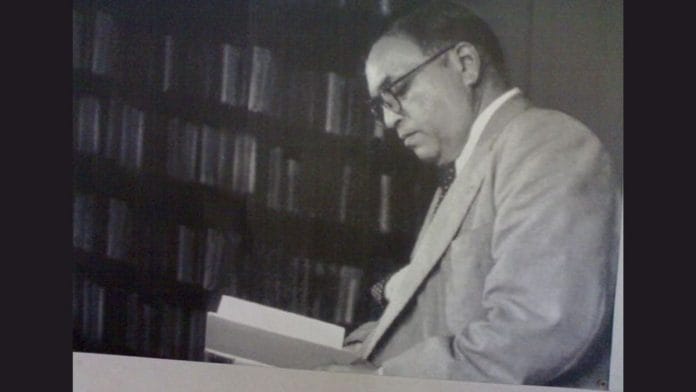
What troubled me most was not the disparity itself but the public spectacle of its display. Why must it hang where every passer-by can see? Higher education is meant to open doors, yet the first encounter for many students is a reminder that they do not belong. Access is granted with one hand and taken away with the other. Ambedkar cautioned that political democracy without social democracy is precarious. The noticeboard illustrates this precarity: constitutional guarantees open the gates of higher education, but the public display of caste reasserts hierarchy at the very threshold, undermining the fiction of merit.
Inside the classroom, the consequences unfold quickly. Teachers and peers enter already knowing who belongs to which category and with what score. Even before a student speaks, expectations are fixed. Some are assumed to excel, others to struggle. The label of “imposter” is not born of performance; it is born of the gaze that precedes it.
Some institutions have recognised this danger. A few of the top IITs, for instance, no longer disclose entrance ranks in placement documents. They understand how a single number can follow a student long after the exam. Even casual conversations carry weight. A classmate asking, “What was your rank?” may sound harmless, but beneath it lies a subtler question: are you good enough to belong?
Over time, friendships cluster around students with similar scores — often from similar schools, families, and languages. Those who arrive through different routes, often with lower ranks or weaker English, find themselves edged out not just from academic confidence but also from the networks that make university life survivable. A rank is not just a number; it becomes a boundary.
These practices are not accidents. They are one among a hundred ways in which exclusion re-enters through the back door of inclusion. Reservation policies have widened access, but the dignity of that access remains contested. Instead of asking whether these students deserve their seats, we should ask whether our institutions are doing enough to ensure they feel welcome upon entering.
That requires more than rules; it requires empathy. Policymakers, administrators, and teachers must be able to imagine what it feels like to be that last-ranked student, staring at a board that announces both name and category to a crowd of strangers. Without that imagination, policies will continue to open gates while humiliation stands guard at the door.
Critics of reservations often reduce the debate to big words such as meritocracy, brain drain, and efficiency. Yet the lived truth of inequality is quieter and crueller: the hesitation before choosing a seat, the loneliness of being left out of a group, the shame of seeing your difference displayed.
Ambedkar reminded us that liberty, equality, and fraternity are inseparable. Liberty without equality breeds privilege, and equality without fraternity breeds resentment. The noticeboard makes visible how fragile our democracy becomes when fraternity is absent. The real question is not whether these students deserve to be in the classroom. It is whether the classroom itself, with its rules, friendships, noticeboards, and unspoken norms, can welcome them without first reminding them that they do not belong.
These pieces are being published as they have been received – they have not been edited/fact-checked by ThePrint.