





Thank you dear subscribers, we are overwhelmed with your response.
Your Turn is a unique section from ThePrint featuring points of view from its subscribers. If you are a subscriber, have a point of view, please send it to us. If not, do subscribe here: https://theprint.in/
In response to Uniform definition of Aravalis by the Supreme Court of India I wish to submit the following-
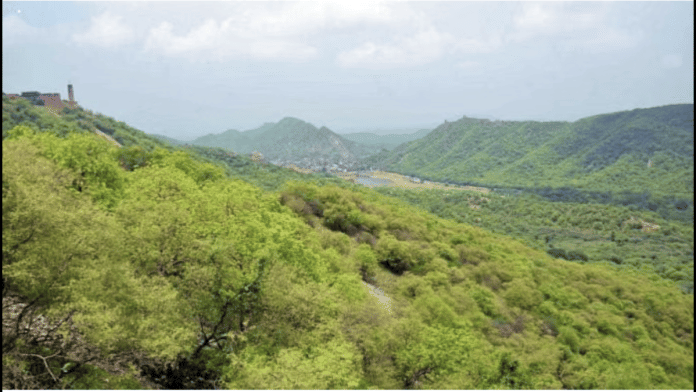
The Aravalli range, one of the world’s oldest mountain systems, has shaped the climate, culture, ecology, and livelihoods of countless villages across Gujrat, Rajasthan, Haryana, and Delhi.
It divides the Narmada River and the river Ganga. Both part ways after passing through the Aravali range.
Prior to British India, the Aravallis were not under a centralised government control. They were managed largely by local communities, clans, and traditional institutions.
However centralized control without local monitoring, commercial exploitation of resources has led to increased corrupt practices This present system is making rich richer and poor poorer.
Local ownership could change that because communities would have a stake in protecting their commons.
Villages on the Aravallis have natural assets like cleaner air, richer biodiversity and forest produce. Having access to traditional knowledge related to hills, grazing patterns, and climate-resilient agriculture they can become self-sustaining through regenerative agriculture. By preserving sacred groves pastoral support systems and growing millets, medicinal plants, aloe vera, ber, amla and honey villagers can have better economic returns.
Eco-tourism, such as guided nature walks, birdwatching, local food experiences, heritage trails, and homestays can bring national and international tourists bringing added incomes and self pride. With proper training, villagers can start nature – based enterprises, become nature guides, hospitality providers,handicraft artisans, heritage walks conductors, rural hospitality providers, and conservation workers.
By reviving its water harvesting structures the area can become water sufficient both for farming and livestock.The potential of community-led watershed development,revival of johads, naulas, ponds, and gullies, equitable access to clean drinking water can change lives of the residents.
The Aravalli Village Rights Charter recognizes that the people who live closest to the hills are not obstacles to conservation; they are its natural custodians. By restoring community rights, empowering gram sabhas, ensuring ecological protection, and supporting sustainable livelihoods, we can create a future where the Aravallis thrive — as living landscapes, as cultural heritage, and as engines of rural dignity.
The Aravallis do not belong to a single entity. Legally, most of the hills are classified as forest or revenue land, making them government property. Historically, however, villages living along the range have treated the Aravallis as their commons—sources of grazing, fodder, water, and cultural identity. Ecologically, the Aravallis serve millions by recharging groundwater, moderating climate, and preventing desert spread, making them a shared public resource. Ethically, they belong to future generations whose survival depends on their protection. In essence, the Aravallis belong to the State in law, to villagers in practice, and to everyone on purpose.
At present corrupt exploit the weak, oversight encroach land, issue illegal mining permits, and convert protected forest zones into lucrative real estate. They profit through forged ownership papers, political patronage, and bypassing environmental rules, turning a fragile ecosystem into a source of private gain at public cost.
For collective welfare by Aravalis’ good governance, decentralisation of power, increasing accountability, participation and fairness is a must.
Good governance means decisions are transparent, fair, and made in the interest of all. Decentralization of power helps achieve this by moving authority closer to people, reducing delays, limiting corruption, and allowing local solutions for local problems. When power is shared with villages, communities, panchayats, urban wards governance becomes more responsive, accountable.
Good governance is not automatic in democracies, but democracy provides the best foundation for it. When citizens participate actively, institutions stay independent, and power is decentralized, democracies can deliver some of the most accountable, inclusive, and ethical governance systems in the world.
Finland and Denmark are widely considered the most inclusive, corruption-free governance models in the world but India cannot simply “copy” Denmark or Finland. However, it can adopt their principles:
- strong local governments
- professional civil services
- transparency
- social security nets
- high accountability
- investment in education and health
India can move toward a high-trust, low-corruption model but it must do so in a way suited to its own scale, diversity, and historical path.
For the Aravallis to truly “belong” to the villages, governance must be decentralised, transparent, and deeply participatory. Local gram sabhas should have legal authority over land-use decisions, conservation rules, and benefit-sharing. Transparency in every transaction like leasing, tourism, mining bans, restoration funds would reduce corruption and build trust. A strong social security net would ensure that villagers are not forced into environmentally harmful choices out of poverty. High accountability mechanisms, including public audits and independent oversight, keep both local bodies and outside agencies answerable. Long-term investment in education, health, and ecological literacy equips communities to manage the Aravallis wisely. Such governance blends rights with responsibility, enabling villages to protect, restore, and sustainably benefit from their own landscapes.
These pieces are being published as they have been received – they have not been edited/fact-checked by ThePrint.