





Thank you dear subscribers, we are overwhelmed with your response.
Your Turn is a unique section from ThePrint featuring points of view from its subscribers. If you are a subscriber, have a point of view, please send it to us. If not, do subscribe here: https://theprint.in/subscribe/
A series of aviation incidents has once again put India’s civil aviation safety under uncomfortable scrutiny. Recent mishaps have revived concerns about aging fleets, regulatory oversight, maintenance standards and raise questions about whether rapid expansion of the aviation sector is outpacing its ability to ensure safety. This threatens ambition to establish India as the leading aviation hub in South Asia.
In Bidar, Karnataka, February 8, residents woke to the shocking news of a Cessna crash belonging to Redbird Flight Training Academy, a school of piloting. The aircraft made a hard landing about 50-70 kilometers from Belagavi airport. There were no fatalities, but the crew sustained injuries. Despite an experienced instructor, having 734 flight hours under his belt, – equivalent to Air Force standards – at the helm, the mishap occurred. The Ministry of Civil Aviation’s press release states the aircraft, manufactured in 1975, is over 50 years old. Wear and tear is suspected, pending investigation findings.
Early this month, Air India Flight AI132 from London to Bengaluru flagged a malfunctioning fuel-control switch on its Boeing 787 Dreamliner mid-flight. Britain’s Civil Aviation Authority pressed Air India for answers on releasing the faulty jet. Eight crashes that year took 274 lives total. Context runs deep: The Federation of Indian Pilots blames a like flaw for the June 2025 AI171 disaster, killing 260 aboard. Eight aviation accidents that year killed 274. December reports flagged at least eight domestic flights on uncertified airliners. The accidents nonetheless raise questions about civil aviation in India, the reliability of the planes, and the state of the sector.
Air traffic growth belies deepening losses
Demand for air travel continues its upward trajectory. The Investment Meanwhile, demand for air travel continues to rise. ICRA, the Investment Information and Credit Rating Agency, forecasts domestic passenger traffic to grow by 7% in the 2026 financial year, with international traffic expanding by 15%.
Paradoxically, airlines are expected to incur losses even as the sector faces a tightening crisis. ICRA projects the largest carriers’ net losses to reach up to 105 billion in the current year, more than double the previous year. Soaring costs are a key driver; in January 2026, aviation fuel prices increase by 2.2% year on year, and fuel now accounts for up to 40% of operating costs.
Timely aircraft repairs remain a challenge. In 2025, up to 17% of planes idled at airports due to spare parts shortages; estimates now place 10% still awaiting maintenance. Fleet contraction compels deployment of older, less fuel-efficient aircraft, with high leasing costs adding pressure.
The industry also grapples with personnel deficits. Experts project a need for 10,300 qualified pilots by 2030 against a current pool of around 8,000, nearly 2,000 lacking requisite flight hours. Crew shortages trigger delays, cancellations and overwork. For instance, IndiGo had, with permission from the Directorate General of Civil Aviation, not complied with the crew rest rules up to February 10, raising concerns about pilot fatigue and safety.
Wings India 2026 Signals Manufacturing Push
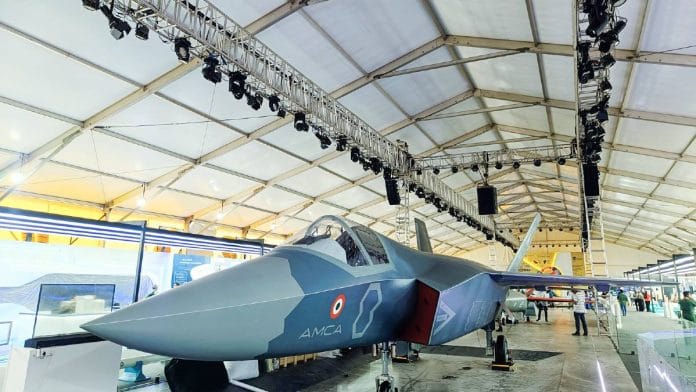
Experts widely agree that reform is essential for India’s passenger aviation sector to meet its targets. The Wings India 2026 conference, held in Hyderabad from January 27 to 30, focused on attracting capital and expertise to advance civil aviation in India.
Following the event, New Delhi underscored its resolve to rely more on domestic capacity, announcing plans to produce more aviation equipment locally. Hindustan Aeronautics Limited (HAL) and Russia’s Yakovlev have signed a framework to manufacture the Sukhoi Superjet 100 (SSJ-100) in India. Adani Group and Brazilian Embraer will collaborate on cargo aircraft. Within the Make in India initiative, Sakthi Group and Czech firm Omnipol signed an MoU to begin assembly work on the L410 NG, marking a significant step toward diversifying and strengthening the national aviation industry. India persists with Boeing procurement amid the firm’s global reliability issues. Air India ordered 30 narrow-body aircraft and a Boeing 787 maintenance program to address shortages.
India remains one of the world’s most promising aviation markets, with passenger numbers rising and airport infrastructure expanding rapidly. Yet the sector still grapples with a pilot and technician shortage, service culture gaps, and safety standards concerns. Accordingly, the government is laying groundwork to strengthen the country’s aviation industry, even as a robust domestic scientific base in aviation remains a critical factor for India’s future ambitions on the global stage.
These pieces are being published as they have been received – they have not been edited/fact-checked by ThePrint.