





Thank you dear subscribers, we are overwhelmed with your response.
Your Turn is a unique section from ThePrint featuring points of view from its subscribers. If you are a subscriber, have a point of view, please send it to us. If not, do subscribe here: https://theprint.in/subscribe/
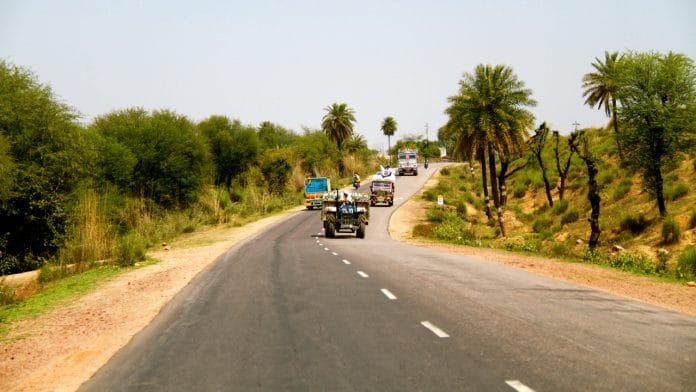
For centuries, the vast, arid landscape of Rajasthan was defined by its majestic beauty and its formidable challenges of connectivity. Historically, the state’s fragmented road network acted as a critical barrier, reinforcing the isolation of rural communities and stifling human and economic potential. The Second Rajasthan State Highways Development Program (RSHDP- II), a strategic World Bank-supported initiative, has fundamentally altered this trajectory. Its impact provides a compelling case study in how targeted infrastructure investment acts as a powerful lever, generating a multiplier effect that elevates core human development indicators while simultaneously contributing to broader macroeconomic growth at the state and national level.
The most profound impacts are visible in the dramatic improvement of critical human development metrics. By upgrading over 2,500 km of key state highways and major district roads, RSHDP-II has directly enhanced access to life-saving services. The most significant outcome has been the reduction in Infant Mortality Rate (IMR). Reliable, all-weather roads have enabled pregnant women to reach emergency obstetric care facilities in time and facilitated regular visits by mobile health units and immunization teams to remote villages.
This improved access to prenatal and postnatal care has been a key driver in reducing IMR, a cornerstone indicator of societal health and well-being. Concurrently, the project has catalyzed an improvement in literacy rates, particularly for girls. Safer, shorter, and more predictable commutes have removed a major barrier to education, increasing enrollment, reducing dropout rates (especially after primary school), and improving attendance. This enhancement in educational access is building the human capital essential for long-term development.
Economically, RSHDP-II has been a catalyst for transformative growth at multiple levels. For rural households, reduced transportation costs (by an estimated 20-30%) and minimized post-harvest losses have significantly increased farm-gate incomes, moving communities from subsistence to commercial agriculture. Beyond the farm, the roads have unlocked economic corridors, spurring the growth of Micro, Small, and Medium Enterprises (MSMEs), agro-processing clusters, and tourism in previously inaccessible heritage sites. This diversification has created vital non-farm employment, raising per capita incomes and reducing vulnerability.
This robust state-level economic revitalization translates into a tangible contribution to the National GDP. By integrating Rajasthan’s rural producers and industries into efficient national supply and value chains, RSHDP-II has boosted the state’s economic output and competitiveness. The improved logistics network lowers the cost of doing business across sectors, attracting investment and enhancing the productivity of both labor and capital. As Rajasthan’s economy grows—with its significant contributions from agriculture, mining, tourism, and manufacturing—it adds substantial value to the national economy. The project, therefore, represents not just a state-level infrastructure upgrade but a strategic investment in the nation’s overall economic capacity and resilience.
Furthermore, the project has strengthened the social inclusion and community vitality pillar of well-being. The roads have empowered women by facilitating access to markets and self-help groups, integrated marginalized communities, and provided climate-resilient infrastructure that secures communities against shocks. The psychological shift from isolation to opportunity has elevated subjective well-being and fostered a sense of inclusion in the national mainstream.
In conclusion, RSHDP-II exemplifies infrastructure’s role as the backbone of holistic development. It demonstrates a clear causal pathway: from asphalt to access, from access to improved health and education outcomes, and from human capital development to broad-based economic growth. By simultaneously driving down infant mortality, pushing up literacy, and fuelling state GDP that feeds into national growth, the project has delivered a powerful triple dividend. It has moved beyond merely building roads to building lives, livelihoods, and a more prosperous and equitable future for Rajasthan, while steadfastly contributing to the ambitious development trajectory of India as a whole.
These pieces are being published as they have been received – they have not been edited/fact-checked by ThePrint.