





Thank you dear subscribers, we are overwhelmed with your response.
Your Turn is a unique section from ThePrint featuring points of view from its subscribers. If you are a subscriber, have a point of view, please send it to us. If not, do subscribe here: https://theprint.in/subscribe/
The security evolution of Jammu & Kashmir is a story written less in headlines and more in quiet resolve. From the eruption of militancy in the late 1980s to the present phase of relative stability, India’s central intelligence and investigative agencies have played a decisive—yet largely invisible—role in countering terrorism, dismantling radicalisation networks, and reshaping the region’s security landscape. Their influence, particularly after the abrogation of Article 370 in 2019, has expanded across every layer of society, placing Jammu & Kashmir in a fundamentally different security paradigm from the past.
Militancy in Jammu & Kashmir did not emerge organically. It was systematically sponsored, financed, and sustained by Pakistan through its intelligence agency, the Inter-Services Intelligence (ISI). Political grievances, religious sentiment, and social fault lines were deliberately exploited to wage a prolonged proxy war against India. While the Jammu & Kashmir Police, Indian Army, CRPF, and BSF formed the visible shield—sacrificing lives to restore order—the deeper battle against the terror ecosystem unfolded away from public view. That battle was led by central intelligence agencies working persistently to identify, penetrate, and dismantle terror networks at their roots.
For decades, intelligence operations in the region were constrained by political ambiguity and structural limitations. During the era of state-level power politics, central agencies often faced suspicion and limited acceptance at the grassroots. Misinformation, fear, and politically motivated narratives created a disconnect between ground realities and national-level decision-making. Distorted reports frequently reached New Delhi, while genuine public sentiment and on-ground intelligence were diluted or misrepresented. Unified command structures existed, but they were not always effective in integrating citizen feedback into security assessments.
The abrogation of Article 370 in August 2019 marked a decisive strategic reset. It was not merely a constitutional change but a transformation of governance and security architecture. Post-2019, central intelligence agencies rapidly expanded their operational reach, coordination, and analytical depth across Jammu & Kashmir. Their presence became comprehensive rather than selective, extending to border belts, urban centres, rural interiors, and former militant strongholds. More importantly, intelligence gathering shifted from politically filtered inputs to people-driven ground intelligence.
Today, intelligence assessments in Jammu & Kashmir are increasingly shaped by community behaviour, social trends, local sentiment, and citizen feedback. Ordinary residents—often silently—form the backbone of actionable intelligence. This shift has altered policymaking at the national level. Instead of relying on administratively curated narratives, decision-makers now receive inputs rooted in verified ground realities. In this evolving security framework, the people of Kashmir have emerged as indirect stakeholders and contributors to stability and policy direction.
A notable outcome of this transformation is the changing perception of central agencies among Kashmiris. The fear and misunderstanding that once surrounded these institutions are steadily receding. Increasingly, locals show willingness to cooperate with intelligence and investigative agencies. This trust has not emerged overnight; it has been built through consistent, restrained, and law-based action. Central investigating agencies have effectively pursued cases related to terror financing, narco-terrorism, corruption, and money laundering—networks that thrived for years under fear or political protection. The operational principle has remained clear: no innocent is targeted, and no guilty individual is beyond scrutiny.
Despite operating with limited manpower relative to the scale of the challenge, central agencies have delivered disproportionate strategic impact. From election preparedness and democratic processes to developmental planning and de-radicalisation initiatives, intelligence assessments now inform governance decisions across sectors. These agencies provide the Government of India with unfiltered clarity, ensuring policies are shaped by reality rather than rhetoric.
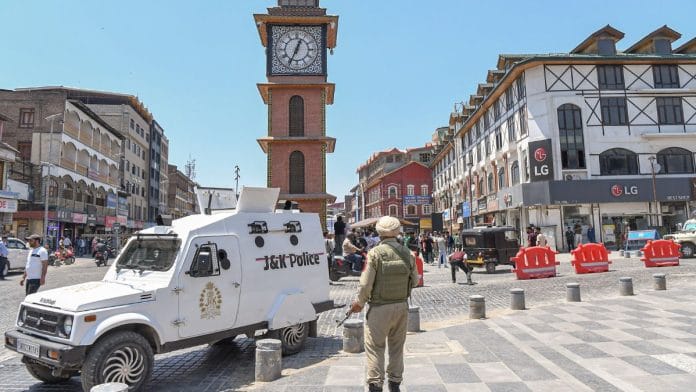
The security architecture in Jammu & Kashmir rests on a clear division of responsibility. The J&K Police, Indian Army, CRPF, and BSF serve as the executive arms—conducting operations, neutralising militants, and maintaining law and order. Their sacrifices form the visible foundation of peace. Central intelligence agencies, however, operate at strategic depth. They pre-empt threats, dismantle recruitment and funding chains sponsored by Pakistan and guided by the ISI, and disrupt hostile plans before violence materialises. Their success is often measured not in encounters, but in attacks that never occur.
These agencies operate in hostile, high-risk environments where every assignment carries personal danger. Yet anonymity remains central to their doctrine. They are unsung by design. Media narratives rarely capture their role, and public discourse seldom acknowledges their victories. This invisibility is essential. In intelligence work, silence is not absence—it is success.
Today, central agencies maintain extensive situational awareness across Jammu & Kashmir. Profiles of militants, overground workers, separatist networks, radical preachers, narco-operatives, corrupt facilitators, and hostile political actors are continuously updated. No individual or network engaged in anti-national activity operates beyond institutional scrutiny. This intelligence dominance has sharply reduced operational space for terrorism, particularly in Kashmir, once the epicentre of Pakistan-sponsored violence.
The societal impact of this intelligence-led transformation is increasingly visible. Kashmiris display a growing sense of ownership over peace and stability. Cooperation with security institutions is rising, while aspirations for education, employment, and development are replacing narratives of conflict. The public is no longer a passive observer but an active partner in shaping the region’s future.
All security institutions in Jammu & Kashmir now function with a unified objective: zero tolerance for terrorism, dismantling Pakistan–ISI-sponsored infrastructure, and irreversible normalisation. The zero-terror doctrine articulated by Prime Minister Narendra Modi and the resolve for a terror-free Kashmir emphasised by Home Minister Amit Shah are translating into measurable outcomes—not through slogans, but through sustained intelligence dominance and institutional coordination.
As Jammu & Kashmir moves toward a more secure and prosperous future, it is essential to acknowledge the sacrifices behind this transformation. Personnel from the J&K Police, Indian Army, central forces, intelligence agencies, and civilians have laid down their lives in defence of national security. Their courage has rewritten Kashmir’s security narrative. Today, “Eyes Everywhere, Terror Nowhere” is not merely a phrase—it reflects an operational reality, forged quietly by the silent rise of India’s central intelligence and investigative agencies.
About the Author:
Murtaza Ali, Counter Terrorism & Counter Intelligence Analyst. He writes on grassroots governance, defence strategy, and counter-insurgency developments in Jammu and Kashmir.
Twitter Handle id : @Themurtazabhat
These pieces are being published as they have been received – they have not been edited/fact-checked by ThePrint.