




Thank you dear subscribers, we are overwhelmed with your response.
Your Turn is a unique section from ThePrint featuring points of view from its subscribers. If you are a subscriber, have a point of view, please send it to us. If not, do subscribe here: https://theprint.in/subscribe/
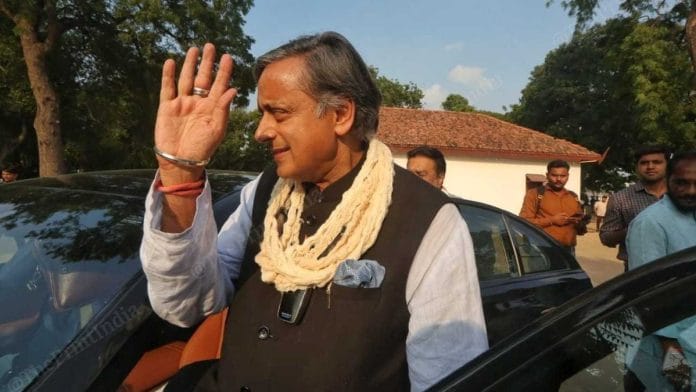
Over the past decade, the space for a viable federal-level opposition in India has steadily shrunk over the past decade. While the BJP’s use of investigative agencies against rivals plays a role, the larger problem is the Congress and its allies’ lack of resolve to challenge the BJP with comparable vigor or strategy. Yet, in an unexpected twist, Narendra Modi has unintentionally and inadvertently bolstered the opposition’s visibility by including Shashi Tharoor in India’s delegation tasked with engaging the international community after ‘Operation Sindoor’ to highlight Pakistan’s links to terrorism. Acting despite resistance from Tharoor’s own party, Modi executed a move widely regarded as a political masterstroke, both at home and abroad. In doing so, he may have subtly strengthened India’s democratic landscape—shifting the tenor of elections from debates over who will win to questions about by how much.
Since its early years and for much of the past seven decades, the Congress Party has operated more like a family-run enterprise than a modern political organization. The Gandhi–Nehru family’s grip has been absolute, and party leaders and functionaries have largely been reduced to serving a single purpose: safeguarding the family’s interests at all costs. Its internal functioning often resembles a Mughal-era durbar, where bloodline trumps merit, capability, or political competence. Congress’ own history makes this clear: figures like Sitaram Kesri and P.V. Narasimha Rao paid a steep price for crossing the family’s Lakshman Rekha. Their legacies have been scrubbed from the party’s official memory, remembered today mainly by the opposition as examples of the price paid for asserting independence. Since the ouster of Sitaram Kesri, any election involving a member of the Gandhi family has been either uncontested or so one-sided that it resembles the presidential polls of authoritarian regimes, where winners routinely secure over 90% of the vote. In the 2000 Congress presidential election, Sonia Gandhi won more than 99% of the ballots cast, and successive elections remain contest until Mallikarjun Kharge’s election in 2022. When Mallikarjun Kharge stood for president, he won 84% of the vote against Shashi Tharoor, who managed 11.5%, even with the Gandhi family openly backing Kharge. Although Tharoor’s share would be insignificant in a general election, not enough even to retain his deposit, yet within the Congress it is significant enough to kindle hope and the possibility of imagining an alternative. His vote percentage even surpasses what Sharad Pawar received as runner-up in 1996. This outcome indicates that, if nurtured and given a genuine choice at the right moment, a candidate outside the Gandhi fold can still find space in the party’s higher echelons.
Sashi Tharoor has never been shy about his ambitions, openly stating during his 2024 Lok Sabha campaign that he is willing to be the Congress’s chief ministerial candidate for the 2026 Kerala Legislative Assembly elections. Yet the Gandhi family’s inner circle at Congress headquarters is working tirelessly to block Tharoor from becoming the party’s official candidate, fearing that a victory could elevate his profile above their own. For Sashi Tharoor, the timing could not be more opportune. With the current CPI(M) government in Kerala facing double anti-incumbency, his strong national and international stature could well tip the scales in his favor for the nomination. If he reads the political landscape astutely, he might consider challenging the party establishment much like Narendra Modi did in 2014 and pour all his energy into the campaign should the opportunity arise.
If Tharoor secures the Congress nomination for chief minister and wins the Kerala election, the momentum could catapult him into a strong position for the party presidency in 2027. With his public stature and experience as a Union Minister, he appears well-placed to claim the role, provided he navigates the internal politics wisely. From that vantage point, he could reform the party, sidelining and rooting out sycophants who erode its democratic spirit for personal gain while exploiting the Gandhi family’s influence. Should everything align perfectly, the 2029 parliamentary elections could feature an extraordinary, quasi-presidential showdown, with Narendra Modi and Sashi Tharoor locked in a high-stakes, two-horse contest for the country’s most powerful office.
These pieces are being published as they have been received – they have not been edited/fact-checked by ThePrint.