




Thank you dear subscribers, we are overwhelmed with your response.
Your Turn is a unique section from ThePrint featuring points of view from its subscribers. If you are a subscriber, have a point of view, please send it to us. If not, do subscribe here: https://theprint.in/subscribe/
W
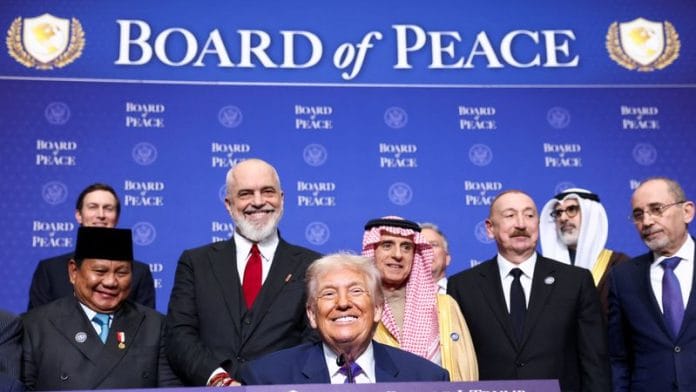
hen President Roosevelt and Prime Minister Churchill met on board HMS Prince of Wales on 14 August 1941 to create an alternative to the League, it was based on Western Supremacy. France was not interested, and China was not in the picture. Powerful Stalin had to be taken on board later. Side by side, with full control over the Bretton Woods institutions, these leaders created a power structure to govern their flagship organisation, the UN. The hypocrisy of the creators now brought the UN to a state where its very existence is being questioned. The question about its relevance was building up before even Russia invaded Ukraine. The Gaza war has probably confirmed that the UN is irrelevant, concluding that it must either be reformed or replaced by another effective organisation. President Trump’s proposal for the Board of Peace seems to be moving in that direction. With 47 nations already on board, if it expands as the UN has, from 51 member states to its current 193, the Board has become a threat as an alternative to the UN.
Most of the members who contributed to the board are from Middle Eastern nations. On the face of it, the benefit of peace in the Middle East seems to be the motive of these nations. Or are they looking to be the founding members of the new organisations if it replaces the UN, which had deprived them of any say when it (UN) was created. With the US President serving as Chairman with veto power, the US will control the Board and oversee the UN. With Russia’s power diminishing and the UK no longer a close US ally, the world is now unipolar. So, is multilateralism under threat? With so many nations already on board, technically, it is not anti-multilateralism. As President Trump said, “We’re going to strengthen the United Nations.” As Oudenaren earlier observed, a leading power in a unipolar world can continue to advocate multilateralism. What the US is therefore doing is using the UNSC (UNSCR 2803) to legitimise its power to extract cooperation from the Board’s members.
In my private conversation, an international legal expert observed that the UN was established under international laws, with its core principle of respecting state sovereignty, as enshrined in the Peace of Westphalia (also known as the Treaty of Westphalia, signed on 24 October 1648) and the Kellogg-Briand Pact of 1928. But the Board is not. Hence, the Board cannot replace the UN unless the UN’s member states ratify it. But the legality of the very international laws is under question when the powerful nations blatantly disregard the very laws created by them in “pursuit of their national interests.”
Democratic institutions require many years to become firmly established. Leaders’ consultations spanned over four years before the UN’s creation. It has since steered through a volatile geopolitical environment for more than eight decades. Critics, including the heads of governments at war with other nations, used the UN podium to criticise the organisation but never left it. Essentially, these leaders want the UN only for themselves and not for humanity. The Board, on the other hand, is a knee-jerk response to the UN’s failure to end the crisis. Or preventing the UN from doing its job and, hence, using it as an excuse to give birth to the Board, projecting it as an alternative to the UN? There are limits to what the Board can do. The chief among them is the militarisation of peace. By emphasising that stabilisation must precede political reconstruction, Resolution 2803 has gone against the UN’s principle of primacy of politics in conflict resolution. Then, what would motivate Hamas to disarm after a century of Palestinian armed struggle?
Is there a role for India in it? India was always the leading voice demanding the rightful place for all non-Western member states. At the time of signing the UN Charter, India did so reluctantly, hoping it would be reviewed within the next ten years. Its lead role in the Bandung Conference and the Non-Aligned Movement are only two of the many examples. The Bandung spirit was bottled by the Western powers, but seems to have come out of the bottle in the form of BRICS. As India repositions itself on the global platform as an effective member of BRICS, it faces challenges. A lot will depend on whether India wants to lead or act as a bridge, facilitating the Global South in coming together to break the selective world order.
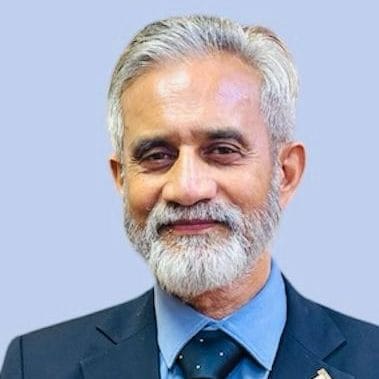
Major General (Dr) AK Bardalai, Retired is an Indian Army veteran who served as the Deputy Head of the Mission and Deputy Force Commander of UNIFIL (Lebanon)
These pieces are being published as they have been received – they have not been edited/fact-checked by ThePrint.