





Thank you dear subscribers, we are overwhelmed with your response.
Your Turn is a unique section from ThePrint featuring points of view from its subscribers. If you are a subscriber, have a point of view, please send it to us. If not, do subscribe here: https://theprint.in/subscribe/
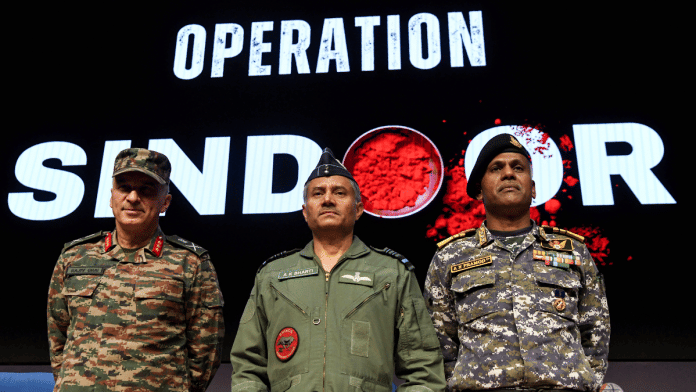
The four-day military confrontation between India and Pakistan has continued to shape strategic, diplomatic, and technological conversations well beyond the battlefield. While the fighting itself was brief, its implications have endured, particularly in the domain of air power, where the scale, composition, and restraint displayed by both sides have drawn sustained attention from military planners and policymakers worldwide.
The air engagement is widely described by analysts as among the largest fighter aircraft confrontations since the Second World War, not because of territorial changes or casualties, but due to the number of modern combat aircraft involved and the absence of escalation despite intense contact. Dozens of fighters operated simultaneously, employing long range missiles, electronic warfare, and airborne early warning assets, all while remaining within their respective airspaces. This combination of scale, sophistication, and restraint has made the conflict a case study in contemporary air warfare.
Competing Narratives and Measured Reality
As expected, both India and Pakistan issued sweeping claims regarding operational success. These ranged from assertions of aircraft losses to missile interceptions and electronic dominance. Independent verification of many of these claims remains limited, reinforcing a familiar lesson, modern conflicts are fought as much in the information domain as in the air. For external observers, the value of the episode lies less in official narratives and more in what can be inferred from force posture, platform usage, and subsequent policy decisions.
Eastern and Western Systems in the Same Battlespace
One reason the conflict has attracted exceptional interest is the coexistence of Western and Chinese military technology within the same air force. Pakistan operates upgraded American F 16s alongside Chinese J 10CE fighters and JF 17 variants. This makes Pakistan a rare operational environment where two rival technological ecosystems are fielded in parallel under combat conditions.
This situation has intensified concerns in both Washington and Beijing. The issue is not trust in Pakistan as an operator, but anxiety over unintended exposure of tactics, electronic signatures, and operational data. American and Chinese defence establishments are acutely aware that even routine maintenance, joint planning, or post mission analysis can generate insights valuable to competitors. Despite such concerns being raised in strategic circles, the White House has largely chosen to downplay them, prioritizing short term diplomatic objectives over long term technological insulation.
Lessons for India’s Air Power
For India, the conflict reinforced long standing realities rather than producing dramatic doctrinal shifts. It highlighted the importance of integrated air defence, electronic warfare resilience, and network centric operations. It also underscored the limits of platform centric thinking in an environment where detection, data fusion, and missile reach increasingly outweigh close range manoeuvre combat.
India’s response since the conflict has focused on tightening operational integration rather than headline acquisitions. The emphasis has been on sensor fusion, survivability, and readiness across a diverse fleet that includes Russian, European, and indigenous platforms. The takeaway has been clear, future effectiveness will depend less on individual aircraft and more on how well systems communicate and endure contested environments.
Global Technological Repercussions
Beyond South Asia, the conflict has influenced procurement and upgrade decisions elsewhere. One notable development has been renewed momentum behind integrating the Meteor beyond visual range missile into the F 35 program as part of its Block 4 upgrade. While this integration was already under consideration, lessons drawn from recent air combat environments have reinforced the need for longer range, high probability kill capabilities against advanced adversaries.
Diplomacy After the Shooting Stops
The aftermath also demonstrated how diplomatic manoeuvring can outweigh battlefield outcomes. Pakistan’s decision to nominate U.S. President Donald Trump for the Nobel Peace Prize was widely seen as a symbolic but calculated move. Similar gestures by other U.S. partners have historically proven effective in shaping narratives and access in Washington.
India chose not to participate in such post conflict signalling. As a result, it found itself navigating a less favourable diplomatic environment, including the imposition of tariffs and a more transactional tone in bilateral engagement. In this instance, symbolic diplomacy proved more immediately influential than military positioning.
India, the U.S., and the Long View
Structurally, India remains the more compelling long-term partner for the United States. Its economy is expanding rapidly, its market depth is unmatched in the region, and its strategic interests align with U.S. objectives across the Indo Pacific. From an institutional perspective, U.S. policy planners recognize this.
However, short term politics often operate on different incentives. Personal relationships, business linkages, and informal influence channels can temporarily override strategic logic. Analysts have noted that Pakistan’s ability to cultivate access within Trump’s inner circle, including through family connected networks, gave it disproportionate leverage during the post conflict phase. Whether this advantage endures remains uncertain.
Conclusion
The India–Pakistan conflict will not be remembered for territorial change or decisive victory. It will be studied for how modern air forces operate under escalation constraints, how rival technologies coexist uneasily within allied fleets, and how diplomacy after combat can shape outcomes more effectively than combat itself. In that sense, the skies may have gone quiet, but the lessons are still unfolding.
These pieces are being published as they have been received – they have not been edited/fact-checked by ThePrint.