




Thank you dear subscribers, we are overwhelmed with your response.
Your Turn is a unique section from ThePrint featuring points of view from its subscribers. If you are a subscriber, have a point of view, please send it to us. If not, do subscribe here: https://theprint.in/subscribe/
The Bihar elections were, for some sections, supposed to settle the national political mood. Instead, they have triggered a national unease. The mandate was massive in numerical terms, yet the energy on the streets reveals an entirely different verdict. It is as if the country is voting twice—once in the polling booth and once in the public square—and these two verdicts are violently at odds.
Across cities and towns, the anger is unmistakable. Inflation, unemployment, collapsing public services, food insecurity, authoritarian policing, and a pervasive sense of injustice have pushed ordinary citizens beyond routine frustration. This is not the choreography of party-managed protests; it is the raw pulse of a society that senses betrayal. This divergence between electoral numbers and lived realities is not new in South Asia. Sri Lanka learned this in 2022 when the ballot could no longer contain public fury. Nepal confronted it when its political class lost all credibility. India, too, stands at a similar precipice.
The “bag of tricks” that once dazzled voters—spectacle politics, hyper-nationalism, manipulated narratives, and the continuous manufacturing of enemies—now feels stale. The packaging is old, the contents discredited. People are hungry for jobs, for dignity, for justice; the political establishment keeps serving distraction and theatre. A gulf has opened between what people endure and what governments imagine they can sell. That gulf is now widening into revolt.
Inevitably, the question arises: is this the beginning of a new JP Movement? In emotional temperature, certainly. In its moral outrage, unquestionably. India today mirrors the same disquiet that marked the early 1970s—discontent with corruption, anger at unresponsive power, and the sense that institutions have been hollowed out. But one critical ingredient is missing: leadership. JP was not merely a protest figure; he was a unifying moral force who articulated a national conscience. Today’s moment lacks such coherence.
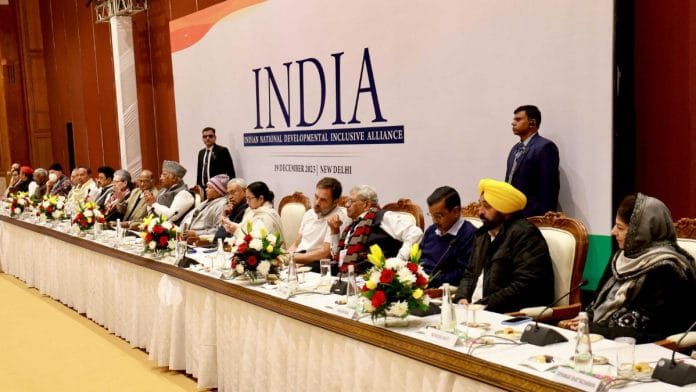
The Opposition is present but not leading. Rahul Gandhi speaks to moral politics but has not fully stepped into the role the moment demands. Mamata Banerjee carries enormous political weight but remains confined to regional imperatives. Tejashwi Yadav shows promise but remains tentative. The southern leadership—Stalin, Revanth Reddy, Pinarayi Vijayan – offers administrative competence but is yet to translate that into a national language of protest.
At precisely such a juncture, the Left has re-emerged with an opportunity it has not seen in decades. With its grounding in class politics, its organisational discipline, and its historical experience in mass movements, the Left can serve as the ideological anchor of a broad anti-fascist coalition. But it must abandon its comfort zones, shed factional habits, and embrace a true united socialist-democratic front. India does not need vanguardism; it needs solidarity.
The country is entering a phase where uncoordinated anger can easily spill into despair—and then into anarchy. Economic distress is acute, social cohesion is fragile, and institutional trust has evaporated. Without strategic leadership, the anger of the streets may intensify without direction, much like Sri Lanka’s Aragalaya, which toppled a regime but did not produce a stable alternative. Protest energy is not enough; it must be shaped into political energy.
What India needs now is a coherent, principled, and morally compelling Opposition strategy—one that does not merely react to crisis but reimagines the Republic itself. The task is not only electoral; it is structural. It requires a commitment to rebuild institutions, democratise political parties, defend civil liberties, and restore the social contract between state and citizen.
This is a historic moment. The people are speaking more loudly than the political establishment. They are telling us that the electoral mandate is not a licence to evade responsibility. They are telling us that governance must be rooted in justice, not propaganda. And they are telling the Opposition that hesitation is no longer an option.
History is knocking again. Whether this becomes India’s new JP moment depends not on the anger of the people—they have already declared their rejection – but on whether the Opposition can rise to meet them. The streets are ready. The question is whether the leaders are.
These pieces are being published as they have been received – they have not been edited/fact-checked by ThePrint.