








DUBAI, Jan 3 (Reuters) – The United Arab Emirates said on Saturday it was deeply concerned by an escalation in Yemen after Saudi-backed government forces swept into areas seized last month by UAE-backed southern separatists seeking independence.
The fast-moving crisis in Yemen has opened a major feud between the two Gulf powers and fractured the coalition of forces, headed by the internationally recognised government, who are fighting the Iran-backed Houthi movement.
The UAE statement said Yemenis should exercise restraint and prioritise dialogue to safeguard security and stability.
It came hours after the UAE-backed Southern Transitional Council (STC) announced its intention to hold a referendum on independence in two years as its forces were ejected from some strategically important areas they suddenly seized last month.
ESCALATION
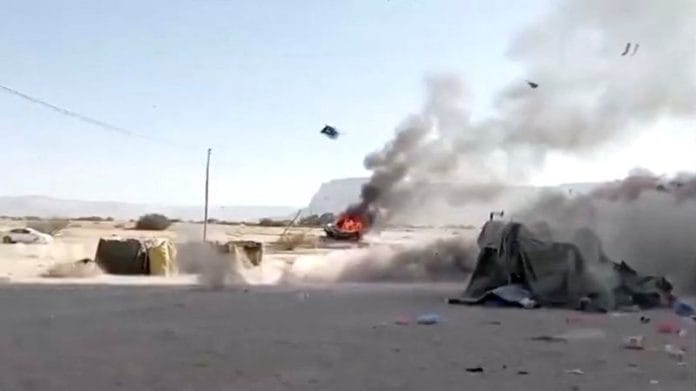
Saudi-backed forces said on Friday they had taken control of key locations in Hadramout, a large province with stretches of desert along the Saudi border, and on Saturday witnesses said they had entered parts of the region’s capital Mukalla.
The Saudi-backed governor of Hadramout said authorities would grant safe passage to STC fighters to leave Mukalla and areas further east towards Aden.
The STC appealed on Saturday for regional and international leaders to intervene against what it described as a “Saudi-backed military escalation” in eastern Hadramout and Mahra provinces.
In a statement, it added that northern Islamist factions – an apparent reference to the Islah party that is part of the internationally recognised government – had targeted civilians and vital infrastructure.
Yemen, split for a decade between warring regions, sits at a highly strategic location between the world’s top oil exporter Saudi Arabia and the Bab al-Mandeb strait that guards the vital sea route between Europe and Asia.
The STC has for years been part of the internationally recognised government that controls southern and eastern Yemen and is backed by Gulf states against the Houthis.
Overnight the leader of that government, Presidential Council chief Rashad al-Alimi, said he had asked Saudi Arabia to host a forum to resolve the southern issue, adding he hoped this would bring all southern factions together.
Aden airport, the main transport hub for areas of Yemen outside Houthi control, has been closed since Thursday after a dispute over new restrictions announced by the internationally recognised government on flights with the UAE.
The STC and Saudi Arabia have accused each other of responsibility for shutting off air traffic. The STC in its statement on Saturday said southern Yemen was being subjected to a land, sea and air blockade.
REGIONAL CRISIS
The crisis began early last month when the STC suddenly seized swathes of territory including Hadramout, establishing firm control over the whole territory of the former state of South Yemen that merged with the north in 1990.
The leadership of the internationally recognised government, which had been based in Aden and included several ministers from the STC, departed for Saudi Arabia, which regarded the southern move as a threat to its security.
The crisis triggered the biggest split in decades between formerly close allies Saudi Arabia and the UAE, as years of divergence on critical issues came to a head, threatening to upend the regional order.
How far the feud over their differences on regional security bleeds into other issues may become plainer over the weekend as both countries join a scheduled OPEC meeting to determine the group’s oil output policy.
Early this week Saudi Arabia bombed a base in Hadramout and asked all remaining UAE forces in Yemen to depart, calling this a red line for its security, and the UAE complied.
The STC declaration on Friday that it wants a two-year transition period leading to a referendum on independence for a new South Arabian state was the movement’s clearest indication yet of its intention to secede.
(Reporting by Maha El Dahan and Enas Alashray; Writing by Angus McDowall; Editing by Toby Chopra and Susan Fenton)
Disclaimer: This report is auto generated from the Reuters news service. ThePrint holds no responsibility for its content.