








By Karam al-Masri and Khalil Ashawi
RAQQA, Syria, Jan 19 (Reuters) – Syrian government troops tightened their grip on Monday across a swathe of northern and eastern territory abruptly abandoned the previous day by Kurdish forces, in a dramatic shift that consolidated President Ahmed al-Sharaa’s rule.
After days of fighting with government forces, the Kurdish-led Syrian Democratic Forces (SDF), once the main U.S. allies in Syria, agreed on Sunday to withdraw from two Arab-majority provinces they had controlled for years, including oil fields.
There were reports of clashes on Monday despite the deal. The SDF said a jail where it holds thousands of Islamic State militants in the east came under attack by armed groups, without naming them, and that it was fighting government forces near a second jail where it was holding IS militants near Raqqa.
The Syrian army accused Kurdish forces of trying to derail the deal, reporting that three of its troops were killed in attacks.
But the broader SDF withdrawals marked the biggest change in Syria’s control map since Islamist fighters led by Sharaa toppled President Bashar al-Assad in 2024, tilting the power balance Sharaa’s way after months of deadlock in talks with the SDF over government demands its forces merge fully with Damascus.
GOVERNMENT TROOPS DEPLOY AT OILFIELD, IN RAQQA
Neighbour Turkey, which has repeatedly sent forces into northern Syria to curb Kurdish power since 2016, welcomed the agreement signed by its ally Sharaa and SDF commander Mazloum Abdi, voicing hope it would help bring stability and security.
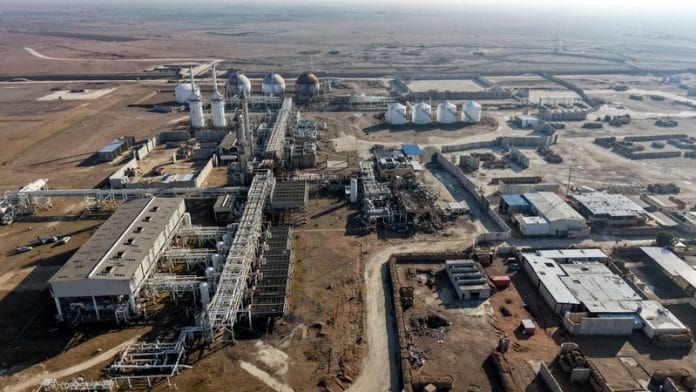
Reuters journalists saw government forces deployed in the city of Raqqa that the SDF had captured from Islamic State in 2017, and at oil and gas facilities in the eastern province of Deir al-Zor – both areas the Kurdish forces had held for years.
The SDF, spearheaded by the Kurdish YPG militia, had established control of a quarter or more of Syria during the 2011-2024 civil war, whilst fighting with the support of U.S. troops against Islamic State. The United States, which has since established close ties with Sharaa under President Donald Trump, has been closely involved in mediation between the sides.
In Raqqa, government internal security forces and military police were setting up checkpoints and checking IDs.
Security sources in Raqqa told Reuters that the city had been cleared of SDF fighters overnight, though some snipers had held out until Sunday evening.
In Deir al-Zor, a Reuters reporter saw state security forces at both the al-Omar oilfield – Syria’s largest – and the Conoco gas field. Al-Omar had long served as the SDF’s main base in the area. Two guards stood outside the Conoco field’s gate. A large Syrian military convoy was deploying to al-Omar. There was no visible SDF presence.
SDF RETAINS CONTROL OF SYRIA’S NORTHEAST CORNER
The SDF retains control of the northeastern province of Hasakah, which includes the Kurdish-majority city of Qamishli, the main prisons holding Islamic State detainees, and a camp holding thousands of IS-linked prisoners.
In a statement, the SDF media centre said SDF forces were engaged in heavy clashes with armed groups who were attacking the prison in Shaddadi in Hasakah province, without identifying the attackers.
In a separate incident, the SDF said its forces were clashing with government fighters near a prison holding Islamic State detainees near Raqqa.
The deal stipulates that the prisons, along with all border crossings and oil and gas fields, would be handed to government control, steps the SDF had long resisted. The timing of the handover of the prisons and camps was not announced.
Abdi, the SDF commander, confirmed on Sunday that the SDF had agreed to withdraw from Deir al-Zor and Raqqa provinces, both of which have Arab majorities. The 14-point deal published by Syria’s presidency showed his signature alongside Sharaa’s.
Abdi said he is set to meet Sharaa in Damascus on Monday and would share the details of the agreement with the public after his return to SDF-held territory, Kurdish media reported.
Abdi said his group remained committed to protecting the “achievements” of the Kurdish region in the northeast.
The deal says that all SDF forces will be merged into the central defence and interior ministries as “individuals” and not as whole units, as the SDF had sought.
The agreement commits the SDF to expel all non-Syrian figures affiliated to the Kurdistan Workers’ Party (PKK), a Kurdish militant group which fought a decades-long insurgency in Turkey.
Senior figures from Turkish President Tayyip Erdogan’s ruling AK Party said this removed a major obstacle to Turkey’s peace process with PKK militants.
(Additional reporting by Maya Gebeily in Beirut, Suleiman al-Khalidi in Amman, Jana Choukeir and Ahmed Elimam in Dubai, Daren Butler in Istanbul, Ece Toksabay in Ankara; Writing by Tom Perry; Editing by Peter Graff and Andrew Heavens)
Disclaimer: This report is auto generated from the Reuters news service. ThePrint holds no responsibility for its content.