








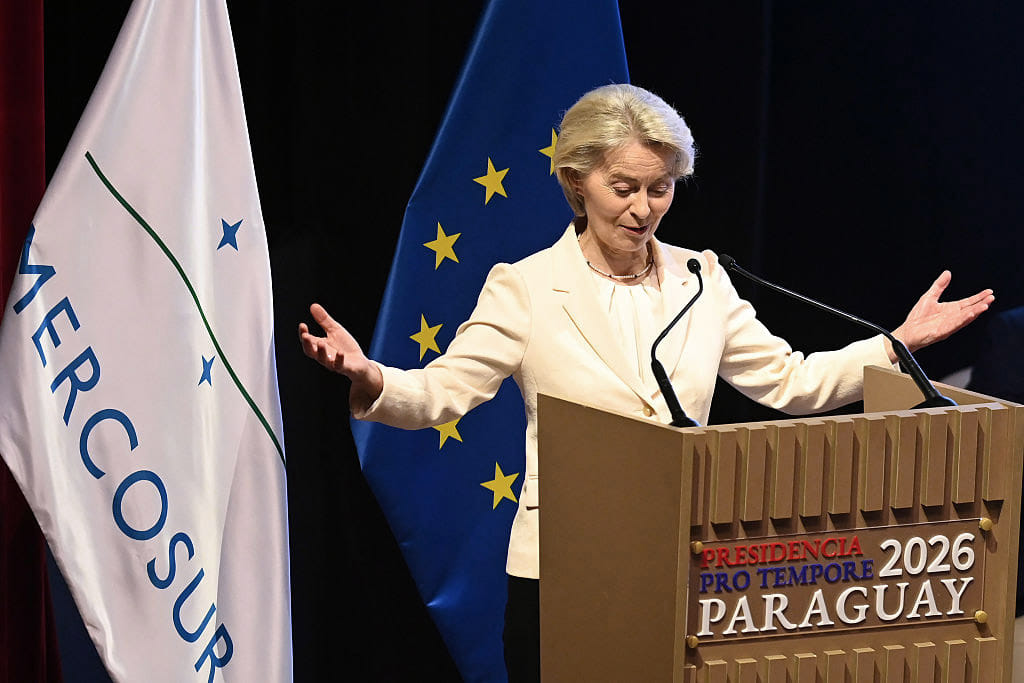
Ursula von der Leyen was preparing to claim a rare victory on Saturday, sealing a trade pact with South America’s biggest economies. Donald Trump had other ideas.
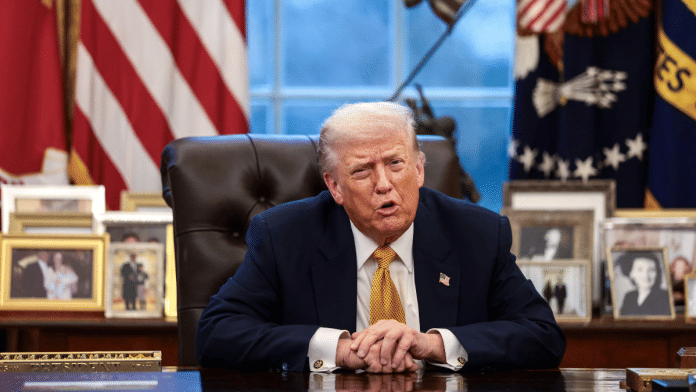
Moments before von der Leyen stepped to the podium in Paraguay, the US president dropped a blistering announcement: He was piling more tariffs on Europe over its support for Greenland.
As the European Union’s top executive, von der Leyen was suddenly in an unexpected spotlight as people waited to see if she would publicly rebuke the US president’s latest threat to unravel alliances built over decades.
She didn’t. And when her response came — a statement later that night — multiple officials and diplomats called it “weak.”
“President von der Leyen takes all decisions with one objective in mind: serving the best interests of the EU and its citizens,” said Paula Pinho, chief spokesperson for the European Commission, the EU’s executive arm.
The moment illustrates a simmering frustration with von der Leyen’s leadership that is beginning to boil. Her preference for trade concessions over confrontation with Trump has done nothing to impede Washington and little to benefit the EU, numerous officials have pointed out.
“European appeasement strategy has failed,” said Arancha Gonzalez Laya, Spain’s former foreign minister, using historically fraught terms that several senior officials have used in private.
Meanwhile, von der Leyen has slow-walked a promised economic revival plan back home, these officials added, leaving Europe more exposed to US bullying. That economic weakness and her weakness on trade are now all converging on Greenland, as Trump’s tariff ultimatum over the Danish territory brings the US and EU to the brink of economic warfare.
Whether von der Leyen can carry the EU through this moment carries existential stakes. It will determine whether the bloc can protect Ukraine from Russian aggression and adapt to a new world order where power brokers like the US and China have quashed the international system Europe spent decades building.
“What Europe needs is an intelligent deterrence capacity to deal with predators,” said Gonzalez Laya, who represented Spain during Trump’s first term.
This assessment is based on conversations with more than a dozen officials and diplomats who have worked closely with von der Leyen and her team. They all spoke on the condition of anonymity to speak freely.
Reelection Vow
Von der Leyen’s pledge to focus on the bloc’s economic competitiveness and security was the linchpin of her 2024 reelection for a second term atop the commission.
She came armed with a 400-page plan of action from Mario Draghi, the former European Central Bank head and one of the continent’s most respected economic minds. Europe could leverage its €20 trillion-plus ($23.2 trillion) single market and 450 million people to project geopolitical power globally, the argument went.
Over a year later, however, much of the blueprint remains unfulfilled, while the US and China threaten to swallow Europe economically and Russia menaces on its borders.
Some officials suggested that von der Leyen was more drawn to the spotlight of meetings with world leaders and international issues than the minutiae of domestic economic policies.
“Anyone who has worked with her knows that this claim is completely unfounded and lacks factual basis,” Pinho said in response.
Other officials argued that von der Leyen hasn’t empowered the commissioners overseeing various policy files. Von der Leyen’s team, they said, retains tight control over day-to-day operations across the EU’s executive branch, drafting proposals that normally go through other departments, directing internal communications and making the final say on even minor job appointments.
The result, they say, is delay at a time when Europe cannot afford it.
Draghi himself cautioned in September that the EU was moving too slowly on needed economic reforms. “To carry on as usual is to resign ourselves to falling behind,” he said in a speech, with von der Leyen in the audience.
Pinho disputed the officials’ perception, arguing the commission used “an inclusive decision process” and that “the urgency mindset of this commission is blatantly clear.” She said von der Leyen was also leading on economic files, citing the South American deal and late-stage trade negotiations with India.
And von der Leyen’s trade strategy with the US, Pinho added, was a faithful reflection of what EU leaders and businesses wanted from Brussels.
Even von der Leyen’s critics acknowledge she has led Europe through historic crises, often with success. Her centralized leadership may have even helped in these situations, they said.
In her first term, von der Leyen put the EU in charge of coordinating vaccine purchases and convinced countries to take on joint debt to help people weather the economic fallout.
Later, when Russia sent troops streaming into Ukraine, von der Leyen’s team worked closely with US President Joe Biden to coordinate tough sanctions on Moscow. She then pushed Europe to sever its deep Russian energy ties and helped ensure that billions kept flowing to Ukraine, even after Trump cut off US aid.
Economically, she hit Chinese electric vehicles with tariffs, despite intense German lobbying against the move.
Then there is the trade deal with the Mercosur bloc of South American countries, the one von der Leyen was in Paraguay to sign on Saturday. The pact is the EU’s largest-ever free-trade agreement. It took 25 years of stop-start negotiations to get it finalized.
These are all major achievements, officials say. None of them were a given.
Trump’s Return
But von der Leyen started her second term just weeks before Trump returned to the White House, quickly pulling attention to a potential transatlantic trade war and the loss of US support for Ukraine.
The EU chief moved swiftly to strike a trade accord, even if it meant making painful compromises, following the guidance of many EU countries.
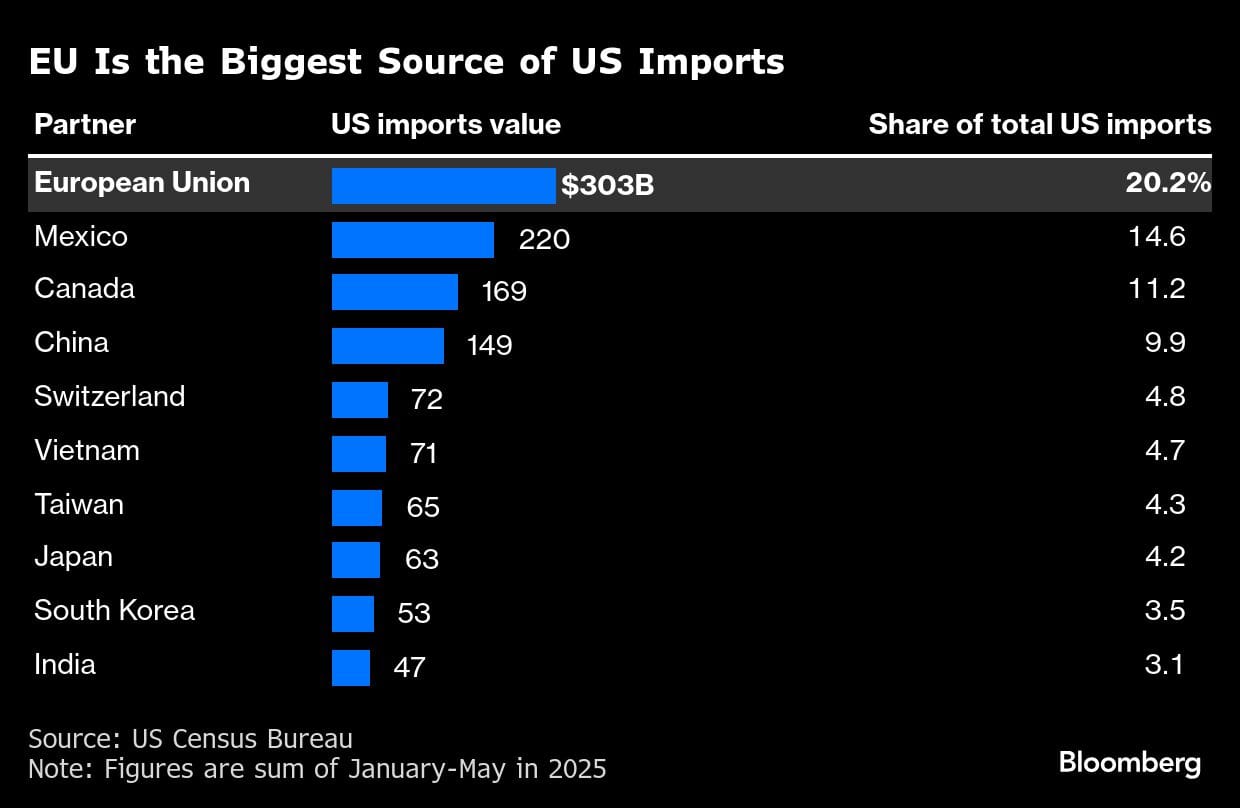
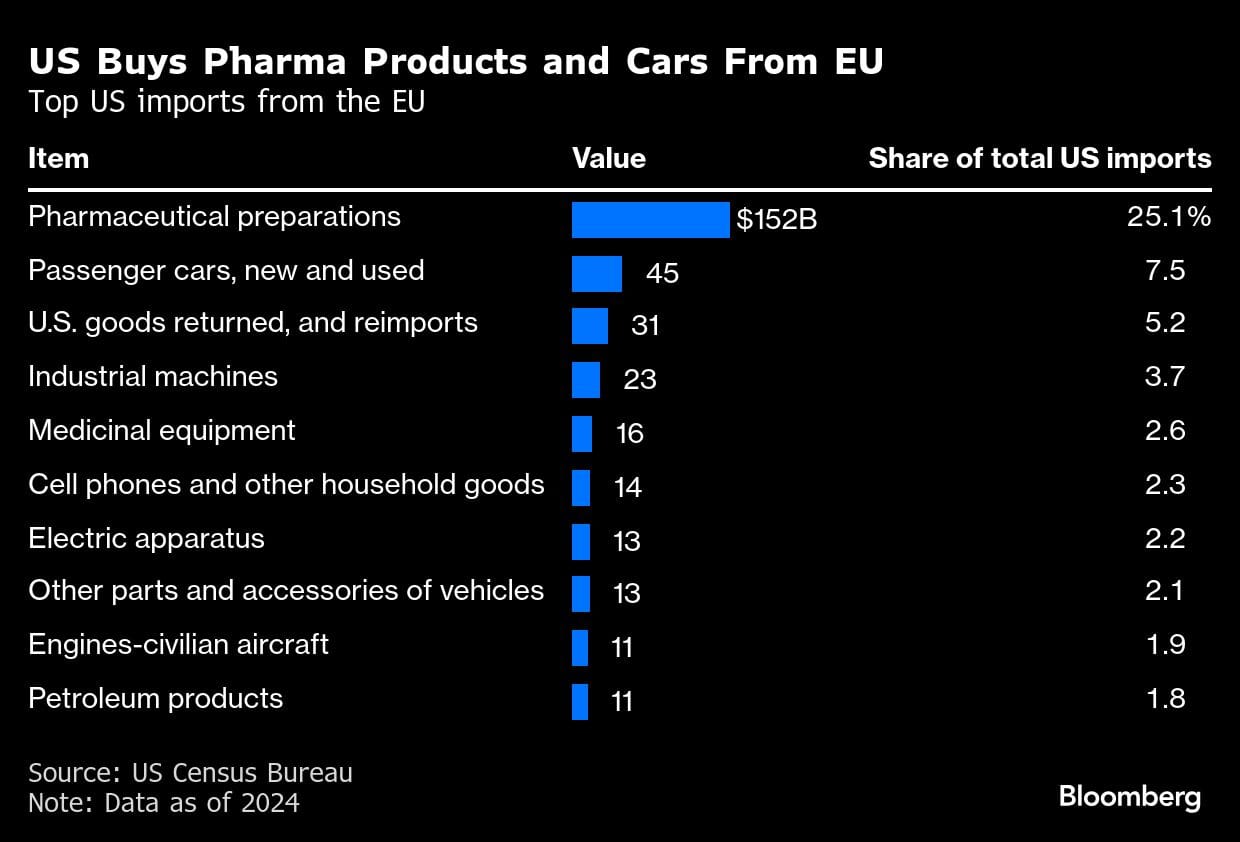
In July, von der Leyen flew to Trump’s golf resort in Scotland to pose for thumbs-up photos with the president after signing a deal that accepted a 15% tariff on EU exports to the US, while removing all tariffs on US industrial goods and some agricultural products entering the single market.
The deal “creates certainty in uncertain times,” von der Leyen said at the time, echoing the sentiment of numerous EU capitals — and the desire to keep Trump on Europe’s side in Ukraine.
No certainly has arrived, though. And Trump continues to swerve on Ukraine.
From the start, a group of officials warned that the EU was giving up more than it was getting. They argued that if the bloc didn’t take a more forceful approach, the US would only return with extra requests later. They also cautioned that trade issues risked bleeding into other matters.
Those voices grew when Washington expanded a 50% metals tariff to hundreds of additional products and started demanding changes to EU tech regulations.
After this weekend, the deal is on life support. European Parliament leaders have said they will withhold their final approval for now, while others wonder why the pact was signed in the first place.
There is a growing realization internally, one EU official said, that the bloc’s current approach to the US is not going to get the desired results. But they see little chance of a muscular pivot.
Meanwhile, the ECB last week noted that problems within the EU’s own single market, touted as the bloc’s biggest benefit, are actually creating higher trade barriers than the US — equivalent to levies of 67% for goods and 95% for services.
The findings reflected a sentiment officials expressed: While von der Leyen is not to blame for Trump’s erraticism, she hasn’t done enough on the EU executive’s core job to ease business within the single market.
Yes, she is constrained by EU capitals that are frequently divided and at times blatantly obstructive. But she has also largely opted to stick with the bloc’s consensus-based traditions, even as it increasingly becomes an obstacle to making quicker progress.
“Too often, excuses are made” for the EU’s plodding economic reforms, Draghi said in September. “We say it is simply how the EU is built. That a complex process with many actors must be respected. Sometimes inertia is even presented as respect for the rule of law. I think that is complacency.”
Opportunity Overtaken
It was telling that von der Leyen’s attempt to trumpet one of her biggest accomplishments on Saturday was drowned out by the Trump bullhorn.
The South American accord was meant to show Washington that Europe could find likeminded economic partners elsewhere, that it wouldn’t always necessarily need the US.
That sentiment didn’t even last through the press conference. Attention was back on Trump before it even began, and back on the question of what to do with a US president that blares disdain for Europe.
At some point, said one senior EU diplomat, Europe may have to decide that a relationship with the US is lost for now, that the costs outweigh the benefits.
Greenland, they added, could be that point.
Disclaimer: This report is auto generated from the Bloomberg news service. ThePrint holds no responsibility for its content.