








By Olena Harmash
KYIV, Jan 30 (Reuters) – Russia and Ukraine said on Friday they had halted strikes on each other’s energy infrastructure but differences emerged over the timeframe for the moratorium and there was uncertainty about the next step in talks to end the nearly four-year-old war.
The Kremlin said it had agreed to U.S. President Donald Trump’s request to halt strikes on energy targets, which have knocked out power and heating to hundreds of Kyiv apartment buildings. But spokesman Dmitry Peskov indicated the measure would end on Sunday.
Ukrainian President Volodymyr Zelenskiy said Russia had conducted virtually no strikes in the past 24 hours, though he and his prime minister said Moscow had reoriented its strategy and were now hitting logistical points, notably rail junctions.
Zelenskiy said the moratorium for strikes on energy infrastructure had gone into effect for a week, starting from Friday at midnight. He also noted there was no formal truce between the two countries as the Ukrainian capital braced for another bitterly cold spell from Sunday.
“In all our regions, there were indeed no strikes on energy facilities from Thursday night to Friday,” Zelenskiy said in his nightly video address. “Ukraine is ready in reciprocal terms to refrain from strikes and today we did not strike at Russian energy facilities.”
Ukrainian Prime Minister Yulia Svyrydenko said that over the past 24 hours alone, Russia had carried out seven drone attacks on railway facilities.
The Kremlin said President Vladimir Putin had accepted Trump’s request to stop bombarding Kyiv to create “favourable conditions” for peace talks.
RESIDENTS LEFT WITHOUT HEATING
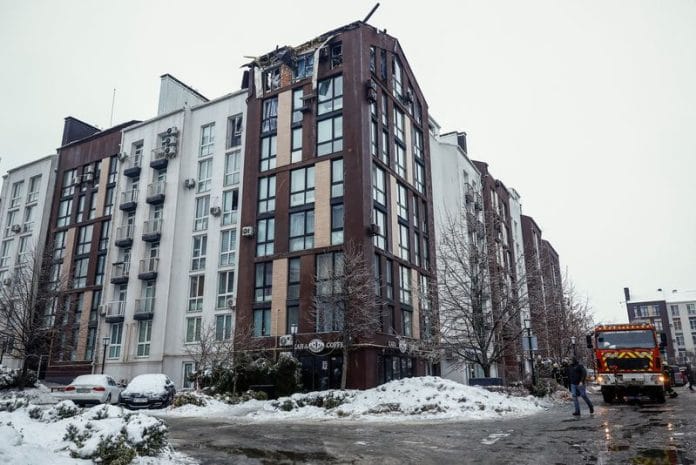
In recent weeks, Russian strikes on energy infrastructure in Kyiv have left hundreds of thousands of people without heating for days on end at times as temperatures have dipped below minus 15 degrees Celsius (5 Fahrenheit).
Zelenskiy said 378 residential high-rise buildings remained without heating on Friday. Weather forecasters say that from Sunday temperatures in the Ukrainian capital will plunge as low as minus 26 degrees Celsius.
“President Trump did indeed make a personal request to President Putin to refrain from striking Kyiv for a week until February 1 in order to create favourable conditions for negotiations,” Peskov said, confirming that Putin had agreed.
In a separate briefing with reporters, Zelenskiy said Ukrainian air defences had been left depleted because Kyiv’s European allies had delayed payments to the U.S. under the PURL weapons purchase programme.
As a result, he said, U.S. Patriot air defence missiles had not arrived ahead of heavy Russian airstrikes on Kyiv that knocked out power to swathes of the city this month.
Diplomatic efforts to end the war have produced no tangible results. Zelenskiy said two main issues remained unresolved — Russia’s demand to cede all of the Donbass region and control over the Zaporizhzhia nuclear power plant, Europe’s largest.
NEXT DIPLOMATIC MEETING
The president said he did not know when the next meeting of Russian, Ukrainian and U.S. negotiators, originally scheduled for Sunday in the United Arab Emirates, would take place.
“The date or the location may change – because, in our view, something is happening in the situation between the United States and Iran. And those developments could likely affect the timing,” Zelenskiy said.
In Moscow, two sources told Reuters that Kirill Dmitriev, Putin’s special envoy, would travel to Miami on Saturday for meetings with members of Trump’s administration.
Kyiv residents doubted the energy truce would lead to any lasting improvement, saying they had no choice but to endure the darkest and coldest winter of the nearly four-year war.
“I trust neither Putin nor Trump, so I think that even if he (Putin) complies now, he will stockpile missiles and will still keep firing,” said Kyiv pensioner Kostiantyn, 61, who didn’t provide his family name. “Putin’s goal is the destruction of Ukraine, and all we can do is resist.”
The Ukrainian Air Force said Russia had launched a ballistic missile and 111 drones in its latest overnight attacks on Ukraine. Zelenskiy said the missile damaged warehouses of the U.S. company Philip Morris in the northeastern Kharkiv region.
Movements towards a ceasefire for the energy sector come at a critical moment. Russian troops are continuing their grinding advance in Ukraine’s eastern Donetsk region, and Moscow sends hundreds of drones in nearly daily attacks on Ukrainian towns and cities far from the front lines.
Putin’s demand that Ukraine surrender the 20% it still holds of Donetsk Region – about 5,000 sq km (1,900 sq miles) – has proven a stumbling block to any settlement. Zelenskiy has ruled out giving up territory that Ukraine has shed blood to defend.
U.S. Secretary of State Marco Rubio had said on Wednesday that Trump’s top envoys Steve Witkoff and Jared Kushner, who attended the previous round of talks, would not participate in the scheduled meeting this weekend in Abu Dhabi.
U.S. officials said headway was made at last weekend’s talks but no details have emerged. Russia and Ukraine both said there has been no sign of compromise on the question of territory.
(Additional reporting by Anna Pruchnicka, Editing by Daniel Flynn, Ron Popeski and Alistair Bell)
Disclaimer: This report is auto generated from the Reuters news service. ThePrint holds no responsibility for its content.