








BUDAPEST, March 5 (Reuters) – Two ethnic Hungarian prisoners of war who were released by Russia to Budapest arrived in the country early on Thursday, drawing condemnation from Kyiv as “provocation” as the POWs were also dual citizens of Ukraine.
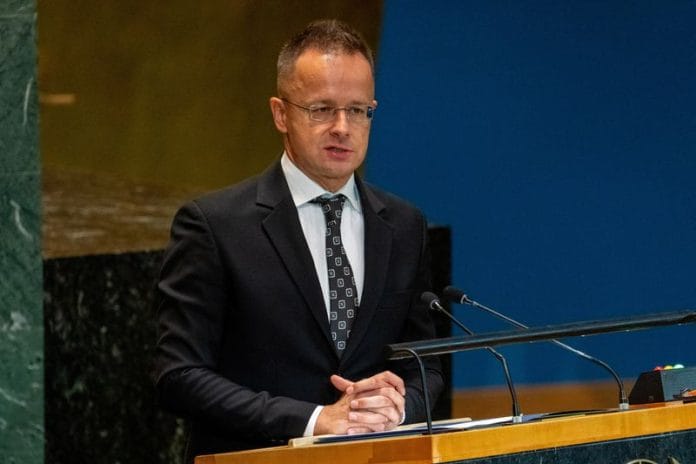
Hungary’s Foreign Minister Peter Szijjarto secured their release at a meeting with Russian President Vladimir Putin in Moscow on Wednesday, a day after Hungary’s Prime Minister Viktor Orban held a phone call with the Russian leader over the crises in the Middle East and Ukraine, and energy supplies for Hungary.
The move drew Ukraine’s ire, with its prisoner exchange coordination committee calling it a Russian “provocation.”
“The transfer of two Ukrainian prisoners by Russia to the Hungarian side is a gross violation of international humanitarian law,” it said on the Telegram messaging app.
Both Putin and the Hungarian foreign ministry have referred to the POWs as dual citizens of Hungary and Ukraine.
ETHNIC HUNGARIANS IN UKRAINE’S TRANSCARPATHIA REGION
Ukraine is home to around 150,000 ethnic Hungarians, most of them in the Transcarpathia region. Orban’s government and Kyiv have long clashed over the community’s language rights.
Hungary maintains warm relations with Moscow despite Russia’s full-scale invasion of Ukraine, and continues to buy Russian oil and gas despite EU sanctions.
Szijjarto said earlier on Wednesday that two ethnic Hungarian prisoners of war had recently asked Hungary for help.
“I hope that after our talks more people will fly home on the plane than who came in this direction,” Szijjarto said on his Facebook page.
Orban has made Russia’s war on Ukraine a key topic in his campaign for the April 12 parliamentary election, adding to friction between Budapest and Kyiv.
Budapest has accused Kyiv of conscripting ethnic Hungarians. Last Friday, the foreign minister summoned Kyiv’s ambassador to Budapest to protest the conscription of two men.
(Reporting by Anita Komuves; additional reporting by Anna Pruchnicka; Editing by Bernadette Baum)
Disclaimer: This report is auto generated from the Reuters news service. ThePrint holds no responsibility for its content.