








By Sarah Morland and Aida Pelaez-Fernandez
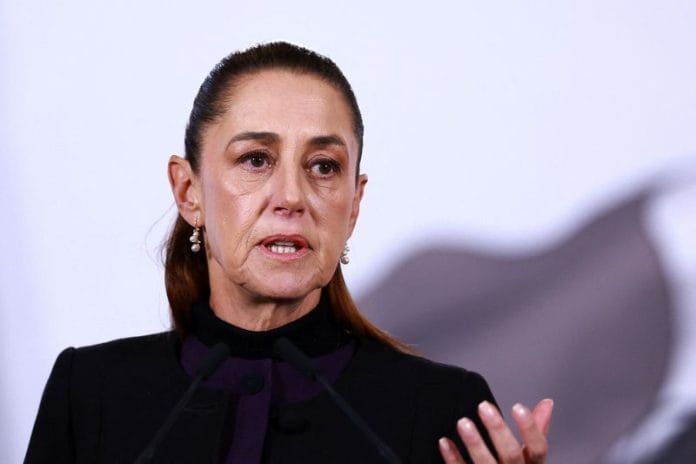
MEXICO CITY, Feb 25 (Reuters) – Mexican President Claudia Sheinbaum said on Wednesday she will send a bill to Congress next week to reform the country’s electoral law, which the government argues will cut spending but opponents fear will allow the ruling party to consolidate its power.
“We don’t want a state party or a single party,” Sheinbaum said. “They are simple, very rational reforms that respond to the demands of the people.”
The bill, to be sent to Congress on Monday, proposes to slash public spending for electoral processes by 25% and redistribute funds to healthcare, education and other social programs, she said.
Pablo Gomez, the head of the electoral reform commission, said Mexico spent $3.55 billion on electoral systems in 2024.
Plurinominal lawmakers, who are currently appointed to political lists by party leaders and assigned to Congress based on each party’s total vote share, would now need to campaign for the public vote for direct election, Sheinbaum said, adding this was a key demand in public consultations.
They represent 200 of Mexico’s 500 representatives in the lower house, and 32 of 128 senators.
REDUCED FINANCING FOR PARTIES
The reform would cut financing for political parties, limit daily TV and radio time per broadcaster per campaign, require labels for AI-made content, ban bots and cap pay for elected representatives and electoral officials, some of whom earn more than the president, Sheinbaum said.
The number of councillors on Mexico’s INE electoral commission would remain the same, she said.
Consecutive reelection would also be banned from 2030, and voting would be simplified for Mexicans living abroad.
The proposal needs the approval of at least two-thirds of each chamber of Congress, creating an uphill battle for Sheinbaum’s Morena party unless it can secure support from its allies, the Labor Party and the Green Party, which oppose key points of the bill. The opposition PRI party has said this would undermine the democratic system by eliminating party representation.
Much of the opposition to the bill comes from the plan to scrap election via political lists, Sheinbaum said.
The proposal follows the ruling Morena party’s overhaul last year of judicial elections, which it said would democratize justice, but critics said could jeopardize it and worsen corruption by opening courts to political campaigns.
Sheinbaum’s predecessor and mentor, Andres Manuel Lopez Obrador, sought to usher in an electoral reform several times during his six-year tenure.
($1 = 17.1840 Mexican pesos)
(Reporting by Sarah Morland, Aida Pelaez-Fernandez, Raul Cortes, Diego Ore and Lizbeth Diaz, Editing by Daina Beth Solomon, Rod Nickel)
Disclaimer: This report is auto generated from the Reuters news service. ThePrint holds no responsibility for its content.