





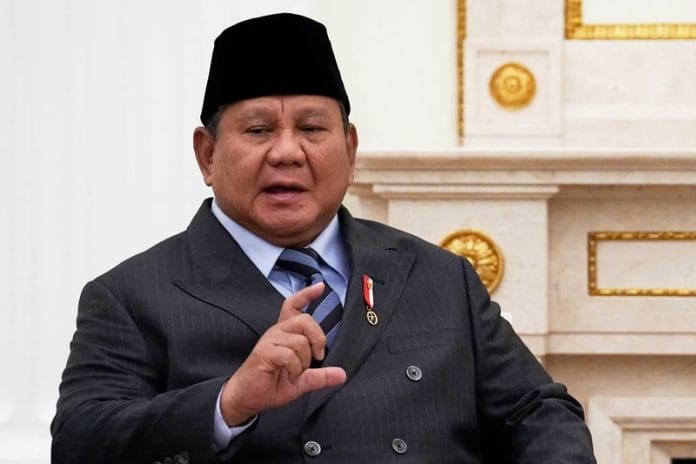



JAKARTA, Jan 19 (Reuters) – Indonesian President Prabowo Subianto has nominated his nephew to join the central bank’s board of governors, his spokesperson said, amid growing concern about its independence as the government seeks more support for ambitious economic targets.
Investors have worried that independent monetary policymaking in Southeast Asia’s largest economy might be under pressure as Prabowo targets economic growth of 8% by 2029, from about 5% now.
Those fears grew after Bank Indonesia unveiled a new burden-sharing deal last year to fund some government programmes.
Prabowo’s nephew Thomas Djiwandono is one of three nominees whose names have been submitted to parliament, presidential spokesperson Prasetyo Hadi told reporters, without identifying the others.
The nomination follows the resignation of central bank deputy governor Juda Agung, he added, well before the 2027 end of his tenure specified on the bank’s website.
Djiwandono, Agung, the central bank’s spokesperson, and the chairman of a paliamentary panel overseeing assessments for top central bank leadership did not immediately respond to requests for comment.
The rupiah currency extended losses on Monday’s news, after having traded at its weakest since April 2025 amid uncertainty from a new U.S. tariff policy and concerns over Indonesia’s widening fiscal deficit.
The U.S.-educated, former businessman Djiwandono is now a deputy finance minister. Reuters reported his nomination earlier on Monday, citing sources.
The central bank is set to hold its next monthly monetary policy review later this week.
Each member of the bank’s board, comprised of a governor and several deputy governors, has a voting right to decide key interest rate levels and determines BI’s policy.
Members are usually career central bankers, economists or former executives of commercial banks appointed by the president with parliamentary approval.
Last year, Djiwandono attended at least one central bank monetary policy review as a representative of the finance minister, but did not have a right to vote.
The move comes as parliament discusses a bill with provisions to strengthen the central bank’s role in supporting economic growth.
(Reporting by Stefanno Sulaiman and Gayatri Suroyo; Editing by Gibran Peshimam and Clarence Fernandez)
Disclaimer: This report is auto generated from the Reuters news service. ThePrint holds no responsibility for its content.