








KATHMANDU, March 2 (Reuters) – Nepal is set to vote on Thursday in a pivotal general election that comes months after historic protests led to the resignation of the government.
The landlocked Himalayan nation has been riven by political instability for decades, with 32 governments taking office since 1990 and none of them completing a five-year-term.
Here is a brief history of the volatility of Nepali politics:
CONSTITUTIONAL MONARCHY
Nepal was ruled by monarchs from various dynasties, until 1951 when a parliamentary democracy was established.
A decade later, King Mahendra suspended the constitution and banned political parties. His son, King Birendra, retained full control of the country till 1990, when the absolute monarchy was reduced to a constitutional one.
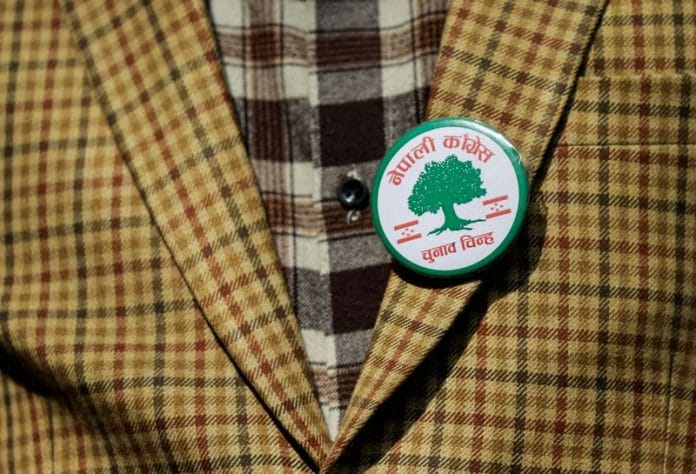
In elections in 1991 and 1999, the centrist Nepali Congress – the country’s oldest political party – won a clear majority required to form the government, but did not last its full term either time because of internal and inter-party squabbling.
A period of political flux followed. King Birendra and eight other royals were killed in a 2001 palace massacre by his son, Crown Prince Dipendra, who later turned the gun on himself, according to an official inquiry.
Tired of fickle politicians and the threat of a growing Maoist insurgency in the hinterland, King Birendra’s successor Gyanendra took power himself in 2005, only to be overthrown a year later following street protests against his action.
A national unity government headed by the Nepali Congress took power in 2006 and lasted two years.
POST-MONARCHY REPUBLIC
In 2008, a special assembly dominated by former Maoist rebels, who joined mainstream politics under a peace deal, voted to abolish the 239-year-old monarchy.
The Communist Party of Nepal faction controlled by the former rebels then took power, but the shift to a republic failed to create political stability.
There have been 15 changes in government since, as power circulated between the former Maoist rebels’ party, the moderate Communist Party of Nepal (Unified Marxist Leninist) and the Nepali Congress.
In 2015, a new constitution came into force, after two constituent assemblies worked on the document for over seven years. This, too, was unable to produce durable administrations.
The fractured politics led to widespread public apathy, reinforcing a popular perception that Nepal’s corrupt political class cared little for the plight of ordinary citizens – among the poorest in the world.
Last September, a simmering online anti-corruption movement exploded into youth-led street protests that forced out the government led by Prime Minister K.P. Sharma Oli of the Communist Party of Nepal (UML).
Former Chief Justice Sushila Karki then took over as interim leader tasked to oversee this week’s general election.
(Compiled by Gopal Sharma, Editing by Devjyot Ghoshal and Raju Gopalakrishnan)
Disclaimer: This report is auto generated from the Reuters news service. ThePrint holds no responsibility for its content.