








By Tim Kelly
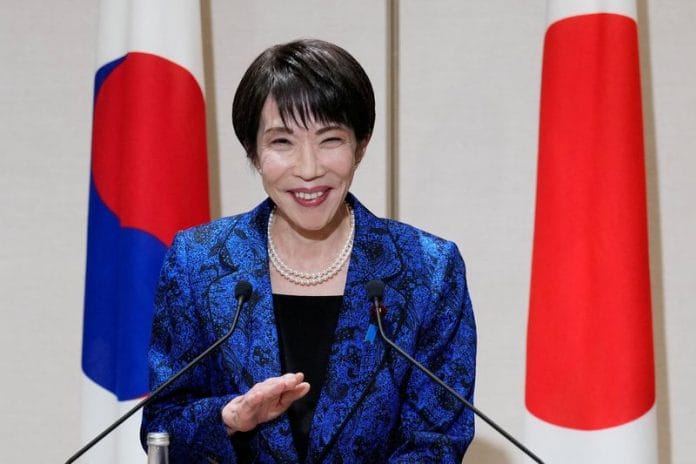
TOKYO, Jan 19 (Reuters) – Japan’s Prime Minister Sanae Takaichi announced plans on Monday to hold a national election on Feb. 8, seeking to capitalise on her strong public polling in her first test at the ballot box since taking office in October.
WHY CALL AN ELECTION NOW?
Japan’s first female premier inherited a battered government, with her ruling Liberal Democratic Party (LDP) having lost its majority in both houses of parliament after disgruntled voters punished it over rising prices and a funding scandal.
By calling a snap election now, she hopes to capitalise on a surge in public support for a new leader who has promised to spur economic growth, tackle cost-of-living concerns and tighten immigration rules.
Some media polls have put the LDP’s support at more than 60%, giving Takaichi an opportunity to restore its majority in the more powerful lower chamber.
A poll of 1,213 people published by public broadcaster NHK on January 13 showed she had the backing of 62% of voters.
Even if she gets a lower-house majority, however, Takaichi will still have to govern with a minority in the upper house, which she cannot dissolve. Voters elect half its members every three years and the next election is not due until 2028.
WHAT WOULD A STRONG RESULT DELIVER?
A decisive victory would strengthen Takaichi’s hand within the LDP and reduce her reliance on smaller political parties to pass key legislation.
That, in turn, could allow her to push ahead with plans to boost government spending to revive economic growth and sharply increase defence outlays under a revised national security strategy amid heightened tension with powerful neighbour China.
The shift could mark a further step from Japan’s post-war pacifist constraints, including a long-standing principle that bars nuclear weapons from its territory.
With prices still rising and the yen’s value against the U.S. dollar sliding, the cost of living is likely to dominate the election campaign.
In the NHK poll, 45% of respondents said that was their main concern, followed by diplomacy and national security at 16%.
Having already proposed record spending of $770 billion for the next fiscal year, Takaichi also promised a temporary sales tax cut on food on Monday, further unnerving investors in one of the world’s most indebted industrial economies.
WHAT’S UP FOR GRABS?
All 465 seats in the lower house will be contested, 289 in single-member districts and 176 through proportional representation. A simple majority requires 233 seats.
The LDP now controls 199 seats in the chamber and governs with the support of its coalition partner the Japan Innovation Party, known as Ishin, which has 34 seats.
The main opposition, the Constitutional Democratic Party of Japan, has joined forces with the LDP’s former coalition partner Komeito to contest the election under a new Centrist Reform Alliance party. That brings their joint seats to 172.
Attention may also focus on how Takaichi fares against the far-right Sanseito Party, whose calls for tighter immigration controls siphoned votes from the LDP in last July’s upper house election, where it won 14 seats.
WHAT HAPPENS NEXT?
After Takaichi dissolves the lower house on January 23, official campaigning will begin on January 27. If the LDP and Ishin secure a majority, she will be confirmed as prime minister in a special parliamentary session.
If not, she may be forced to seek new coalition partners or the support of other smaller parties, a setback that would weaken her authority.
($1=158.7900 yen)
(Reporting by Tim Kelly;Editing by Gareth Jones and Clarence Fernandez)
Disclaimer: This report is auto generated from the Reuters news service. ThePrint holds no responsibility for its content.