








KYIV, Feb 20 (Reuters) – Ukraine could export several billion dollars of military goods and services this year after authorising its first wartime foreign sales and is considering introducing a tax on those exports, a senior Ukrainian defence official said.
Earlier this month, the state commission handling related licences in wartime approved the majority of 40 applications from defence sector producers for exports of materiel and services, Davyd Aloian, deputy secretary of Kyiv’s National Security and Defence Council, told Reuters in an interview.
Ukraine halted weapons exports following Moscow’s February 2022 invasion and has relied heavily on partners’ arms supplies to defend itself against Russian forces.
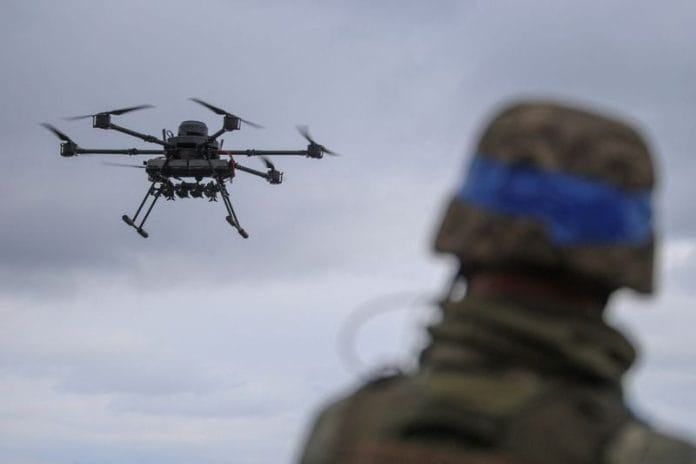
At the same time, Kyiv poured resources into developing its armaments industry, particularly drones and missiles. Leveraging its vast battlefield experience, Ukraine has in recent years experienced a defence technology boom.
Asked about export potential for this year, Aloian said: “Taking into account ready-made products, spare parts, components, and services that can be provided, it amounts to several billion dollars.”
Overall, the potential is “significantly higher” than pre-war exports, he said.
But Aloian, who is a member of the commission authorising exports, played down talks of an immediate export boom for weapons producers and developers.
Ukraine’s own military needs must come first, he said, as Russian troops advance in the country’s east and airstrikes hit towns and cities far from the frontline.
U.S.-brokered peace talks are stalling due to Russian demands for territorial concessions.
FOREIGN INTEREST
Ukraine’s allies have expressed interest in obtaining its cutting-edge defence technology, Aloian said, naming Germany, Britain, the U.S., Nordic countries, three Middle East nations, and at least one Asian country as among the keenest.
One of the Middle East countries, which has a long history of arms trade with Ukraine, is exploring opportunities in drones and heavy vehicles, Aloian said, declining to name the country.
Priority will be given for exports to countries that are Kyiv’s strongest backers in the war, Aloian said.
Kyiv also aims to prioritise joint ventures and other forms of cooperation with foreign countries to attract financial resources, create new arms supply chains to the frontline and have access to new technologies. That is more important than the simple export of ready-to-use products, Aloian added.
Defence manufacturers have been pressing Ukraine to resume exports, saying it risks losing opportunities on the global arms market. Some have already created subsidiaries to operate overseas.
“There is no desire or goal to lock all manufacturers in here and just keep our own… There is an approach, and it is focused on making a system that prioritises the frontline and national interests,” Aloian said. “And then come commercial interests.”
Ukraine is also considering an export tax for defence producers, he said.
While no final decision has been made, he believes this measure would justify for the state the decision to resume exports, as Kyiv could use the revenues to spend on its own underfinanced military needs.
Among the applications approved by the commission, none involve the export of ready-to-use weapons, Aloian said, and the majority are aimed at reimporting arms to Ukraine for use on the frontline.
But some are related to equipment for the Ukraine-U.S. FrankenSAM program, which is developing surface-to-air missile systems by combining Soviet systems owned by Ukraine with Western missiles.
(Reporting by Yuliia Dysa)
Disclaimer: This report is auto generated from the Reuters news service. ThePrint holds no responsibility for its content.