








By Jan Strupczewski and Lili Bayer
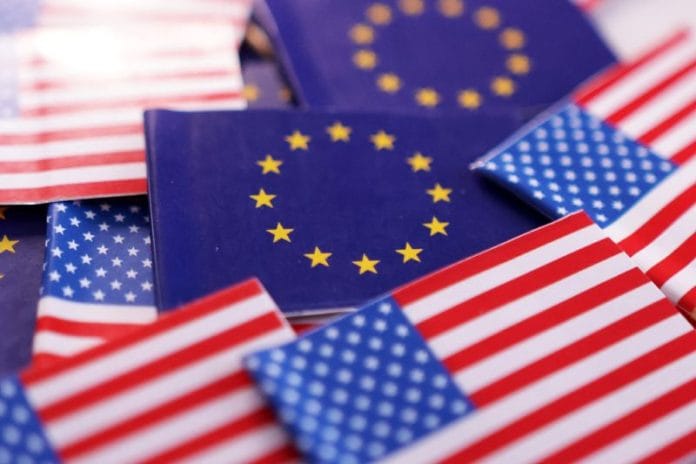
BRUSSELS, Jan 22 (Reuters) – EU leaders will rethink ties with the U.S. at an emergency summit on Thursday after Donald Trump’s threat of tariffs and even military action to acquire Greenland badly shook confidence in the transatlantic relationship, diplomats said.
Trump abruptly stepped back on Wednesday from his threat of tariffs on eight European nations and ruled out using force to take Greenland, a semi-autonomous territory of NATO ally Denmark, suggesting a deal was in sight.
EU governments remain wary of another change of mind by a mercurial president increasingly seen as a bully whom Europe will have to stand up to. They are focused on coming up with a longer-term plan on how to deal with the U.S. under this administration and possibly its successors too.
“Trump crossed the Rubicon. He might do it again. There is no going back to what it was. And leaders will discuss it,” one EU diplomat said, adding that the bloc needed to move away from its heavy reliance on the U.S. in many areas.
“We need to try to keep him (Trump) close while working on becoming more independent from the U.S. It is a process, probably a long one.”
The EU leaders’ summit begins at 7 p.m. (1800 GMT).
After decades of relying on Washington for defence within the NATO alliance, the bloc lacks the needed intelligence, transport, missile defence and production capabilities to defend itself against a possible Russian attack.
This gives the U.S. substantial leverage.
The U.S. is also Europe’s biggest trading partner, making the EU vulnerable to Trump’s policies of imposing tariffs to reduce Washington’s trade deficit in goods, and, as in the case of Greenland, to achieve other goals.
HOW TO DEAL WITH ‘BULLY’
“We need to discuss where the red lines are, how we deal with this bully across the Atlantic, where our strengths are,” a second EU diplomat said.
“Trump says no tariffs today, but does that mean also no tariffs tomorrow, or will he again quickly change his mind? We need to discuss what to do then,” the second diplomat said.
The EU had been ready to deploy a package of retaliatory tariffs on 93 billion euros ($108.74 billion) of U.S. imports and anti-coercive measures if Trump had gone ahead with his own tariffs that were to kick in on February 1, officials said.
In protest over U.S. pressure to acquire Greenland, the European Parliament on Wednesday put on hold its work on ratifying the U.S.-EU trade deal agreed in mid-2025.
While the threat of U.S. action was gone, parliament still needed clarity on U.S. plans for Greenland before returning to the trade agreement, senior parliamentarian Bernd Lange said.
Trump said on Wednesday he had reached a framework deal on Greenland with NATO Secretary General Mark Rutte and on Thursday said details were being worked out but the U.S. would get “total access” at no cost.
“No one knows what this so-called solution is,” German Social Democrat Lange, who chairs the European Parliament’s trade committee, told Reuters.
“We would need a clear yes from Denmark and Greenland. It cannot just be an agreement between two individuals. This means we will be making an assessment of whether there is a threat to EU sovereignty,” he added, saying however that potential EU counter-measures should be put on hold.
A third European diplomat also said the Greenland deal needed explaining, adding: “We are a bit fed up with all the bullying. And we need to act on a few things: more resiliency, unity, get our things together on internal market, competitiveness. And no more accepting tariff bullying.”
Rutte told Reuters on Thursday that under the framework deal with Trump, Western allies would step up their Arctic presence but did not flesh that out. He also said talks would continue between Denmark, Greenland and the U.S.
“Despite all the frustration and anger of recent months, let us not be too quick to write off the transatlantic partnership,” said German Chancellor Friedrich Merz.
($1 = 0.8552 euros)
(Additional reporting by Andrew Gray, Julia Payne and Phil Blenkinsop in Brussels, Madeline Chambers and Sarah Marsh in Berlin; Editing by Gareth Jones and Andrew Cawthorne)
Disclaimer: This report is auto generated from the Reuters news service. ThePrint holds no responsibility for its content.