








By Dave Sherwood and Marianna Parraga
HAVANA/HOUSTON, Dec 12 (Reuters) – A U.S. move this week to seize an oil tanker out of Venezuela is poised to make a bad situation worse for a crisis-stricken Cuba already struggling to source enough oil to power its ailing economy and electrical grid.
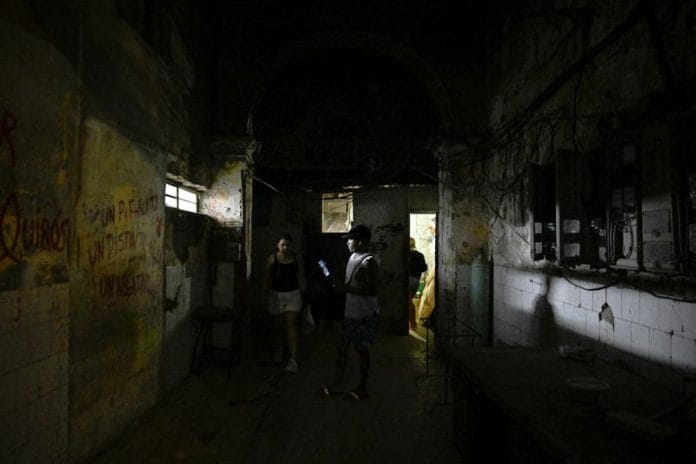
The Communist-run nation, a nearby neighbor and long-time foe of the United States, suffers daily, hours-long rolling blackouts that have decimated productivity and tested the patience of its exhausted residents.
Cuba depends on Venezuela’s crude and refined products – transported to the island by small vessels and a shadow fleet of sanctioned tankers – for a large portion of its consumption, according to shipping data and analysts.
That supply chain – critical to keeping the lights on in Cuba – could be severely curtailed if the single tanker seizure this week turns into a pattern of interceptions, coupled with more sanctions.
MORE INTERCEPTIONS PLANNED: SOURCES
Washington, which on Thursday imposed fresh sanctions on six Venezuela-related vessels, is planning in the coming weeks more interceptions of tankers carrying Venezuelan oil, sources familiar with the matter said this week.
Between January and November, Venezuela sent 27,000 barrels per day of crude and fuel to Cuba, below the 32,000 bpd of last year, according to shipping data and internal documents from state oil company PDVSA.
That covers about 50% of Cuba’s oil deficit, or around one quarter of the island’s total demand, according to Jorge Pinon, who studies Cuba’s energy infrastructure at the University of Texas at Austin.
Without Venezuela’s contribution, Cuba’s oil imports, which have also been hit by lower supply from Mexico this year, would tumble, he said, leaving Cuba in dire straits, with far less fuel for industry, agriculture and electricity generation.
“Now that Mexico is sending less oil and Russian supply in large quantities has not materialized, I just don’t see any other alternatives,” Pinon said. “Times are tough and are going to get tougher.”
Cuba and Venezuela have condemned the U.S. seizure of the tanker as an illegal act and “piracy.”
Cuba’s Foreign Ministry on Friday said the U.S. move also marked the latest aggression in its “economic war” against Cuba.
“These actions have a negative impact on Cuba and intensify the United States’ policy of maximum pressure and economic strangulation, with a direct impact on the national energy system and, consequently, on the daily lives of our people,” the Foreign Ministry said in a statement.
The Venezuelan government and PDVSA did not reply to requests for comment on this story.
SHIPPING INDUSTRY ON ALERT
The U.S. action, as U.S. President Donald Trump ratchets up pressure on Venezuelan President Nicolas Maduro, is putting many vessel owners, operators and shipping agencies on alert, and many are reconsidering whether to set sail from Venezuela in the coming days as planned, sources have told Reuters.
Cuba has for decades worked to outwit a Cold War-era U.S. trade embargo and related financial restrictions that complicate its fuel purchases on the global market.
The vessel seized this week, the Skipper, transferred a small portion of its Venezuelan oil cargo near Curacao to another tanker bound for Cuba, according to satellite images analyzed by TankerTrackers.com.
That matched a pattern that started early this year, in which third-party-owned supertankers load oil under shared charterers departing from Venezuelan ports, make a brief stop in the Caribbean to transfer a portion of cargo to another vessel bound for Cuba, and then continue to China to deliver the remainder of the oil, the shipping data and documents showed.
The terms between Venezuela and Cuba on those cargoes remain unclear. As part of a long-standing collaboration, Cuba provides security and intelligence services to Maduro.
Some Russian naphtha cargoes have also been shared by Cuba and Venezuela this year, with tankers delivering parcels to the countries in turn to make more efficient use of the available fleet.
Cuba has also announced a drive to fast-track the building of solar parks, though officials have cautioned that the island’s aging oil-fired power plants will still need fuel.
(Reporting by Dave Sherwood in Havana and Marianna Parraga in Houston; Editing by Christian Plumb, Tom Hogue, Rod Nickel)
Disclaimer: This report is auto generated from the Reuters news service. ThePrint holds no responsibility for its content.