





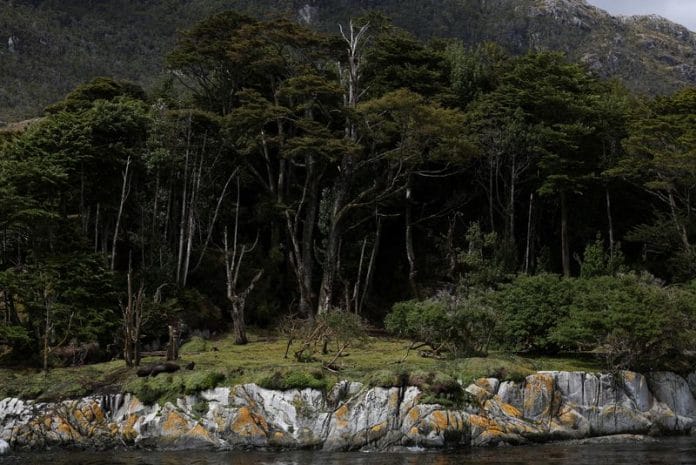



CAPE FROWARD, Chile, Dec 19 (Reuters) – At the edge of the world map, where land turns into subantarctic forests, icy seas and glaciers, Chile is preparing to create a national park to protect endangered wildlife and unique ecosystems.
The proposed Cape Froward National Park, on the Brunswick Peninsula at the southern tip of the Americas, would span roughly 150,000 hectares of forests, peatlands, glaciers and coastline facing the Strait of Magellan.
“The Brunswick Peninsula is a mosaic of marine, coastal and land ecosystems,” said Benjamín Caceres, Rewilding Chile’s wildlife coordinator, adding that human activity, from industry to tourism, must be regulated to prevent harm to fragile ecosystems.
“These are resilient places that maintain balance and create a refuge for species that are in danger of extinction.”
Rewilding Chile, a foundation set up by the late philanthropist and founder of the North Face outdoor clothing company Douglas Tompkins, donated about 127,000 hectares of land to the Chilean government in November with the condition that the national park would be created within two years.
The park would shelter the southernmost continental population of the endangered huemul deer and its productive waters support a vast marine food chain including whales, sea lions and orcas.
Project coordinator Gabriela Garrido said authorities hope to finalize the decree in coming months, adding the park to an 8 million-hectare biological corridor in Patagonia that includes the Kawesqar and Alberto de Agostini National Parks.
Rewilding director Carolina Morgado said the park aimed to be a sustainable source of economic development in the region as it would be the first within the municipality of Punta Arenas, the capital of Chile’s southernmost region.
The foundation is working on plans for the park to include hiking trails, facilities and camping zones for tourists.
(Reporting by Nicolas Cortes; Writing by Alexander Villegas, editing by Ed Osmond)
Disclaimer: This report is auto generated from the Reuters news service. ThePrint holds no responsibility for its content.