








By Olivia Le Poidevin
GENEVA, March 6 (Reuters) – Large-scale evacuation orders issued by the Israeli army for southern Lebanon and Beirut’s southern suburbs raise serious concerns under international law, the U.N. human rights chief said on Friday.
“These blanket, massive displacement orders we are talking here about hundreds and thousands of people,” said United Nations human rights chief, Volker Turk.
“This raises serious concern under international humanitarian law, and in particular when it comes to issues around forced transfer,” he added.
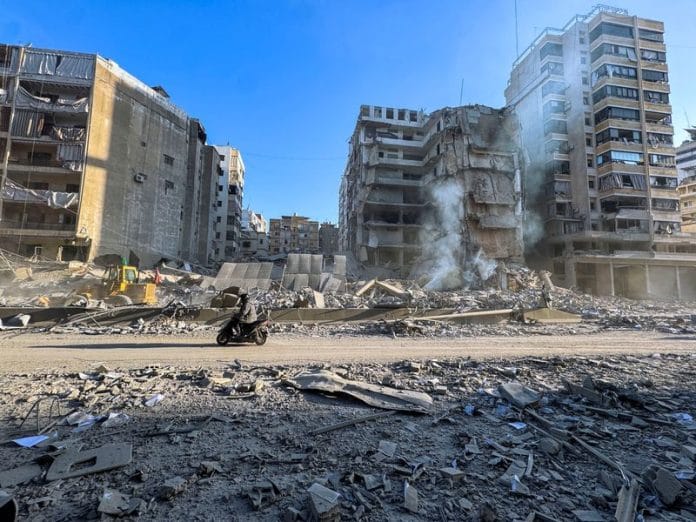
Israel carried out heavy airstrikes on the Hezbollah-controlled southern suburbs of Beirut overnight after ordering its residents to leave, while the Iran-backed group warned Israelis to leave towns and villages at the frontier.
On Thursday, an Israeli military spokesperson told residents of the southern suburbs to move east and north, posting a map showing four large districts of the capital he said they must leave, including areas adjacent to Beirut’s airport.
Lebanon was pulled into the war in the Middle East on Monday when Hezbollah opened fire, triggering a new Israeli offensive, with airstrikes focused on Beirut’s southern suburbs and on southern and eastern Lebanon.
“Lebanon is becoming a key flashpoint. I’m extremely concerned and worried about the latest developments,” Turk said in Geneva following the firing of rockets into Israel by Hezbollah and the Israeli army’s strong response in recent days.
Hezbollah, in a message published in Hebrew on its Telegram channel early on Friday, warned Israelis to leave towns within 5 km (3 miles) of the border.
During fighting between Hezbollah and Israel in 2024, tens of thousands of Israelis were evacuated from towns in the border area, but many have since returned. Israeli officials have previously said there are no plans to remove them for now.
“The world urgently needs to see steps to contain the Middle East crisis,” Turk added.
(Reporting by Olivia Le Poidevin, Editing by Friederike Heine and Thomas Derpinghaus)
Disclaimer: This report is auto generated from the Reuters news service. ThePrint holds no responsibility for its content.