








By Andreas Rinke
BERLIN, Jan 16 (Reuters) – Germany’s government and Holocaust memorial institutions have demanded social media platforms stop the spread of fake images which they say are distorting and trivialising history.
Concentration camp memorial sites and documentation centres expressed deep concern in a letter this week at a tide of so-called AI Slop, or falsified images, around the Nazis’ killing of more than six million Jews during World War Two.
Images included highly emotionalized illustrations of invented incidents such as meetings of concentration camp inmates and their liberators or children behind barbed wire.
“AI-generated content distorts history by trivialising and kitschification,” said the organizations’ January 13 letter, adding that such images helped fuel mistrust among users of authentic historical documents.
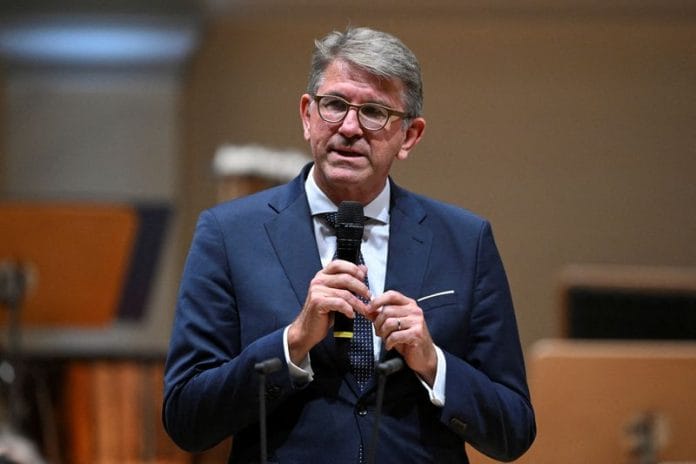
Germany’s state minister for culture and media Wolfram Weimer said he supported efforts by the memorial institutions for AI-generated imagery to be clearly marked and, where necessary, removed.
“This is a matter of respect for the millions of people who were killed and persecuted under the Nazi regime of terror,” he said in an email to Reuters.
AI companies, notably Elon Musk’s xAI, which runs the chatbot Grok, are also under pressure over thousands of sexualised deepfake images of women and minors spread online.
The memorial institutions said the imagery appeared in part aimed at generating attention and earning money and in part intended to “dilute historical facts, shift victim and perpetrator roles, or spread revisionist narratives”.
The institutions include memorial centres for Bergen-Belsen, Buchenwald, Dachau and other concentration camps where Jews, as well as others including Roma and Sinti people, sexual minorities and disabled people, were killed.
They said social media platforms should move proactively against fake AI imagery around the Holocaust rather than waiting for users to report it, ensuring it was clearly marked and preventing it from being monetized.
The spread of low-quality AI Slop, which can consist of fake text, images or video has raised alarm among many experts that it will pollute the information landscape and make it increasingly hard for users to distinguish between truth and falsehood.
(Reporting by Andreas Rinke, writing by James Mackenzie, editing by Andrew Cawthorne)
Disclaimer: This report is auto generated from the Reuters news service. ThePrint holds no responsibility for its content.