





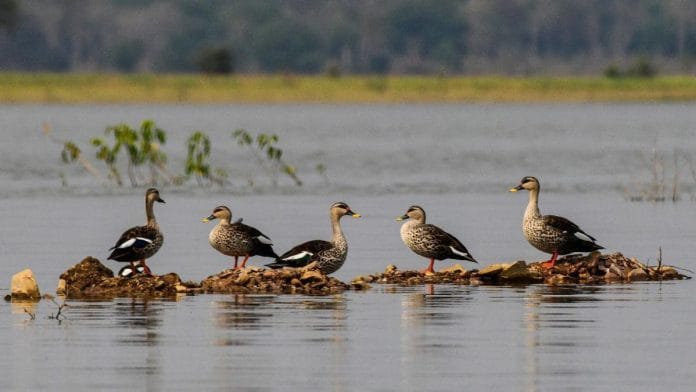



New Delhi: With the addition of Rajasthan’s Siliserh Lake and Chhattisgarh’s Kopra Jalashay, India’s tally of Ramsar sites increased to 96 last week. Both are manmade wetlands.
A Ramsar site is a wetland of international importance designated under the Ramsar Convention. It is an intergovernmental treaty signed in Ramsar, Iran in 1971, which offered a framework for national action and international cooperation for the conservation and wise use of wetlands.
Wetlands cover 6.4 per cent of the global geographical area. In India, they constitute 4.63 per cent of the total area.
There are 2,550 Ramsar sites worldwide. In terms of the number of Ramsar sites, India occupies the third place globally, after the UK (176) and Mexico (144).
What’s significant about India’s new Ramsar sites?
Siliserh Lake is the fifth Ramsar site from Rajasthan and the 96th in India. It is located in the Alwar district along the Aravallis and is close to the Sariska Tiger Reserve.
The lake was constructed in 1845 by Maharaja Vinay Singh to supply water to the city of Alwar. Gradually, it has evolved into a significant ecological area that supports a wide range of aquatic species, terrestrial fauna, and birds.
Siliserh Lake is popular among birdwatchers, especially for its kingfishers and cranes. But in recent years, the wetland area has faced encroachment.
This month, the anti-encroachment squad of Alwar Urban Improvement Trust (UIT) sealed 10 hotels and resorts for operating without permission near the Siliserh Lake.
The Ramsar tag will help strengthen conservation planning, protect heritage, and encourage tourism.
Kopra Jalashay is Chhattisgarh’s first site to get a Ramsar tag, placing the state on the national and global wetland conservation map.
Situated in the Bilaspur district, the site is a reservoir located in the upper catchments of the Mahanadi River. It was constructed in 1993 to alleviate regional water stress. The local communities also rely on it for freshwater.
“Originally constructed for irrigation purposes, it is mainly surrounded by farmland and a few villages. The wetland’s extensive open water area features shallow nutrient-rich backwaters. Its strong hydrological and ecological connectivity contributes to a wide variety of habitats across the area,” read the Kopra Jalashay entry on the Ramsar Sites Information Service.
Kopra Jalashay supports more than 60 migratory birds. But the wetland faces threats from siltation, invasive non-native species, and intensive agriculture in the surrounding landscape.
Chhattisgarh CM Vishnu Deo Sai called the recognition a moment of immersive pride.
“The global tag will boost eco-tourism in the region and create new livelihood opportunities for local communities. It will also strengthen public awareness about wetland conservation and serve as an important milestone in protecting natural resources for future generations,” Sai said.
In the last decade, India’s Ramsar journey has seen a rapid growth from just 26 sites in 2014 to 96 in 2025.
Last month, Gogabeel Lake in Katihar, Bihar was recognised as a Ramsar site. The state now has six Ramsar sites, ranking third in the country after Tamil Nadu (20) and Uttar Pradesh (10).
(Edited by Prasanna Bachchhav)