





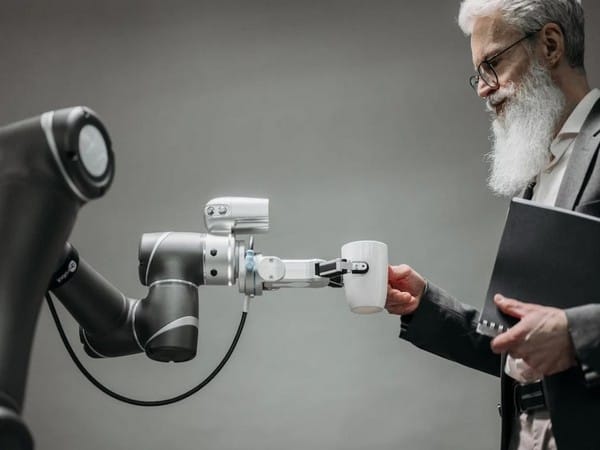



Washington [US], September 26 (ANI): According to a study, a one-hour training session is sufficient for people to perform a task with their own robotic arms as effectively as with a partner.
Researchers from Queen Mary University of London, Imperial College London, and The University of Melbourne discovered that with just one hour of instruction, humans can learn to utilise supernumerary robotic arms as successfully as working with a partner.
The research, which was published in the journal IEEE Open Journal of Engineering in Medicine and Biology, looked into the ability of supernumerary robotic arms to assist individuals with jobs that require more than two hands. Human enhancement with extra artificial limbs has long been a theme in science fiction, as shown in Doctor Octopus in The Amazing Spider-Man (1963).
“Many tasks in daily life, such as opening a door while carrying a big package, require more than two hands,” said Dr Ekaterina Ivanova, lead author of the study from Queen Mary University of London. “Supernumerary robotic arms have been proposed as a way to allow people to do these tasks more easily, but until now, it was not clear how easy they would be to use.”
The study involved 24 participants who were asked to perform a variety of tasks with a supernumerary robotic arm. The participants were either given one hour of training in how to use the arm, or they were asked to work with a partner.
The results showed that the participants who had received training on the supernumerary arm performed the tasks just as well as the participants who were working with a partner. This suggests that supernumerary robotic arms can be a viable alternative to working with a partner and that they can be learned to use effectively in a relatively short amount of time.
“Our findings are promising for the development of supernumerary robotic arms,” said Dr Ivanova. “They suggest that these arms could be used to help people with a variety of tasks, such as surgery, industrial work, or rehabilitation.” (ANI)
This report is auto-generated from ANI news service. ThePrint holds no responsibility for its content.