






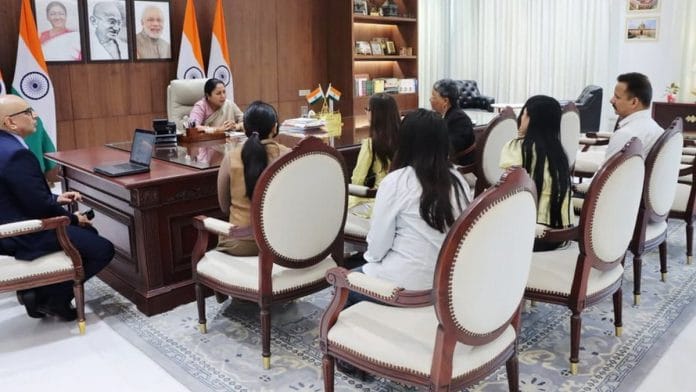



The recent incident of racial abuse against three young women from Northeast India, two from Arunachal Pradesh and one from Manipur, by their neighbours in Malviya Nagar, Delhi, has again reopened old wounds. It is the kind of racism we ignore because it happens so often, and when we do pay attention, it is never for long.
Every time such incidents occur, we see a very familiar pattern: immediate outrage on social media, condemnation from student groups, statements from political leaders, and strong reactions from civil society. The police take action, as in this case where the accused have been arrested, and the matter becomes a public issue for some time. For a few days or weeks, the nation appears awakened.
But over time, everything fades and settles until the same pattern repeats, and we are once again shocked that racism against people from the Northeast is still prevalent. It is high time that this cycle of outrage and forgetting is questioned.
Also Read: I’m single, Assamese, Muslim, and an animal feeder. I feel unsafe in Delhi
The limits of ‘awareness’
I do not see the recent incident as an isolated case, nor should it be reduced to one unfortunate episode. It reflects a larger and continuing pattern of racial stereotyping and abuse faced by people from the Northeast in different parts of the country. For many of us, this is not new. It is something we experience in everyday spaces, in subtle remarks, in stereotypes, and at times in open hostility.
After the racially motivated killing of Nido Tania, who was from Arunachal Pradesh, in January 2014, the Government of India formed the Bezbaruah Committee to study racism and discrimination against people from the Northeast. Several awareness and preventive measures were recommended, and some steps were taken, including sensitisation initiatives, helplines, and public awareness efforts.
But then a decade later, in December 2025, Anjel Chakma from Tripura was attacked and killed under similar circumstances.
These repeated incidents suggest that awareness alone has not been sufficient. If awareness were enough, we would not be witnessing the same kind of racial abuse again and again.
What makes the recent incident even more disturbing for me is the social background from which it emerged. It did not happen in a remote or uninformed setting that could be dismissed as ignorance. It happened in South Delhi, one of the most educated and urban spaces in the country. The perpetrators were presumably educated and socially aware people. This shows that the issue is not merely about lack of exposure or rural backwardness, but about a deeply internalised mindset.
When anger surfaced during a dispute on something as mundane as repair work, the language that came out was rooted in long-standing stereotypes about people from the Northeast. This indicates that the prejudice already existed at a deeper psychological level.
In this, there is also a larger irony that we must confront as a nation. When incidents of racism happen against Indians in any other country, we rightly raise our voices to demand dignity and equality. Strong statements are made on global platforms. At the same time, many citizens within our own country continue to face racial slurs, foreignisation, and dehumanising remarks every day.
This contradiction raises an uncomfortable but necessary question: for how long will this continue within our own society?
Also Read: Life in Delhi isn’t easy for Northeast Indians. Racism is always round the corner
Beyond outrage
We have seen ‘outrage’ in past cases. When Anjel Chakma died, there was a public outcry and discussions about racism against us. But what happened after that? Did the conversation sustain long-term structural changes? Or did the issue slowly disappear from mainstream attention until the next incident?
It is time to move beyond symbolic outrage and awareness campaigns. What we need now is structural change.
First, there must be stricter and exemplary punishment in cases involving racial abuse and violence so that such behaviours are not normalised or trivialised. Legal consequences must act as an impediment.
Second, India urgently needs clearer and stronger legal provisions addressing racial discrimination within the country. At present, there is no comprehensive anti-racism law that directly recognises and penalises racial slurs and discrimination faced by communities like those from the Northeast. This legal gap reduces the seriousness with which such incidents are handled.
Third, and most importantly, long-term change must come through education and governance, from primary school to university level. The curriculum should include an accurate representation of the Northeast as an integral and equal part of India. Ignorance in education often leads to prejudice in society. If young students grow up with proper awareness, stereotypes will gradually reduce.
Enough is enough. We cannot continue to react only when incidents go viral. We cannot allow a cycle in which outrage rises, fades, and then returns after another tragedy. The issue of racism against people from the Northeast is not episodic; it is structural. And structural problems require structural solutions in law, education, and governance.
The question now is: how long will we wait before implementing real and lasting change?
Yari Nayam is a PhD scholar at the Centre for Historical Studies, Jawaharlal Nehru University. She is from Arunachal Pradesh. Views are personal.
(Edited by Asavari Singh)
Such incidents are deeply disturbing after experiencing hospitality and friendly, helpful manner of people when I visited some NE states as a tourist.
To all my NE brothers and sisters – I am sorry!
A well-meaning piece. But a PhD scholar at JNU’s history department should know better than to recycle the same recommendations we have heard since the Bezbaruah Committee a decade ago.
Yes, stronger laws. Yes, better textbooks. But here is the question a historian should be asking first: why does this bias exist, and where did it actually come from?
Prejudice born out of unfamiliarity is not an Indian invention. After 9/11, Sikhs were beaten on American streets — mistaken for Taliban because of their turbans. This was not rural backwardness. These were educated, urban Americans who had simply never meaningfully encountered a Sikh person in their lives. The ignorance did the rest.
The same thing happened here, just more slowly. For decades, Congress governments left the Northeast physically cut off and culturally invisible to the rest of India. Two populations grew up as strangers inside the same country. Now that better roads and economic opportunity have brought them face to face, we are surprised there is friction. We should not be.
That is the real structural problem — not just gaps in the law or gaps in the syllabus, but the absence of any serious national effort to make Indians actually know each other. Not through a government poster campaign, but through sustained cultural exchange, shared media, and the ordinary experience of living alongside one another.
And here is something this piece avoids entirely: the bridge has two ends. Awareness cannot be a one-way obligation. That is not victim-blaming — it is just how human beings actually stop being strangers to each other.
Laws can punish. Textbooks can inform. But only familiarity — built deliberately, over time — truly dissolves prejudice. That is the answer staring this article in the face, which it somehow never sees.