






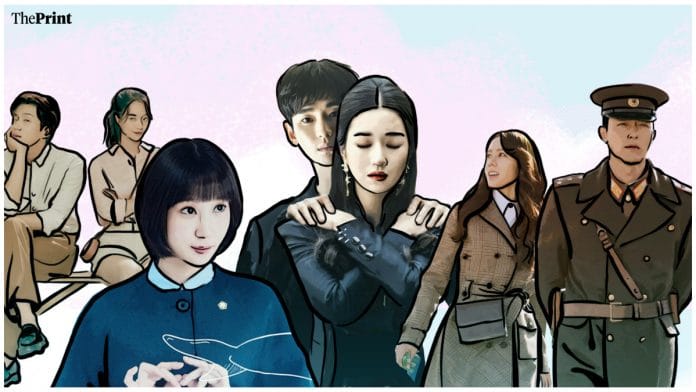



Three sisters in Ghaziabad jumped to their deaths because they couldn’t bear to be parted from Korean culture. In a note, they confessed their love for Korean actors and K-pop groups, calling it bigger than their attachment to family.
And now, there is a collective national uproar over how this could be; how Korean cultural products can brainwash young Indian minds to this extent. The Ghaziabad sisters’ suicide has become an opportunity for everyone to call for a forensic scrutiny of the K-pop and K-drama addiction among Indians.
I, too, have been an addict of Korean dramas since I was 19 years old. Let me explain the phenomenon. It does offer an escape from the drudgery of everyday life—by presenting an unachievable kind of love. For Indian audiences accustomed to horrendous shows such as Naagin, K-dramas are a breath of fresh air. With exceptional beauty standards and an emotionally available boyfriend, the Korean world is far from mine or any other viewer’s reach. But it’s always good to look at.
An escape from loneliness
The three sisters wrote on a wall that they felt lonely without access to Korean culture. The family had been going through financial difficulties, and none of the five sisters had gone to school after the Covid-19 pandemic. K-dramas offered the sisters solace.
In almost all Korean dramas, distressed heroines are saved by their masculine boyfriends. These Korean ‘oppas’ are equipped with a whole syllabus on romance —emotional intelligence, vulnerability, loyalty, respect, and the rare ability to listen.
On Friday, Netflix is set to release the latest episode of No Tail to Tell—a fictional K–drama about a quirky, immortal nine-tailed fox who turns human and unexpectedly falls in love. I am eagerly waiting for this episode, because it will probably be the starting point of the lead couple’s love affair.
So I can say with full authority that these dramas are undeniably addictive. If Shah Rukh Khan set the benchmark for romance at 20 per cent, K–drama heroes exceed 100 per cent. That is what these girls dreamed about.
Aged 12, 14, and 16, the girls documented their fear of being married off to Indian men as well as their dislike for Bollywood movies and songs. I can understand why they idealised a Korean husband. In the world of K-dramas, everything is rosy and beautiful. Once you fall in love, everything becomes easy and love alone can help you survive.
While the discussion on princess treatment continues, K-dramas still build the illusion that women will be protected and cared for by a man.
The global addiction to Korean content is often traced to the meteoric rise of BTS and other K-pop bands. Oscar-winning Parasite (2019), directed by Bong Joon Ho, further cemented South Korea’s cultural presence on the world stage.
Also read: Manipur to Ghaziabad — why Indians are drawn to K-pop
Evolution of K-dramas
I have been watching K–dramas for over a decade. At the age of 31, my Netflix “top pick” remains a K-drama. When I started watching them, I did imagine a merrier world for me. But reality sank in soon after. It didn’t take someone snatching away my laptop or phone, and it is never the way to wean teenagers off their obsessions.
With their brilliant cinematography, screenplay, costumes, and extraordinary locations, K-dramas have created a fantasy world for me. That’s what appeals to me now.
Since Boys Over Flowers (2019), the plot of K–dramas has also changed. Viewers demanded that they do. Shows such as Summer Strike or Hometown Cha-Cha-Cha have evolved to show the realities of life mixed in with the romantic ideal. Addressing issues ranging from anxiety to failed love, they are relatable to a viewer my age. Although the rags-to-riches storyline is probably too delicious to ever be completely removed. And I’m at peace with that.
Views are personal.
(Edited by Prasanna Bachchhav)