






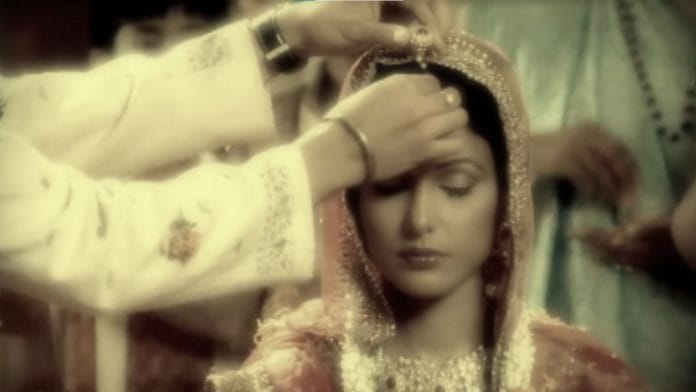



Five thousand episodes. One show. And a country still showing up for it every night. Rajan Shahi’s Yeh Rishta Kya Kehlata Hai, which premiered in January 2009, is still on television screens Monday to Friday on Star Plus.
Yes, you read that right. Five thousand episodes, but of what? Elaborate wedding sets, love triangles, memory loss arcs, deaths, leaps, and loads and loads of crying, to the point it can cause tissue shortage in India. OTT may scream evolution, but TRPs tell a different story.
Congratulations to the YRKKH team. Not taking anything away from them, but more than a milestone, it is a mirror held up to the Indian audience.
Despite Netflix, Amazon Prime, Hotstar, and a thousand other OTT options waiting with tight scripts and masterful storytelling, a huge chunk of Indians, especially women, are still glued to daily soaps.
Every few weeks, when a brainrot film or series drops, social media explodes with outrage, saying the audience deserves better content. Apparently, they don’t.
Because TRP charts continue to be dominated by shows where a bahu is either a know-it-all rebel or a doormat.
We keep saying Indian TV needs to evolve and offer better representation. But if a show has touched 5,000 episodes by doing ‘rinse and repeat’ with the same storyline—albeit tweaked to include trending topics such as Covid-19 and artificial intelligence—what change are we even looking for?
The truth is that Indian daily soaps are like toxic exes: terrible for you, but you can’t help returning to them.
Also read: What is the beauty tyranny at play when a Panipat mother murders kids
Emotional reality of crores of women
When I was 10 years old, I remember watching Akshara Singhania (Hina Khan) adjusting to the joint family after her wedding. Then came Naira (Shivangi Joshi), then Akshara Goenka (Pranali Rathod), and now we’re on the family’s fourth generation with Abhira (Samridhii Shukla).
Over the decades, the families’ problems have evolved, but the one constant is that the daughter-in-law always ends up entangled in every crisis.
And that is why women relate to this content, even when OTT is overflowing with stories created for women, about women, by women. Daily soaps like YRKKH validate the emotional reality of crores of Indian women.
They aren’t just watching a show. They are watching a version of their own life—meddling in-laws, husbands who don’t communicate, the rare glimpse of romance, and the ever-frequent need for self-sacrifice. YRKKH is all this, just more dramatised and exaggerated.
It wouldn’t do to dismiss these women viewers as ‘regressive’. Most Indian women don’t get hobbies, workouts, book clubs, or weekend getaways. They get one hour between chores, kids, and husbands.
Shows such as YRKKH and the current favourite, Anupamaa, are not content; they’re a sacred ritual.
Remember Mihir Virani’s death in Kyunki Saas Bhi Kabhie Bahu Thi? India mourned his death and forced the showrunners to bring the character back.
YRKKH completing 5,000 episodes tells us that a huge chunk of the Indian society is still deeply tied to traditional narratives, even if we pretend to be all modern on Instagram.
As long as TRPs keep singing the same song, daily soaps will keep dancing to it for another 5,000 episodes.
(Edited by Prasanna Bachchhav)