









The last time the term ‘snap election’ entered mainstream political discussion — at least in India — was after French President Emmanuel Macron dissolved parliament after the 2024 Summer Olympics in Paris, only to suffer electoral embarrassment.
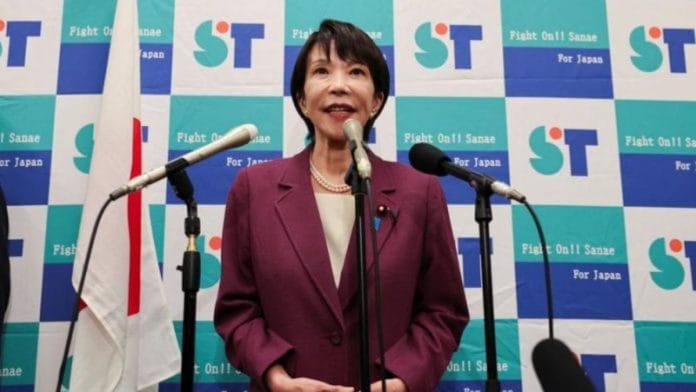
This time, the context could not be more different. It is Japan’s Prime Minister Sanae Takaichi — the country’s first woman to hold that position — who took the ‘snap election’ gamble and won it with aplomb.
Four months ago, when Takaichi emerged as the leader of the Liberal Democratic Party (LDP), she inherited a difficult yet familiar political situation. Her predecessor, Shigeru Ishiba, had been forced to resign after the LDP-led coalition lost the July 2025 elections. Zooming out, for Japan watchers, this was hardly surprising. The country has long been a victim of a ‘revolving door of prime ministers’, a product of intense factional infighting within the LDP — Japan’s largest party — where internal rivalries frequently prevent consensus on critical national issues.
The July 2025 LDP defeat left Japan with not only a political vacuum at the top but also a leadership crisis within the LDP itself. The party was forced to hold another internal election to select a new leader, and by extension, a new prime minister. In a political landscape still deeply and problematically patriarchal, Sanae Takaichi’s victory stunned everyone. She became Japan’s first female prime minister at a moment of acute domestic and geopolitical uncertainty.
Domestically, she was tasked with reviving an economy that has struggled for much of the period since the bursting of the asset bubble in 1991. Externally, she faced an increasingly complex and unpredictable relationship with the United States under President Donald Trump. Her predecessor had negotiated a deeply unpopular trade agreement with Washington, under which Japan committed to investing hundreds of billions of dollars in the US economy. Yet, to Tokyo’s dismay, this economic generosity was not matched by firm American security assurances in East Asia
For the uninitiated, Japan’s security posture is pegged to the 1960 US-Japan Security Treaty — a kind of ‘quid pro quo’ under which Japan accepted constitutional de-militarisation under Article 9 of its post-war constitution in exchange for the American security umbrella. In essence, the United States took on Japan’s defence while Japan limited its military role and focussed on economic growth
That foundational equation began to unravel under Trump’s “America First” doctrine, which has consistently prioritised waywardness and transactionalism over alliance commitments — whether in Europe or East Asia.
A protégé of Shinzo Abe and a security hawk, Takaichi faced her first major test as PM during her bilateral meeting with Trump on 28 October 2025. The meeting was a roaring diplomatic success. Images of Takaichi walking arm-in-arm with Trump reassured a nervous Japanese public that their most important alliance might still hold.
Yet, barely ten days later, Japan found itself in the midst of its worst diplomatic crisis with China in decades.
Poking the panda
During a Budget Committee meeting in the lower house of the Diet on 7 November, Takaichi stated that a Chinese naval blockade of Taiwan would constitute a “survival-threatening situation” for Japan, potentially prompting the right of collective self-defence. The substance of her remarks was neither novel nor radical because Japan’s disputed Senkaku Islands are along the ‘first island chain’. Similar assessments had appeared in Japanese strategic documents earlier too — but their explicitness and timing marked a departure from Tokyo’s usual strategic caution.
Beijing reacted furiously. What made matters worse was the US’s response. Rather than backing its ally, Trump asked Japan not to “provoke” China.
Within the LDP, pro-China factions seized the moment to criticise Takaichi, accusing her of uncalled for hawkishness at a time when US reliability was uncertain. The pressure mounted further in January 2026, when China imposed export controls on rare earth elements and permanent magnets, directly targeting Japan’s automobile and technology sectors as a punitive measure.
Yet, Takaichi did not budge. Instead, she made a risky decision. She dissolved the Diet and called for snap elections on 8 February 2026 — asking the people, already fatigued by three national elections in 15 months, to vote for a stronger defence posture and a more assertive Japan.
Here I need to explain that she had no constitutional compulsion to do so. Under Japan’s system, a prime minister may dissolve the Diet in two circumstances: after a vote of no confidence, or when seeking a direct popular mandate for a fundamental policy shift. Takaichi chose the latter, staking her political future on the judgement of the people.
One woman standing
Voters — long frustrated by the lack of leadership since the assassination of Shinzo Abe in 2022 — rallied behind Takaichi who refused to buckle under pressure, dissolved parliament voluntarily, and framed the election around national dignity and self-respect.
The LDP-led coalition won a landslide, securing 362 of 465 seats in the House of Representatives, with the LDP alone winning 316 seats.
All’s well that ends well? Not entirely, but something historic has clearly shifted.
Japan now has a leader with a voice, a posture, and a strategic vision. The electoral mandate has given Takaichi a rare window in Japan’s faction-ridden politics to pursue meaningful transformation. Two monumental tasks lie ahead.
First, she must beef up Japan’s defence at a time when regional security risks are escalating and the United States can no longer be fully trusted to uphold its treaty commitments in a predictable manner.
Second, she must revitalise Japan’s economy, not only through spending, but by finally implementing the long-delayed structural reforms envisioned in Shinzo Abe’s “third arrow” of Abenomics.
Also read: China’s manufacturing isn’t declining, it is moving from scale to value creation
Defence modernisation
Takaichi has inherited an ongoing transformation initiated by Abe himself. It was Abe who first sought greater strategic autonomy, driven by China’s growing assertiveness, militarisation of the South China Sea, threats to Taiwan, and North Korea’s missile provocations. Russia’s invasion of Ukraine further shattered Japanese assumptions about a stable, rules-based order.
Abe’s successors — Yoshihide Suga, Fumio Kishida, and Shigeru Ishiba — continued this trajectory in bits and pieces, recognising that security had become ‘indivisible’ and that hitherto disconnected strategic theatres were increasingly getting interconnected.
Japan’s 2022–23 National Security Strategy, National Defence Strategy, and Defence Buildup Program reflected this shift. They all emphasised strengthening the defence industrial base, acquiring long-range strike capabilities, and expanding defence cooperation with like-minded partners.
Yet, internal constraints remained. LDP’s long-standing coalition partner Komeito has been the main stumbling block. Despite being a junior partner, Komeito’s pacifist orientation consistently acted as a “brake” on defence expansion, arms exports, and deeper military collaborations. Even achievements such as the 2015 security legislation were restricted due to coalition pressures.
Yesterday’s snap election has fundamentally altered this equation.
Takaichi has replaced Komeito with Ishin (the Japan Innovation Party), a conservative party with a far tougher stance on security. This new coalition is ideologically aligned with her vision of a stronger Japan. For the first time in decades, defence cooperation and industrial collaboration are no longer a political taboo.
Now Japan can fully update and implement its three strategic security documents — National Security Strategy, National Defence Strategy, and Defence build up Program.
Defence spending is set to reach 2 per cent of GDP ahead of schedule mainly through supplementary budgets. More importantly, the clause on defence equipment and technology cooperation opens unprecedented opportunities for international partnerships.
Also read: Don’t celebrate India-US deal yet. It’s a work in progress & Trump can back out any time
A new era for New Delhi-Tokyo
This shift has profound implications for India-Japan relations.
Despite great ties, India and Japan have often suffered from strategic complacency. While Japanese investment in Indian infrastructure, JICA and JBIC financing and cooperation on critical minerals are well recognised; defence collaboration has remained limited — constrained by Article 9 and Komeito’s status.
That constraint is now gone.
Today’s defence partnerships are no longer about buyer-seller relationships. They thrive on co-development, co-production, and co-export across the spectrum — from dual-use technologies to advanced platforms and subsystems. Japan’s new posture creates strategic space for exactly this kind of collaboration with India, particularly in maritime domain awareness, grey-zone capabilities and defence manufacturing.
Japan’s landslide mandate to Takaichi shows a desire for innovative workarounds to Article 9 by building pragmatic partnerships that enhance national security without formal constitutional revision. For India, this opens unprecedented pathways for cooperation not only in high-mast radars, but across the entire defence ecosystem.
A caveat, however, is in order.
The success of this strategic transformation depends on two conditions. First, Takaichi must show the same resolve for economic revitalisation that she has shown on security. Second, she must survive Japan’s notoriously unstable prime ministerial tenures
If she truly carries forward Shinzo Abe’s legacy — in both spirit and substance — Japan may finally enter an era of political stability, strategic clarity and meaningful partnerships abroad.
Swasti Rao is a Consulting Editor (International and Strategic Affairs) at ThePrint. She tweets @swasrao. Views are personal.
(Edited by Aamaan Alam Khan)