







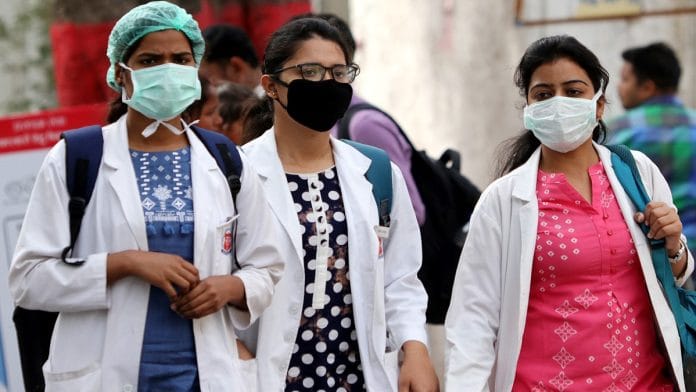



The National Medical Commission’s recent decision to allow for-profit entities to establish medical colleges under the public-private partnership framework marks a rare moment of realism in Indian education policy. At a time when India faces an acute shortage of doctors, mounting pressure on public health infrastructure, and a growing exodus of students seeking medical education abroad, the move directly addresses the most binding constraint in the system: the lack of high-quality capacity at scale. By allowing the use of private capital and permitting professional operators to participate under regulatory oversight, the NMC has implicitly acknowledged that public purpose cannot be met through public provision alone.
This decision also exposes a larger and more persistent problem: India’s education crisis is not fundamentally a problem of money, talent or intent; it is a problem of ideology. Decades after economic liberalisation, India’s education policy remains trapped in a socialist hangover, instinctively distrusting private capacity while overestimating the state’s ability to deliver quality at scale.
The consequences are visible across the system: chronic scarcity, mediocre outcomes, and the steady export of India’s brightest minds. When education policy is driven by moral suspicion rather than national need, public interest becomes the first casualty.
India’s fear of experimentation
Education is a public good because of what it produces, not because of who owns the institution. India today has about 24.8 crore students studying across 14.72 lakh schools. Yet quality capacity is severely constrained. In higher education alone, India’s Gross Enrolment Ratio (GER) stands at about 28 per cent, far below developed economies and still unevenly distributed in terms of quality. Even within this expansion, the number of globally competitive institutions remains thin.
In the QS World University Rankings 2026, there are just 54 Indian universities. And not a single Indian institution ranks in the global top 100. This gap is not about intelligence or effort. It is about institutional capacity, governance models, and incentives. The world’s top-ranked universities, many of them located in the US, are private, not state-run. Institutions such as Harvard University, Stanford University, and the Massachusetts Institute of Technology (MIT) are privately governed, professionally managed, and financially autonomous. They generate surplus, raise private capital, and partner deeply with industry, yet their public value is unquestioned. The lesson is straightforward. The United States did not choose between “public” and “private.” It chose a plurality of models, judged by outcomes.
At the school level, India repeats the same mistake. The state attempts to do everything, distrusts autonomy, and then wonders why learning outcomes stagnate. By contrast, the US experimented with Charter Schools, which are publicly funded but independently run. Over 3.7 million American students now attend charter schools. While performance varies, the best charter networks consistently outperform traditional public schools serving similar demographics. The key insight is not perfection, but innovation at scale, enabled by autonomy with accountability. India’s fear of experimentation has produced the opposite: standardisation without excellence.
Also read: Inside India’s only dark factory in Tamil Nadu. Robots work all night, engineers stay out
Beyond moral signalling
The strongest indictment of India’s education ecosystem is revealed by outbound student data. In 2025, 1.8 million Indian students were studying abroad, making India the largest source of international students globally. Families spend an estimated $40–60 billion annually on overseas education. This is a direct foreign exchange outflow caused by domestic capacity failure. Medical education is a stark example. Thousands of Indian students go to countries like Russia, Ukraine, and the Philippines not because of superior quality, but because India artificially restricts seats in the name of “public interest.” The outcome is neither quality nor equity, but rationing. This is not just a social problem. It is a fiscal and strategic one. When students leave, many do not return. The state loses both the investment made in their schooling and the productive value of their working years.
India’s policy discourse routinely treats “for-profit” as synonymous with exploitation. This is intellectually lazy. A badly regulated non-profit can extract value through opaque donations, capitation fees, and political patronage. A well-regulated for-profit institution, on the other hand, can be transparent, accountable, and scalable. Profit is not a moral failure. It is a mechanism to attract capital, reward competence, and sustain institutions over time. Countries that understand this regulate outcomes, not ownership. India has done the opposite. We cap fees but not incompetence. We regulate balance sheets but ignore learning outcomes. We police intent while tolerating mediocrity.
Education policy must move beyond moral signalling. The question India must ask is simple: does an institution educate well, at scale, and in service of national capability? Public good is defined by outcomes, not ownership. Until Indian education policy internalises this truth, we will continue to export talent, import mediocrity, and congratulate ourselves on ideological purity while paying the price in lost potential.
Suresh Prabhu is India’s former Minister of Commerce and Industry (2017-2019). He tweets @sureshpprabhu. Shobhit Mathur @shobweet is Vice Chancellor of Rishihood University. Views are personal.
(Edited by Aamaan Alam Khan)