








The juggernaut of Census 2027 has finally been rolled out to a sure and steady start.
From a purely legal standpoint, there has been no violation in postponing the census beyond 2021, since neither the Census Act 1948 nor the Census Rules 1990 specify any periodicity. However, when a convention has been observed for over a century and four decades — from 1871 to 2011 — it acquires a certain sanctity, both with regard to the process and timeline. Therefore, the intent, or the mens rea, was uppermost in several minds. Be that as it may, the official reason for the delay has now been ascribed to Covid, and the near impossibility of completing Census 2021 before the 2024 elections.
However, it could only have been delayed, not postponed forever. Once the results of the first digital census start appearing, about sixteen months from now, they will certainly open a Pandora’s Box of multiple divides and discontents.
Also Read: Sikkim’s accession to India has 6 stories. And 3 strong-willed women
What’s under the lid?
Some discontents are clearly in the offing.
This census will, barring another Constitutional amendment, open the floodgates for a new delimitation of Parliamentary and Assembly constituencies. It will also open a more fact-based debate on issues relating to migration, identity, and reservations. This includes the much-hyped women’s reservation, the Nari Shakti Vandan Adhiniyam (NSVA), which reserves one-third (33 per cent) of seats in the Lok Sabha, state legislative assemblies, and the Delhi Assembly.
Other equally contentious questions will centre on the political economy of the rural versus the urban, north versus south, and the applicability of the creamy layer within the SC/ST quota.
The census may also give a fillip to demands for a second States Reorganisation Commission to address the many unfulfilled aspirations of regions and ethno-linguistic groups wanting to carve out a new state or scheduled area within the internal boundaries of existing states.
Toward unfreezing constituencies
While every census is important for giving the country an update about itself — the demographic profile of citizens’ education, employment, migration, language, religion, and caste — this one is special. In all probability, it will lead to the unfreezing of parliamentary and assembly constituencies, which are currently based on the census of 1971.
It bears recall that the 42nd and 84th Constitutional Amendments of 1976 and 2001, passed with rare bipartisan consensus during the premierships of Indira Gandhi and Atal Bihari Vajpayee respectively, accepted the principle of non-alteration in the number of electoral constituencies until such time as most states in the country achieved ‘near demographic stability’. For the record, the only prominent voices that spoke up against this were former Lok Sabha Speakers Somnath Chatterjee and Shiv Raj Patil. However, they spoke in their individual capacities, for their own parties, the CPI(M) and the Congress, were not in favour of disturbing the delicate apple cart.
Now, unless there is another Constitutional amendment, on the lines of the 42nd and the 84th, the census will clear the deck for long overdue delimitation of parliamentary and assembly constituencies.
How the census shapes seats and elections
While Article 326 establishes the principle of Universal Adult Franchise (UAF) for elections to the Lok Sabha and the state assemblies, Articles 81 and 170 provide the constitutional safeguards to ensure that, to the extent of practicability, the ratio of population to seats remains the same across constituencies. This helps maintain the principle of ‘one person, one vote, one value’.
In most cases, voters and candidates are assigned constituencies on the basis of ‘where electors are normally resident’, and this process is called delimitation. The idea of ‘practicability’ allows for exceptions to be made for special geographies, including island territories (Lakshadweep and the Andaman and Nicobar Islands), sparsely populated highlands (Ladakh and Lahaul and Spiti), erstwhile foreign jurisdiction territories such as Daman and Diu, and frontier states like Sikkim and Mizoram.
This explains the wide divergence in the size of constituencies. The three largest Lok Sabha constituencies, by population, are Malkajgiri in Telangana (formerly in Andhra Pradesh) with over 29 lakh voters, followed by Ghaziabad in Uttar Pradesh and North Bengaluru with about 22 lakh each. On the other end of the spectrum are Lakshadweep with less than 50,000 voters, while Daman and Diu and Ladakh have 1.02 lakh and 1.6 lakh respectively.
The presidential order of 1951
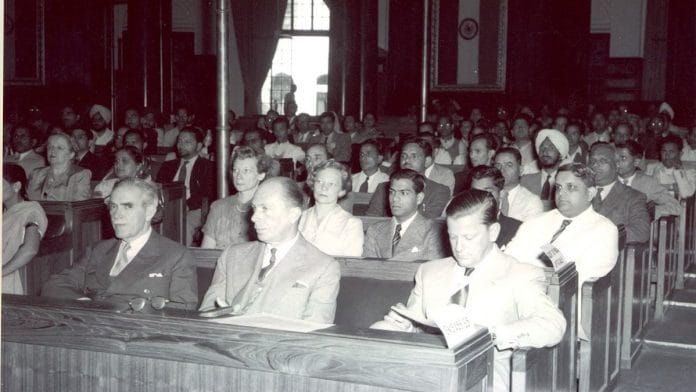
Based on early census data of 1951, the first 489 parliamentary and 3,280 assembly constituencies were delimited and notified through a presidential order the same year.
As there was no Delimitation Commission in place at the time, President Rajendra Prasad requisitioned the services of the Election Commission for this task. Thus, the first delimitation exercise was undertaken by S R Sen, India’s first election commissioner.
It may be mentioned that electoral constituencies had already been created in Part A states (the nine former provinces of British India) and elections had been held there in 1937 and 1945-46, albeit on a limited franchise. However, for Part B states (the erstwhile princely states), and Part C states (former princely states or territories under British rule), the task had to be taken up de novo.
When a seat could have multiple representatives
Interestingly, the first two Lok Sabha elections included multi-member constituencies. These comprised 71 double-member constituencies and one triple-member constituency.
These 72 multi-member constituencies were introduced to ensure representation for SCs and STs alongside general candidates, reflecting their population distribution across regions. The only triple-member constituency was North Bengal (which then included Cooch Behar and Jalpaiguri), where SCs and STs were equally predominant.
However, as court rulings also permitted reserved-category candidates to contest general seats, the 1957 elections saw significant victories by SC and ST contenders in multi-member constituencies, both in general and reserved seats. This led to widespread resentment among the general category, and the practice was discontinued from the 1962 elections.
Also Read: Why China targets Arunachal citizens — and how Nehru, Patel and Khathing saw it coming
The Delimitation Commissions and seat expansion
After the Delimitation Commission Act was passed in 1952, Justice N Chandrasekhara Aiyar was tasked with determining constituencies in the light of the final numbers of Census 1951. The total number of seats went up from 489 to 494 for the second and third Lok Sabha.
Until the 1962 elections, an additional 14 members were nominated to the Lok Sabha to represent J&K, besides certain UTs and regions without assemblies, such as the North Eastern Frontier Agency (NEFA), Lakshadweep, and A&N Islands. This took the total strength to 508. From 1967, with the exception of the two Anglo-Indian nominations, every other member was elected on the basis of universal adult franchise.
It may also be placed on record that under the extant provisions of Article 370, Lok Sabha members from J&K were to be nominated by the state legislature. This, in effect, meant that the premier (as the CM of J&K was then called), exercised significant discretion in this regard. Subsequent Delimitation Commissions were formed in 1963, 1973, and 2002.
Thus, 1963 saw the first delimitation after the 1956 States Reorganisation Act. After adjusting boundaries for new states, 522 single-seat Lok Sabha constituencies were carved out on the basis of population data from the 1961 Census.
The Delimitation Commission of 1973, which followed the Census of 1971, saw an addition of 20 seats, raising the total to 542. An additional seat was added for Sikkim after its integration with India under the 35th Constitutional Amendment.
The 2002 Commission, under Justice Kuldip Singh, had a limited mandate: to reallocate existing seats using updated population data, while ensuring that SC/ST reservations were maintained. With the two additional presidential nominations for Anglo-Indians, the strength of the Lok Sabha stood at 545. However, following the enactment of the 104th Constitutional Amendment in 2020, which abolished this category, the Lok Sabha now has 543 members.
In my next column tomorrow, I will examine how the 1971 Census came to govern India’s political map.
This is the first instalment of a four-part series on the census in India, based on a keynote address delivered at the annual juridical conclave at NUJS Kolkata.
Sanjeev Chopra is a former IAS officer and Festival Director of Valley of Words. Until recently, he was director, Lal Bahadur Shastri National Academy of Administration. He tweets @ChopraSanjeev. Views are personal.
(Edited by Asavari Singh)