






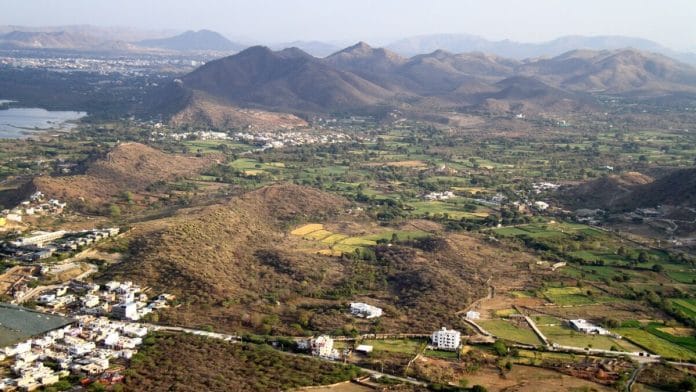



There must have been a good reason for the government to change the definition of the Aravallis. Even the Supreme Court of India found reason in it in the first instance. There may be equally good reasons for the definition to remain unchanged. Someone has to weigh the trade-offs and decide. The elected government of the day decided, and the highest court of the land okayed it. Then came the outcry from organised pro-environment groups. The Supreme Court reversed its stand. The government acquiesced. Sadly, the entire fracas once again positions economic progress and the environment in contradiction to one another. This is an outcome of “noise” dictating decision-making rather than an honest examination of benefits and costs.
Is the state of nature disturbed by economic progress? In one sense, it is. What are human habitations today were once forests or fields, but can anyone make a rational case for civilisation returning to primitive or even the pre-industrial age? On the other hand, in the industrial age, it is proven that richer nations have better environmental conditions, including forest cover, quality of air & water than poor ones.
The bottom line is that we need resources to protect resources. And it requires political steel. India is short on both.
Like in many other domains, we fall between the cracks here too. Activism is selective in its causes. When pitted against big industry who are portrayed as “profiteering” and “rapacious capitalists”, activism often wins the battle of “noise” and forces a climbdown from decisionmakers. Aravallis is one case among several over the years. When pitted against a more formidable coalition, that includes farmers, middle class and small industry, activism is meeker. Otherwise, why would the national capital of the fourth largest economy in the world suffer from severely poor air quality year after year without anyone lifting a finger to do anything about it? Or being compelled to lift more than a finger? Is this not an issue of equal importance?
Occasionally, a leader of steel holds their ground. One need only recall then CM Narendra Modi staring down a high-profile, internationally publicised opposition to the Sardar Sarovar Project. The dam is now the lifeline of farmers and ordinary citizens in the driest parts of Gujarat, vindicating those who backed the construction against those who opposed it. The Supreme Court too changed its view from opposing the dam to supporting its construction.
Also read: What are the Aravallis? The decades-long quest to define a 2-billion-year-old range
India needs mining
In today’s context, taking seemingly tough decisions is made easier by how massively technology has evolved. Mining is a much-maligned industry even though it produces the raw materials that are used to make practically everything we, even activists, use in our daily lives—vehicles, laptops, mobile phones, houses; name it and it’s made from resources below-the-ground. And India hardly mines. The sector contributes only 2 per cent to GDP. As a result, India spends $400 billion a year (50 per cent of its total imports) importing resources.
With the latest technology and a preference for underground mining (as opposed to open cast mining), the impact on the environment can be mitigated. And, at the end of a mine’s life, the natural ecosystem can be restored. This is being done everywhere in the world, including in India. Of course, there must be standards that are enforced, but there is a difference between that and a blanket no.
The only path to prosperity for 1.4 billion Indians is through industry. That is the only sector which can create well paying jobs for the masses. It is easy for those who already have a high level of income and a good standard of living to create false villains in the name of protecting the environment. But those who are poor need to improve their living standards now.
This argument isn’t just about the Aravallis. If it is deemed to be off-limits to mining or industrial activity after a proper cost-benefit analysis, then so be it. Some areas in the country can be designated no-go. But “noise” is a poor determinant of which ones. The fact that India’s environment is so terribly degraded in places where there is no industry (look at our hill stations) shows that the fight for the environment is uneven.
The reality is that India oscillates between the extremes of permissibility (Delhi air, unregulated real estate development in the hills) and ban. And in the end, we have both a poor environment record and slow economic progress. The bottom line is that ad hoc-ism needs to end. A perpetual conflict between environment and economic progress is an activists’ framing of a relationship. But in today’s technological context, it can be a win-win for both.
The author is Chief Economist, Vedanta. He tweets @nayyardhiraj. Views are personal.
(Edited by Theres Sudeep)
Well Said👍👍👍
It is not difficult to find damn fools in this country. Initially I thought it is satire. To my horror, the author was serious. Then I say his details. It was clear that it came out of a pseudo journalist on the role of an Industrialist